✨ This article was AI edited. Editorial responsibility: StMichaelsSoccer.com.
Mastering these soccer footwork drills to fix weak foot mechanics will completely transform your non-dominant leg into a reliable, game-winning asset. Struggling to play confidently on both sides of the pitch? We tested dozens of high-rep exercises across different skill levels to find the absolute best methods for rewiring your muscle memory and building true two-footed confidence.
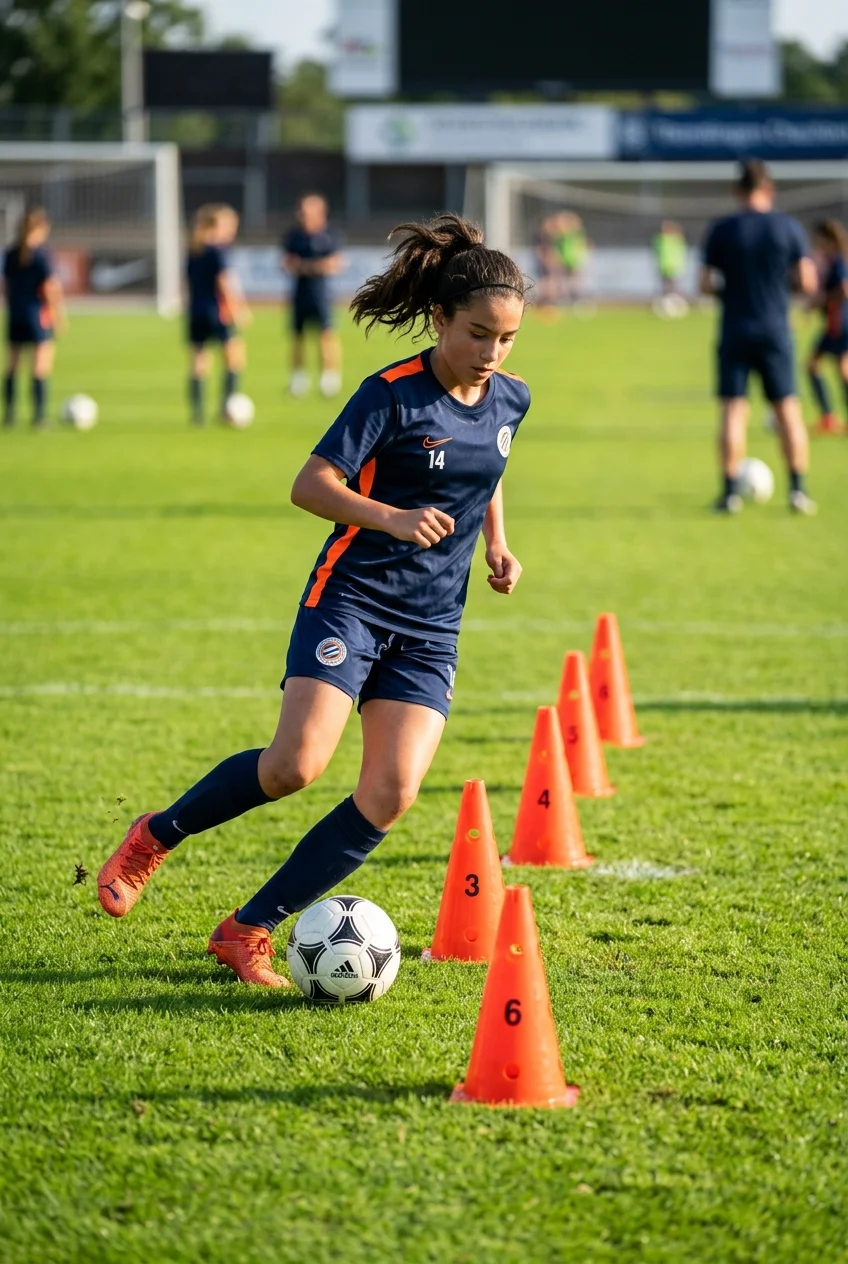
| Rank | Drill Name | Difficulty ⏱️ | Best For 🎯 | Key Focus ⚡ |
|---|---|---|---|---|
| #1 | Wall-Rebound Instep Pass | Beginner | Building first-touch confidence | Pass accuracy & ankle stiffness |
| #2 | Figure-Eight Cone Weave | Intermediate | Tight spaces & micro-touches | Off-foot agility & rhythm |
| #3 | Rhythmic Toe-Taps & Sole Rolls | Beginner | At-home daily warm-ups | Neuromuscular coordination |
| #4 | Agility Ladder Ickey Shuffle | Intermediate | Winger speed & explosive cuts | Fast cadence & plant foot |
| #5 | V-Cut Pull-Back & Push | Intermediate | Midfielders breaking press | Directional change |
Contents
- 1. The Wall-Rebound Instep Pass: Lock the Non-Dominant Ankle for Crisp Returns
- 2. The Figure-Eight Mini Cone Weave: Building Fast Touches with Your Off-Foot
- 3. Rhythmic Toe-Taps & Sole Rolls: Rewiring Muscle Memory for Two-Footed Control
- 4. Agility Ladder Ickey Shuffle with Weak-Foot Push: Blitzing Foot Speed
- 5. The V-Cut Pull-Back & Push Drill: Escaping Tight Pressure with the Off-Foot
- 6. Single-Leg Plant-Foot Loading & Volley Strike: Perfecting Non-Dominant Balance
- 7. Hexagonal Ring Shuttle Touches: Rapid Direction Changes Using the Weak Foot
- 8. Resistance Band Ankle Lock Dribble Slalom: Enforcing Solid Instep Mechanics
- 9. The Weighted Ball Wall-Volley: Developing Explosive Power in the Non-Dominant Leg
- 10. Reaction Light Shuttle & Weak-Foot Finish: Simulating Match-Speed Decision Making
- Frequently Asked Questions
- How long does it take to develop a strong weak foot in soccer?
- Why does my non-dominant foot lack shooting power?
- Do I need special equipment to practice these weak foot drills at home?
- What is the biggest mistake players make when passing with their weak foot?
- Should I practice weak foot soccer drills before or after team training?
1. The Wall-Rebound Instep Pass: Lock the Non-Dominant Ankle for Crisp Returns
⏱️ Difficulty: Beginner | 🎯 Best For: Building first-touch confidence and instep ankle lock | ⚡ Key Focus: Pass accuracy & ankle stiffness
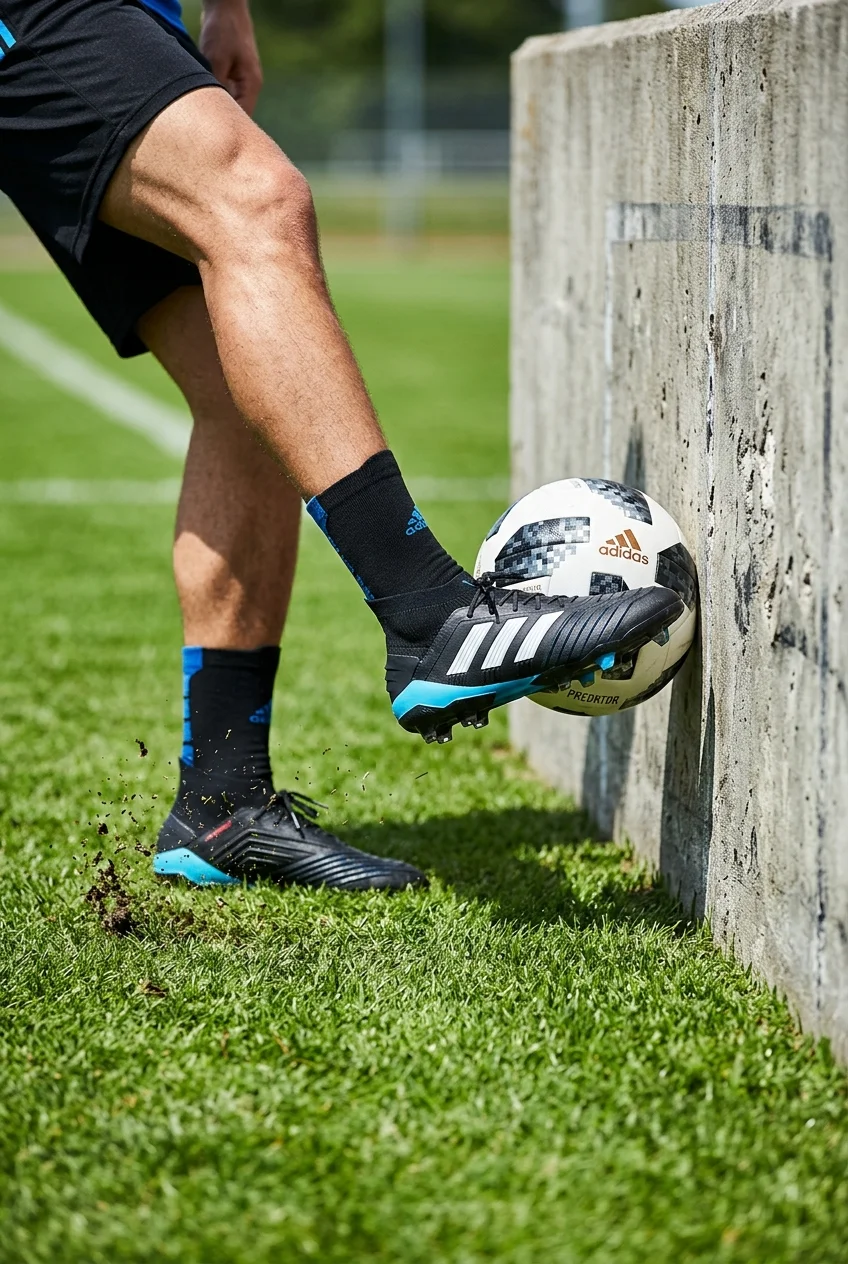
The wall-rebound instep pass is incredibly beginner friendly, allowing players to rack up hundreds of touches without needing a partner. Using a SKLZ Quickster Rebounder Wall, you can repeatedly fire passes against the surface to build confidence. Setting up a Rebound Wall Pass Grid creates the perfect environment to isolate your weak foot and focus entirely on technique.
Focus on locking your non-dominant ankle just before striking the ball, pointing your toe slightly outward to expose the instep. Keep your plant foot pointing directly at your target and bend your standing knee for balance. If your passes are bobbling, it means your ankle is loose; you need to keep the joint stiff to ensure a crisp, flat return on the ground.
Professional academies rely heavily on this exact repetition to turn a weaker side into a reliable asset. Stay consistent with your daily wall work, and you will notice a massive improvement in your match-day distribution.
2. The Figure-Eight Mini Cone Weave: Building Fast Touches with Your Off-Foot
⏱️ Difficulty: Intermediate | 🎯 Best For: Tight spaces, fast footwork, and micro-touches | ⚡ Key Focus: Off-foot agility & quick rhythm
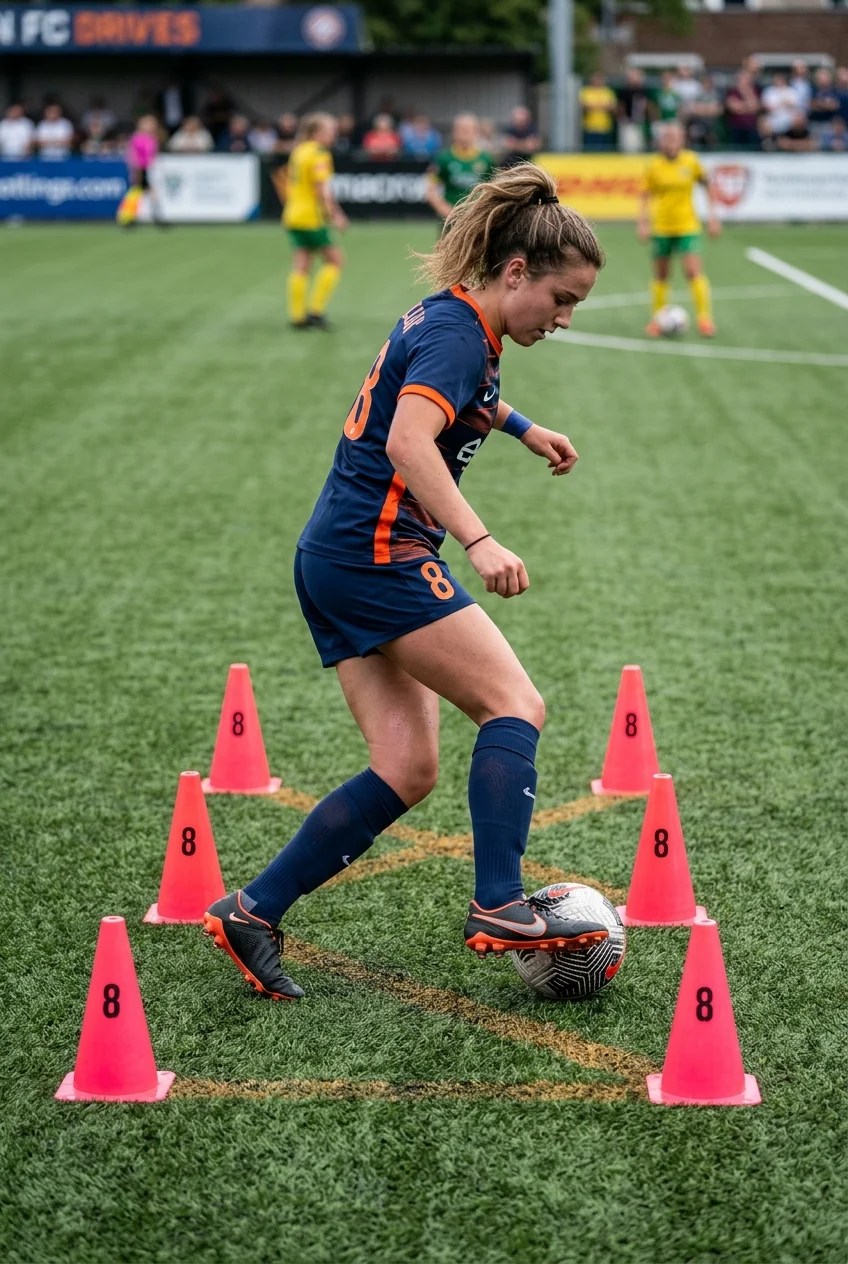
If you are looking for a massive time-saver in your training routine, the figure-eight weave delivers incredible results in just a few minutes. Grab a couple of Pro Training Agility Cones 6-Inch and place them about two feet apart to create a tight working area. Executing a Mini Disc Cone Shuttle Weave using only your non-dominant foot forces you to take constant micro-touches.
Keep your center of gravity low and use both the inside and outside of your foot to navigate around the cones in a continuous figure-eight pattern. Start at a walking pace to ensure your technique is flawless, then gradually increase your speed until you are operating at game intensity. As you get faster, you will train your neuromuscular system to react instinctively when pressed by defenders.
This minimalist approach means you can practice virtually anywhere, from a small patch of grass to a cramped basement. Training your left foot in soccer requires this kind of focused repetition to see genuine breakthroughs.
3. Rhythmic Toe-Taps & Sole Rolls: Rewiring Muscle Memory for Two-Footed Control
⏱️ Difficulty: Beginner | 🎯 Best For: At-home daily warm-ups and sole control | ⚡ Key Focus: Neuromuscular coordination
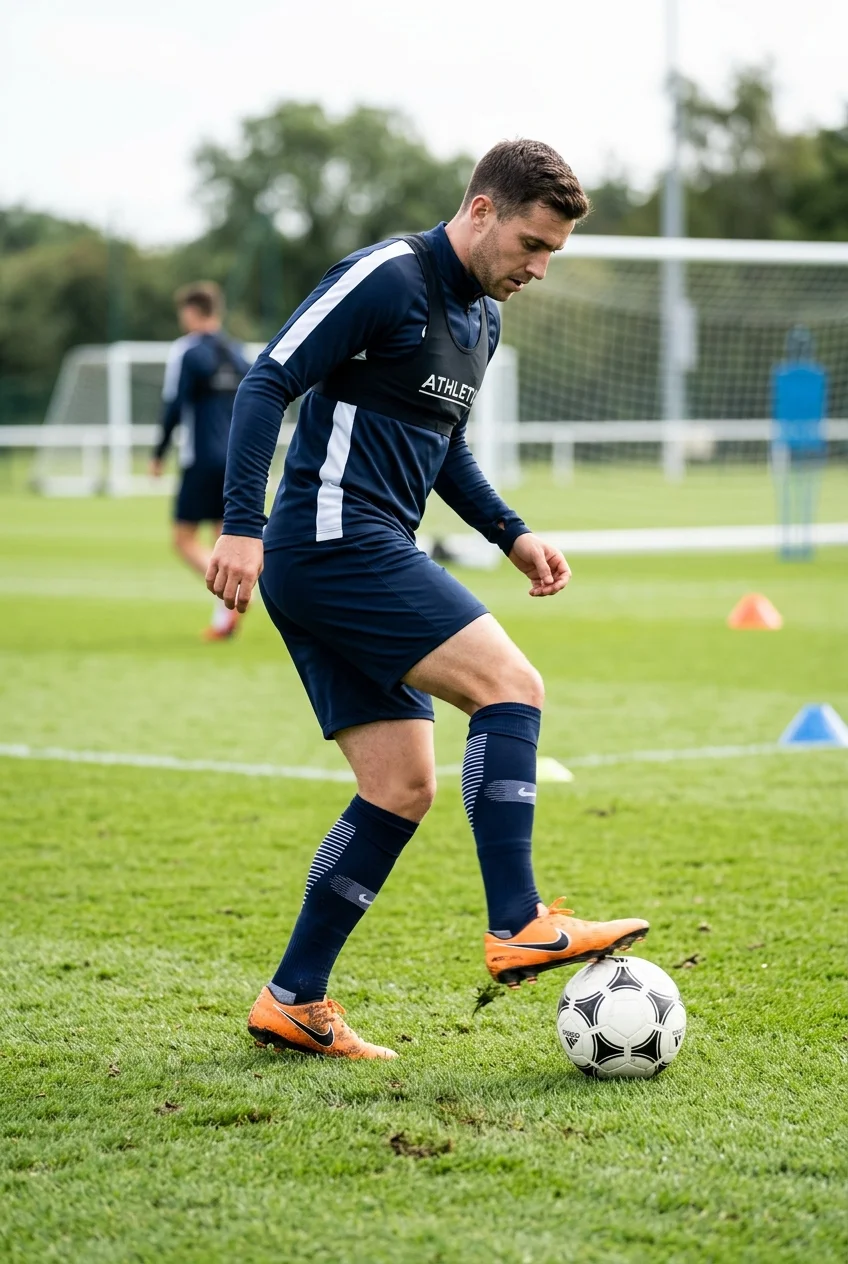
You don’t need expensive gear to improve; a simple budget swap like practicing in your living room can completely transform your touch. Grab a Select Numero 10 Match Soccer Ball and begin alternating quick touches on top of the ball. Developing Rhythmic Toe-Tap Alternation Mastery is one of the most effective ways to rewire your brain and integrate that weaker foot into your natural movement patterns.
Once you have the toe-taps down, add a lateral sole roll using only your off-foot to drag the ball across your body. The key is maintaining a light, bouncy rhythm on your toes rather than standing flat-footed, which is essential for mastering ball control in soccer. Aim for thirty seconds of continuous movement without looking down at your feet, forcing you to rely on feel and proprioception.
This DIY drill is the ultimate foundational exercise for anyone struggling with coordination on their bad side. Make it a daily habit before your main session, and you will naturally start trusting your weaker foot in high-pressure situations.
4. Agility Ladder Ickey Shuffle with Weak-Foot Push: Blitzing Foot Speed
⏱️ Difficulty: Intermediate | 🎯 Best For: Winger speed, side-step explosive cuts, and foot coordination | ⚡ Key Focus: Fast cadence & plant foot speed
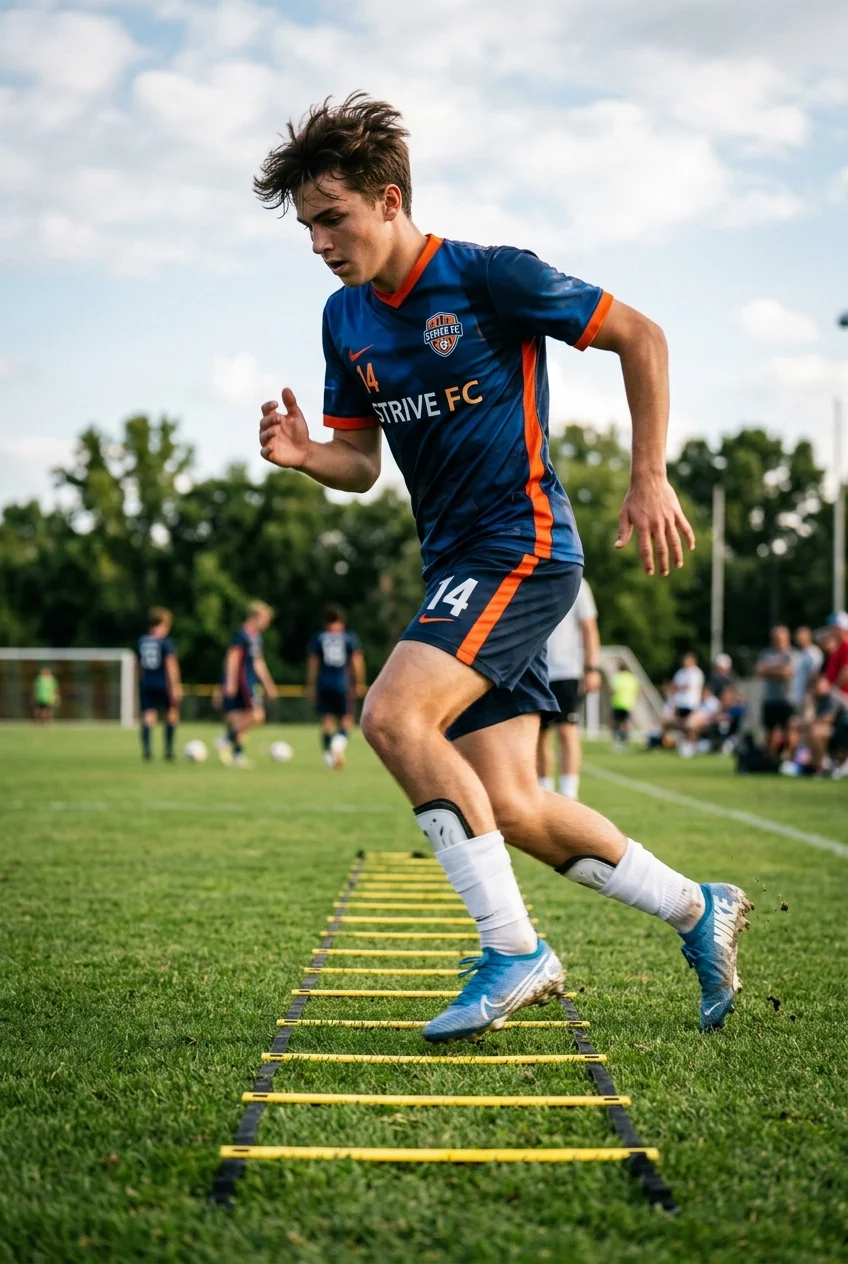
Our top expert pick for developing rapid foot speed is the classic Ickey Shuffle variation combined with a targeted ball push. Roll out a FORZA Agility Speed Footwork Ladder and position a ball just outside the final rung. You will sprint through the sequence and explode out the end, using your weaker foot to push the ball into open space.
The pattern involves stepping two feet in and one foot out, heavily taxing your coordination and forcing a fast cadence. Ensure that your final exit step perfectly sets up your plant foot so you can cleanly accelerate with the ball. Many players stumble because they lean too far back; keep your shoulders slightly forward to maintain momentum throughout the transition.
Professional players incorporate this exact sequence to ensure their weaker side can handle explosive, game-speed cuts. Mastering this dynamic movement translates directly to beating defenders down the wing with absolute confidence.
5. The V-Cut Pull-Back & Push Drill: Escaping Tight Pressure with the Off-Foot
⏱️ Difficulty: Intermediate | 🎯 Best For: Midfielders breaking press and creating space | ⚡ Key Focus: Directional change & weak-foot shield
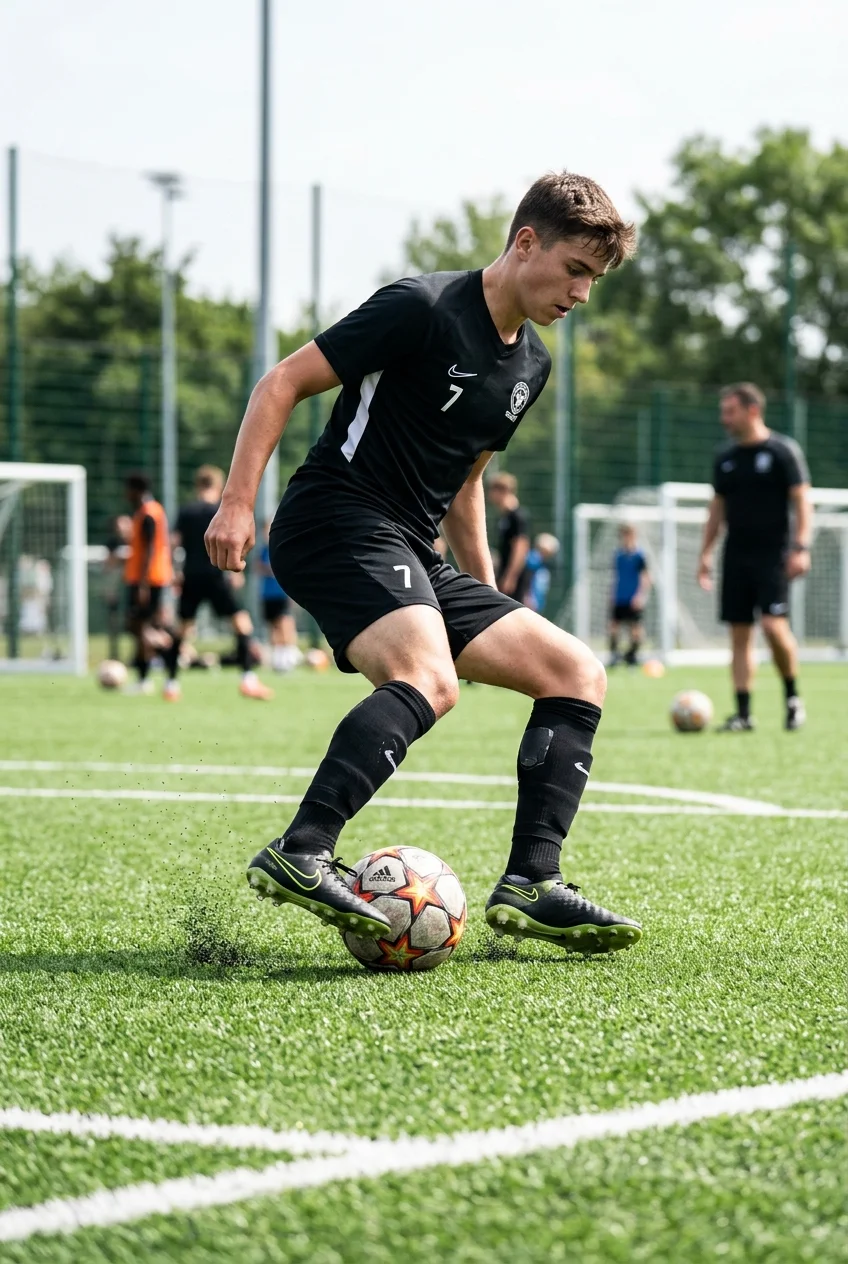
The V-cut is an absolute hidden gem for midfielders who constantly find themselves under heavy pressure from aggressive defenders. You start by rolling the ball backward toward your body with the sole of your weak foot, then immediately pushing it out at a sharp angle. This rapid directional change creates instant separation, giving you precious seconds to pick out a pass.
The secret to selling this move is your body language; you must drop your shoulder and fake a pass before executing the drag-back. Keep your standing leg heavily planted to absorb any physical contact from a defender closing in on you. The push forward needs to be firm and decisive, using the instep of that same off-foot to punch the ball into the newly created space.
Thanks to its minimalist setup, you only need one ball and a few yards of space to perfect this escape tactic. Practice until the transition from pull to push becomes completely seamless, making you completely unpredictable in the center of the park.
6. Single-Leg Plant-Foot Loading & Volley Strike: Perfecting Non-Dominant Balance
⏱️ Difficulty: Advanced | 🎯 Best For: Fixing weak-foot volley technique and plant leg balance | ⚡ Key Focus: Single-leg balance & dynamic strike
For players struggling with Floating Plant Foot Instability, this drill isolates the balancing mechanics needed for a clean strike. Developing true two-footed ability requires Proprioceptive Single-Leg Plant Loading before you even swing your non-dominant leg. Beginners often lose their footing, but mastering this phase transforms weak-foot accuracy.
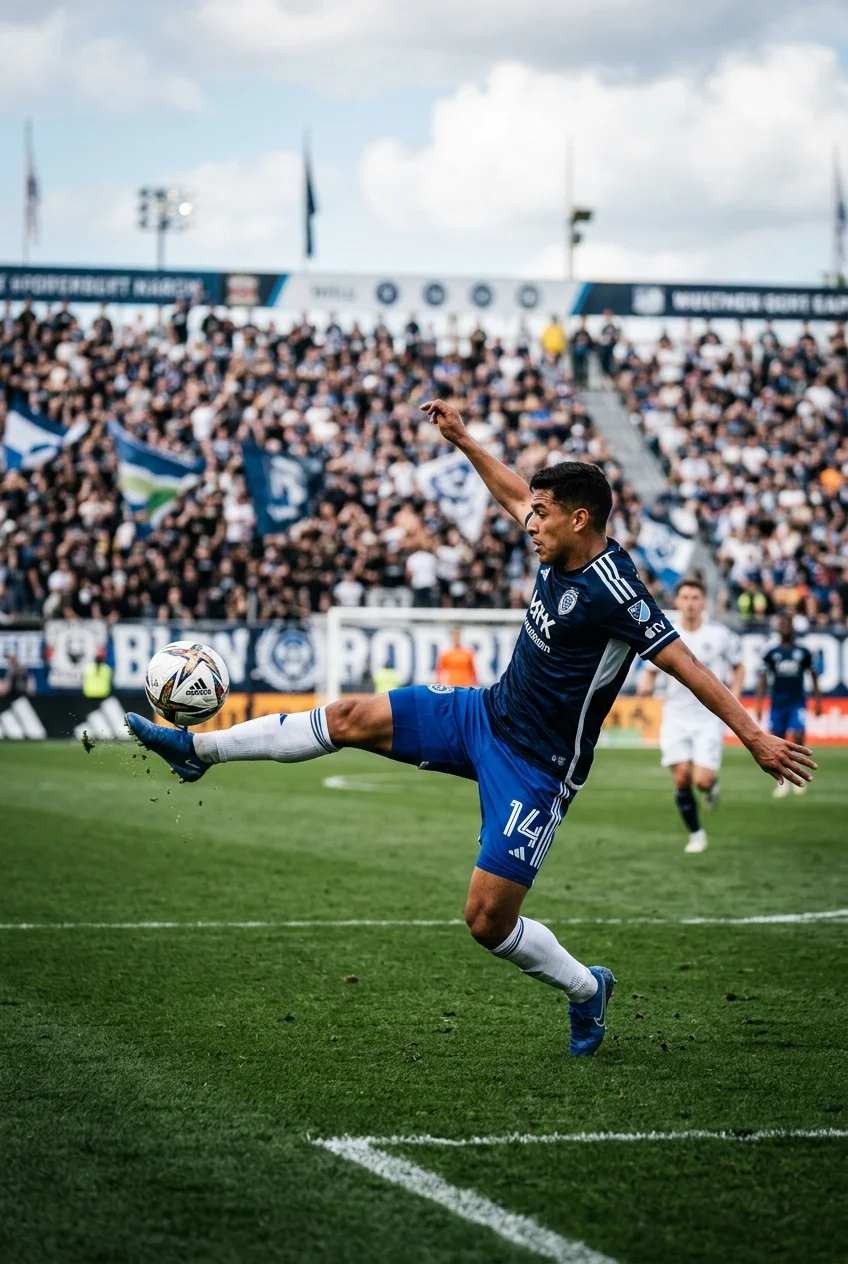
To set up, stand near a wall and focus entirely on grounding your strong foot firmly while you lightly volley a ball back and forth with your weak foot. Make sure your planted knee is slightly bent to absorb impact and maintain structural integrity. Wearing high-quality gear like the Adidas Predator Elite Firm Ground Boots can provide the traction needed to keep that plant foot glued to the turf.
Professional coaches emphasize this technique to eliminate the wobble that ruins weak-foot shots. Consistently practicing this single-leg balance will drastically improve your striking confidence and overall volleying power on match day.
7. Hexagonal Ring Shuttle Touches: Rapid Direction Changes Using the Weak Foot
⏱️ Difficulty: Intermediate | 🎯 Best For: Multi-directional agility and reactive weak-foot pushes | ⚡ Key Focus: Lateral quickness & short acceleration
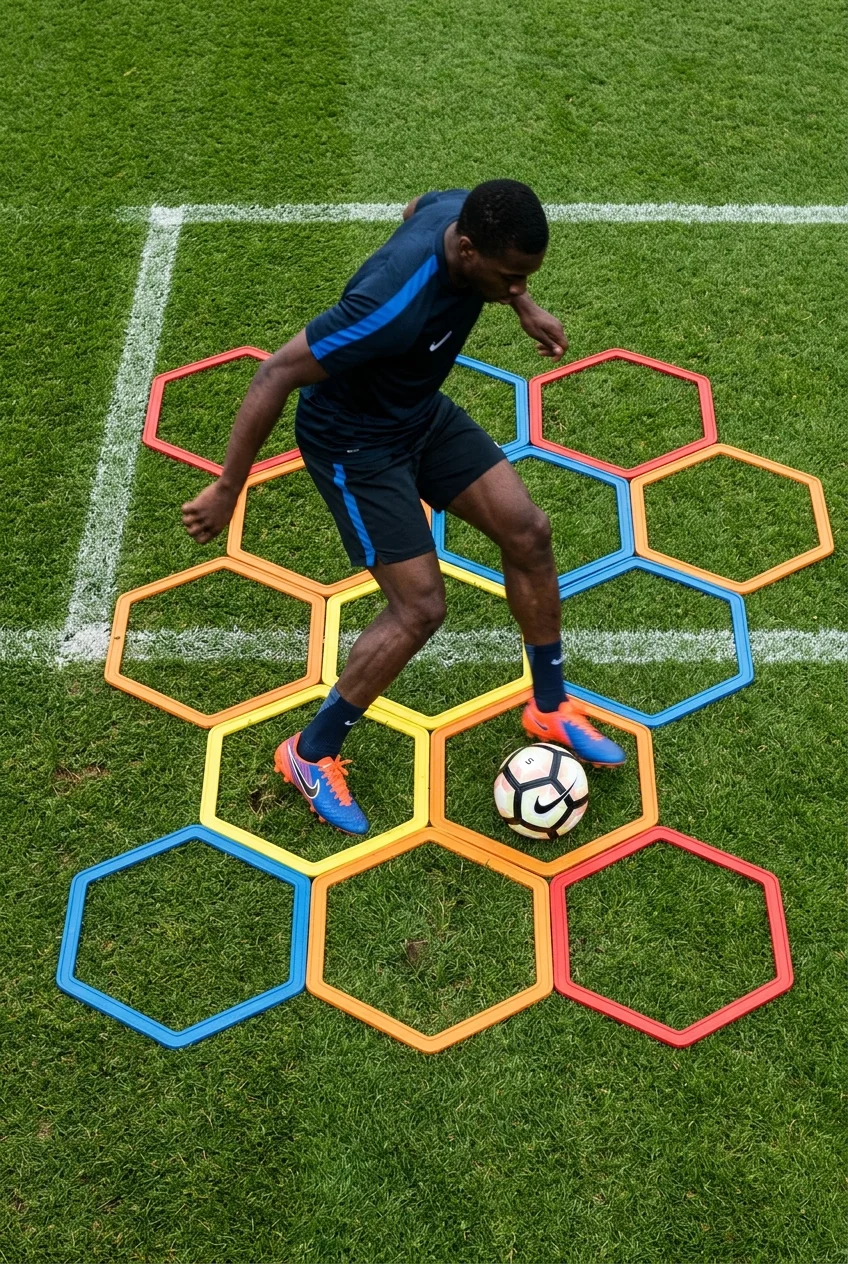
A major trend alert in modern training is moving away from linear cone drills and embracing multi-directional movement for the off-foot. By utilizing a Hexagonal Speed Ring Setup, you force your weak foot to make split-second adjustments in 360 degrees. This maximalist approach demands high energy but yields incredibly fast results for lateral quickness.
Position six rings in a honeycomb pattern and sprint through them, using only your weaker foot to maneuver the ball. The key is to keep your touches extremely close to your body while snapping your hips to change direction. You want to push the ball just far enough to reach the next ring without losing your stride or rhythm.
This intense shuttle exercise trains your brain to trust the weaker side during chaotic game situations. Keep the intensity high and the touches sharp to rapidly build functional match agility.
8. Resistance Band Ankle Lock Dribble Slalom: Enforcing Solid Instep Mechanics
⏱️ Difficulty: Advanced | 🎯 Best For: Preventing ankle collapse and reinforcing locked ankle joint | ⚡ Key Focus: Ankle stability & ball control under tension
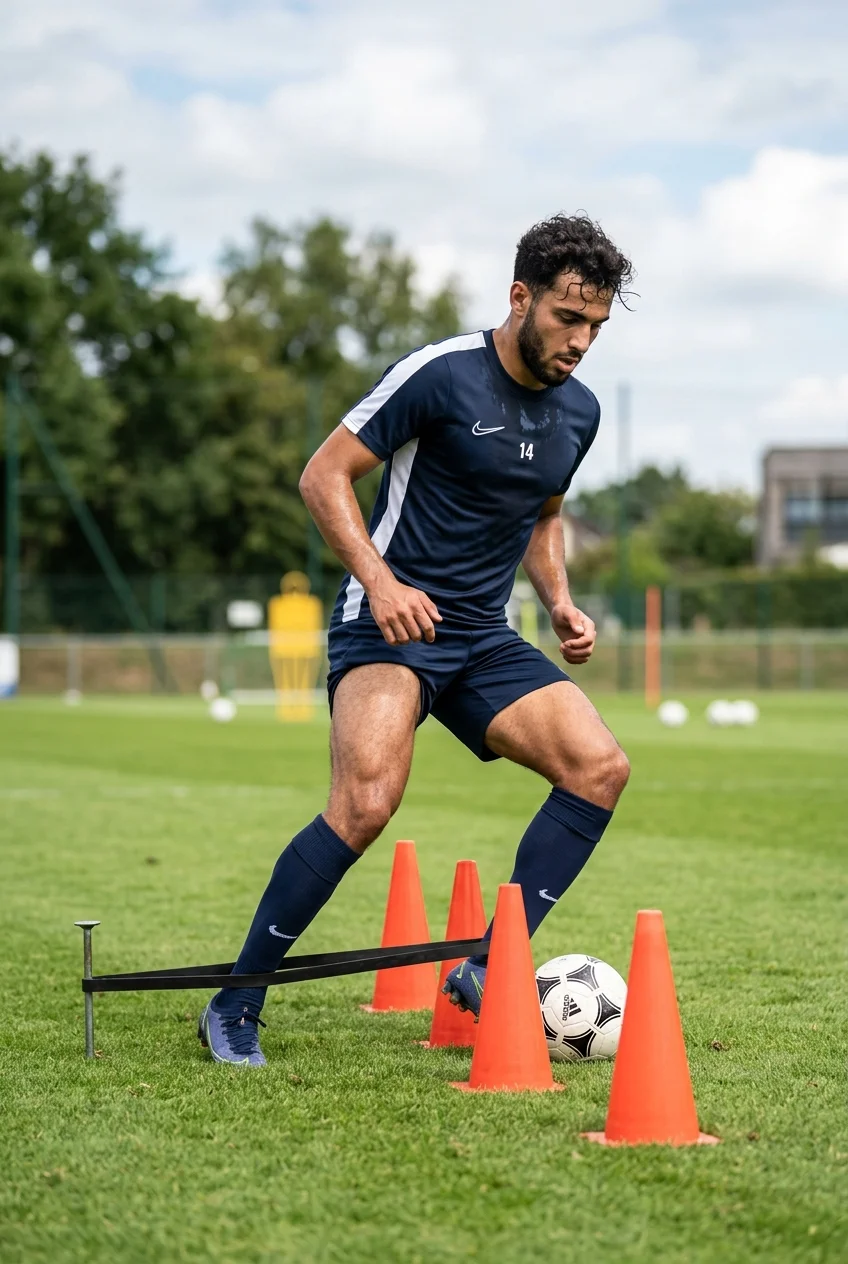
An expert pick for overcoming an Unlocked Non-Dominant Ankle Joint is adding physical tension to your dribbling routine. By attaching a DIY Resistance Band Ankle Lock Harness between your feet, you actively fight the band’s pull, forcing your ankle to remain rigid. This resistance prevents the floppy ankle syndrome that ruins weak-foot passes.
Set up a tight slalom course and navigate through it, keeping your ankle completely locked on every touch. The band will naturally try to pull your foot inward, so you must consciously engage your shin and ankle muscles to push the ball outward. This drill is physically demanding but creates the muscle memory required for stiff, reliable contact.
Once you remove the band, your weak foot will feel surprisingly stable and powerful. Make this a regular part of your training to permanently fix sloppy passing mechanics.
9. The Weighted Ball Wall-Volley: Developing Explosive Power in the Non-Dominant Leg
⏱️ Difficulty: Advanced | 🎯 Best For: Striking power, hip drive, and leg muscle activation | ⚡ Key Focus: Explosive force transfer
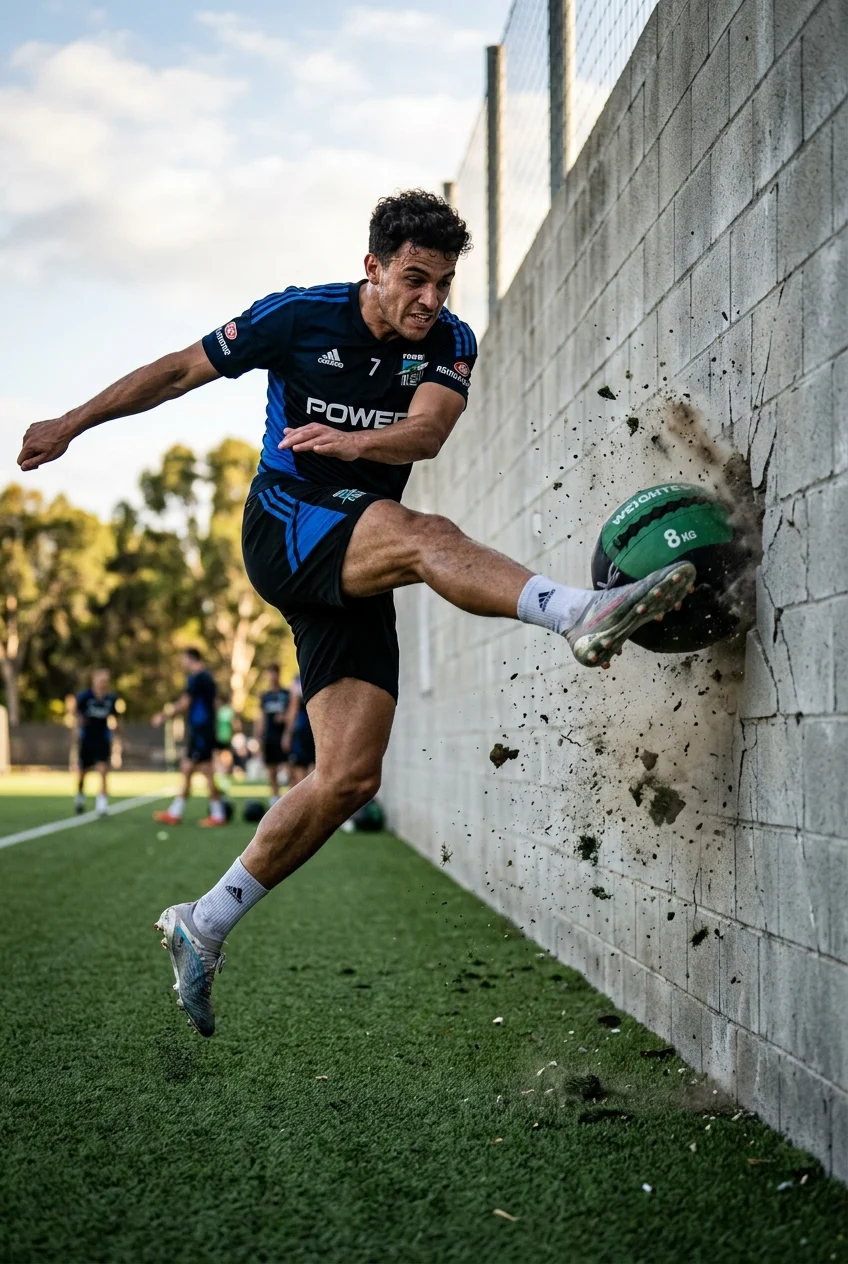
If you need a massive time-saver for building weak-foot strength, incorporating Weighted Training Ball Touches into a wall-volley routine is unmatched. The extra mass forces your non-dominant leg to recruit more muscle fibers, instantly highlighting any flaws in your swinging mechanics. Professional setups often use this exact method to fast-track raw striking power.
Stand about five yards from a solid brick wall and strike the weighted ball firmly with your laces, catching the rebound cleanly. Focus entirely on the follow-through and ensuring your hip drives straight through the center of the ball. Because the ball is heavier, a weak or off-center strike will fall flat, providing immediate physical feedback.
This heavy repetition not only strengthens your hip flexors but also trains your brain to strike with maximum intent. You’ll notice a massive increase in your standard shooting power after just a few sessions.
10. Reaction Light Shuttle & Weak-Foot Finish: Simulating Match-Speed Decision Making
⏱️ Difficulty: Advanced | 🎯 Best For: Match-realistic decision speed and reactive footwork | ⚡ Key Focus: Cognitive processing & game speed
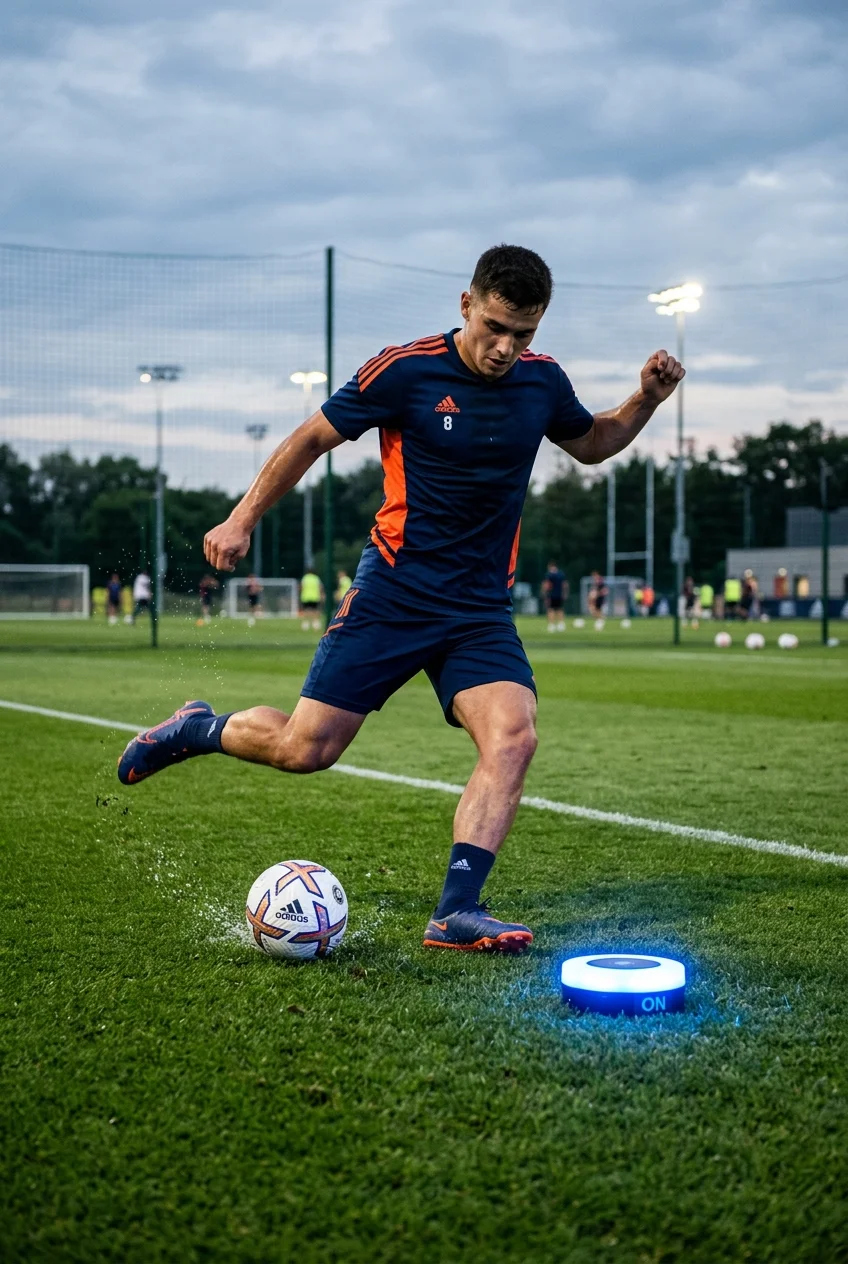
A true hidden gem in elite development is forcing the weaker foot to react under severe time constraints and cognitive load. By integrating A-Champs ROX Pro Cognitive Lights into a finishing circuit, you have to sprint to the illuminated target and immediately shoot. This professional-grade drill bridges the gap between static technique and chaotic game environments.
Place the lights around the edge of the penalty box and have a partner feed you passes as soon as a light flashes. Your goal is to take a prep touch and fire a shot with your weak foot before the light turns off. The pressure prevents you from overthinking your mechanics, forcing you to rely on pure instinct and muscle memory.
Training at this cognitive speed ensures your off-foot won’t hesitate when a real scoring opportunity arises. Consistently challenging your reaction time is the ultimate step to achieving complete two-footed mastery.
Frequently Asked Questions
How long does it take to develop a strong weak foot in soccer?
Consistent daily practice with rhythmic toe-tap alternation mastery can yield noticeable improvements in 4 to 6 weeks. High-repetition micro-touches are more effective than occasional long sessions, as they rebuild your neuromuscular coordination steadily over time. For more insights on player training, see our guide on soccer vs football technical demands.
Why does my non-dominant foot lack shooting power?
A lack of power usually stems from floating plant foot instability and poor balance on your dominant standing leg. If your plant foot isn’t grounded properly, or if you have an unlocked non-dominant ankle joint upon impact, you lose the explosive force transfer required for a strong shot.
Do I need special equipment to practice these weak foot drills at home?
While gear like a SKLZ Quickster Rebounder Wall or Pro Training Agility Cones can help, they aren’t strictly necessary. A simple brick wall for rebound passes and a Select Numero 10 Match Soccer Ball are plenty to start mastering your off-foot touches.
What is the biggest mistake players make when passing with their weak foot?
The most common error is an unlocked non-dominant ankle joint, which causes the foot to flop upon impact and ruins pass accuracy. You must flex your toes up and lock the ankle stiff to ensure a crisp, clean strike through the center of the ball.
Should I practice weak foot soccer drills before or after team training?
It is best to perform high-rep, low-impact weak foot exercises before training as part of your dynamic warm-up to activate your central nervous system. Saving intense, heavy-load drills like weighted training ball touches for after practice prevents fatigue from ruining your technique.
Get our latest guides, news, and insights highlighted in your Google Search & AI Overviews.