✨ This article was AI edited. Editorial responsibility: StMichaelsSoccer.com.
The 14-Day Solo Wall Passing Routine is your ultimate blueprint for elite ball control. We’ve structured a progressive, daily regimen that uses just a wall and a ball to completely transform your first touch. From ground rebounds to complex turns, here are the exact drills you need to execute to accelerate your development.
| Day | Drill Name | 🎯 Primary Focus | 📊 Difficulty |
|---|---|---|---|
| Days 1–2 | The 100-Rep Ground Rebound Foundation | Inside-foot cushioning & ground pass precision | Beginner |
| Days 3–4 | Locked Ankle One-Touch Rapid Fire | Ankle locking & quick recoil rhythm | Beginner |
| Days 5–6 | Two-Touch Directional Wall Turns | Body opening & directional first touch | Intermediate |
| Day 7 | Weak-Foot Rebound Isolation Protocol | Non-dominant leg muscle memory | Intermediate |
| Days 8–9 | Aerial Cushion & Half-Volley Rebounds | Mid-air ball absorption | Intermediate |
| Day 14 | 500-Pass Continuous Rebound Circuit | 14-Day mastery test & endurance | Advanced |
Contents
- 1. The 100-Rep Ground Rebound Foundation (Days 1–2: Inside-Foot Control)
- 2. Locked Ankle One-Touch Rapid Fire (Days 3–4: Passing Tempo & Rhythm)
- 3. Two-Touch Directional Wall Turns (Days 5–6: Opening Body Angle)
- 4. Weak-Foot Rebound Isolation Protocol (Day 7: Non-Dominant Balance)
- 5. Aerial Cushion & Half-Volley Wall Rebounds (Days 8–9: Controlling High Balls)
- 6. Over-the-Shoulder Blind Scanning Wall Pass (Day 10: Spatial Awareness)
- 7. Agility Cone Grid Wall Shuttle (Day 11: Dynamic Footwork & Passing)
- 8. Long-Range Power Passing against Concrete Rebounders (Day 12: Weight of Pass)
- 9. Wall Rebounder Board Speed Challenge (Day 13: High-Intensity Touch Speed)
- 10. The 14-Day Final Benchmark: 500-Pass Continuous Rebound Circuit (Day 14)
- Frequently Asked Questions
- How do I improve my wall passing touch at home?
- What is the biggest mistake when doing solo passing drills?
- How many wall passes should I do a day to see results?
- What equipment is best for a solo passing routine?
- Should I practice wall rebounds with my weak foot?
1. The 100-Rep Ground Rebound Foundation (Days 1–2: Inside-Foot Control)
⏱️ Daily Rep Target: 100 Reps (50 per foot) | 🎯 Primary Focus: Inside-foot cushioning & ground pass precision | 📊 Difficulty Level: Beginner
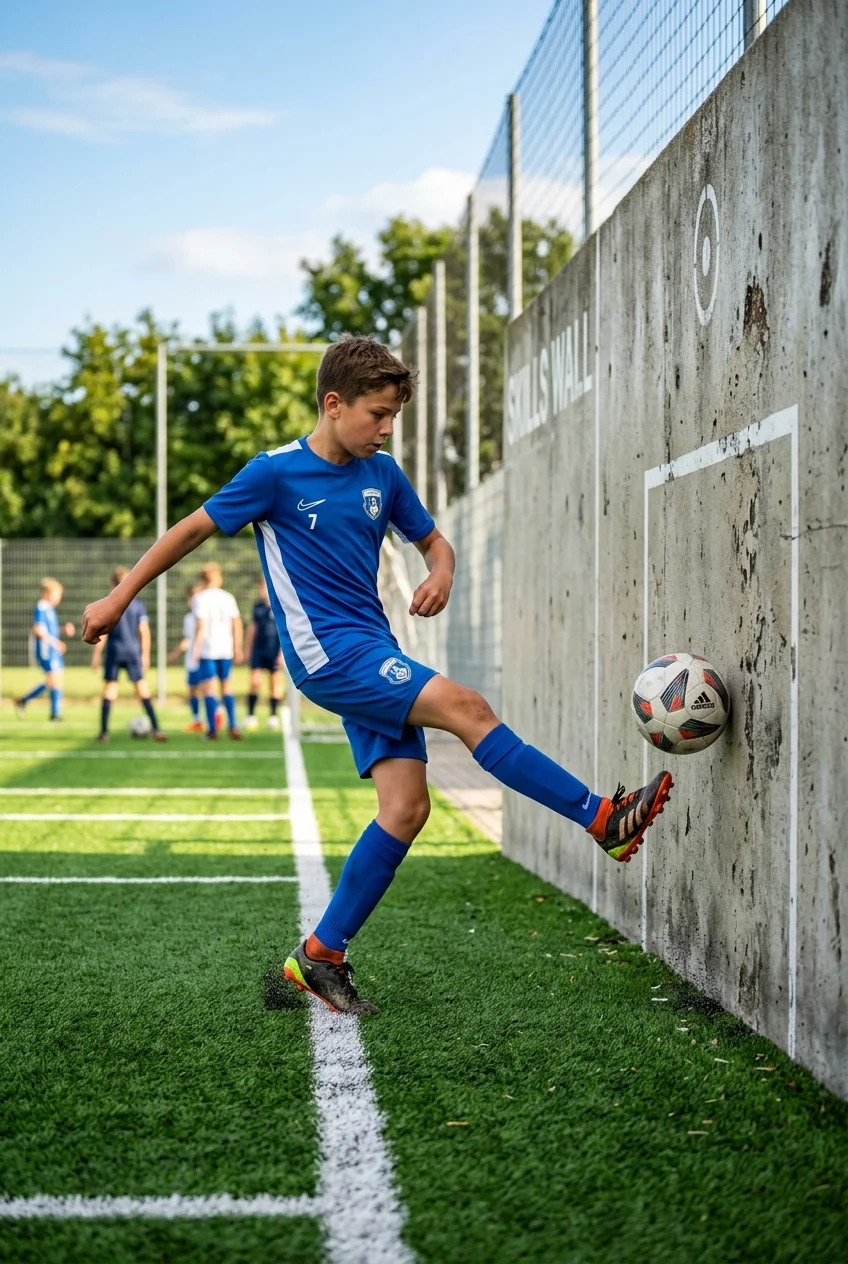
Starting your soccer training journey doesn’t have to be intimidating; in fact, this highly beginner friendly drill provides the perfect foundation for ball mastery. By repeatedly striking the ball against a reliable surface, you will quickly develop a feel for the proper mechanics needed for an elite first touch. You’ll want to focus on executing a precise Cushioning Soft First Touch (Toe Up, Heel Down) to properly absorb the ball’s momentum upon return. This ensures the ball stays close to your body and sets you up perfectly for your next movement.
You don’t need fancy equipment to get started right away. Finding a standard Flat Brick or Concrete Rebound Wall in your neighborhood or at a local park is often the best choice for predictable, consistent returns. Stand about five yards away and strike the ball firmly with the inside of your foot, aiming for a consistent spot on the wall to test your accuracy. When the ball returns, actively meet it rather than waiting passively, making sure your hips are square and your weight is balanced over the ball.
This approach is inherently minimalist, proving that you can make massive technical leaps without expensive gear or a complex setup. Keep your reps deliberate, stay focused on clean technique over raw power, and you will notice a transformed first touch by day three.
2. Locked Ankle One-Touch Rapid Fire (Days 3–4: Passing Tempo & Rhythm)
⏱️ Daily Rep Target: 150 Reps (1-Touch) | 🎯 Primary Focus: Ankle locking & quick recoil rhythm | 📊 Difficulty Level: Beginner
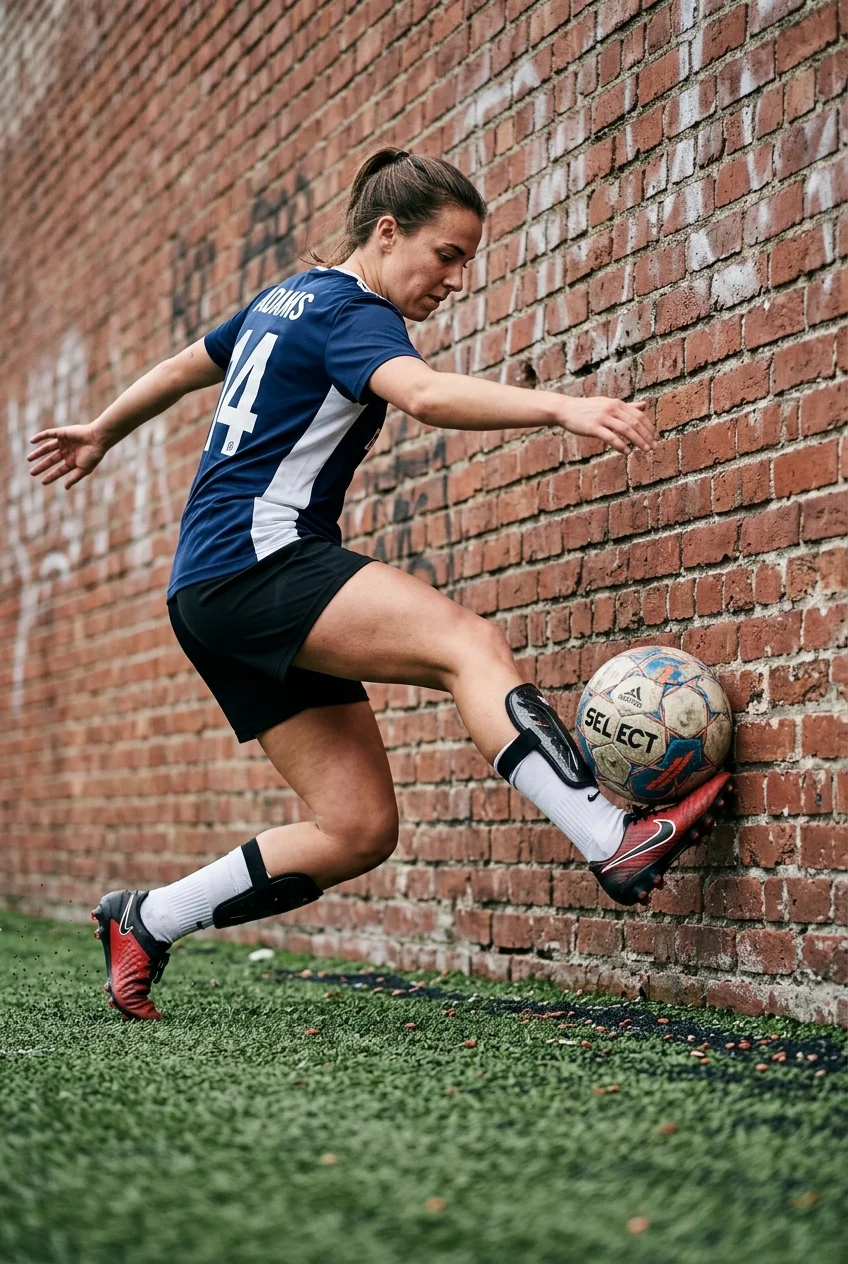
If you’re looking for a serious time-saver that maximizes touches without requiring a full squad, this rapid-fire drill is your ultimate solution. The goal here is to establish a blistering tempo, eliminating the cushion touch and forcing your brain to process the rebound at game speed. A critical element of success is maintaining a firm Locked Ankle Plant Technique on every single strike, ensuring maximum power transfer and accuracy. Understanding the art of playmaking begins with this fundamental ability to distribute the ball instantly and accurately under pressure.
A common mistake among developing players is striking the ball with a Floppy Ankle / Unlocked Foot, which leads to weak, wildly inaccurate passes that break down attacking plays. To counter this, actively flex your toes up toward your shin as you make contact through the center of the ball. You can also incorporate the Tekkerz Soccer Rebounder Board if you have one, as its highly responsive surface will challenge your reaction time even further. Keep your knees slightly bent and stay on the balls of your feet to facilitate immediate readjustment between rapid passes.
Top academy coaches consider this high-rhythm drill a highly professional standard for evaluating a player’s technical sharpness and passing cadence. Commit to this one-touch intensity, and you will dramatically increase your speed of play during actual match scenarios.
3. Two-Touch Directional Wall Turns (Days 5–6: Opening Body Angle)
⏱️ Daily Rep Target: 120 Reps (60 left/right turns) | 🎯 Primary Focus: Body opening & directional first touch | 📊 Difficulty Level: Intermediate
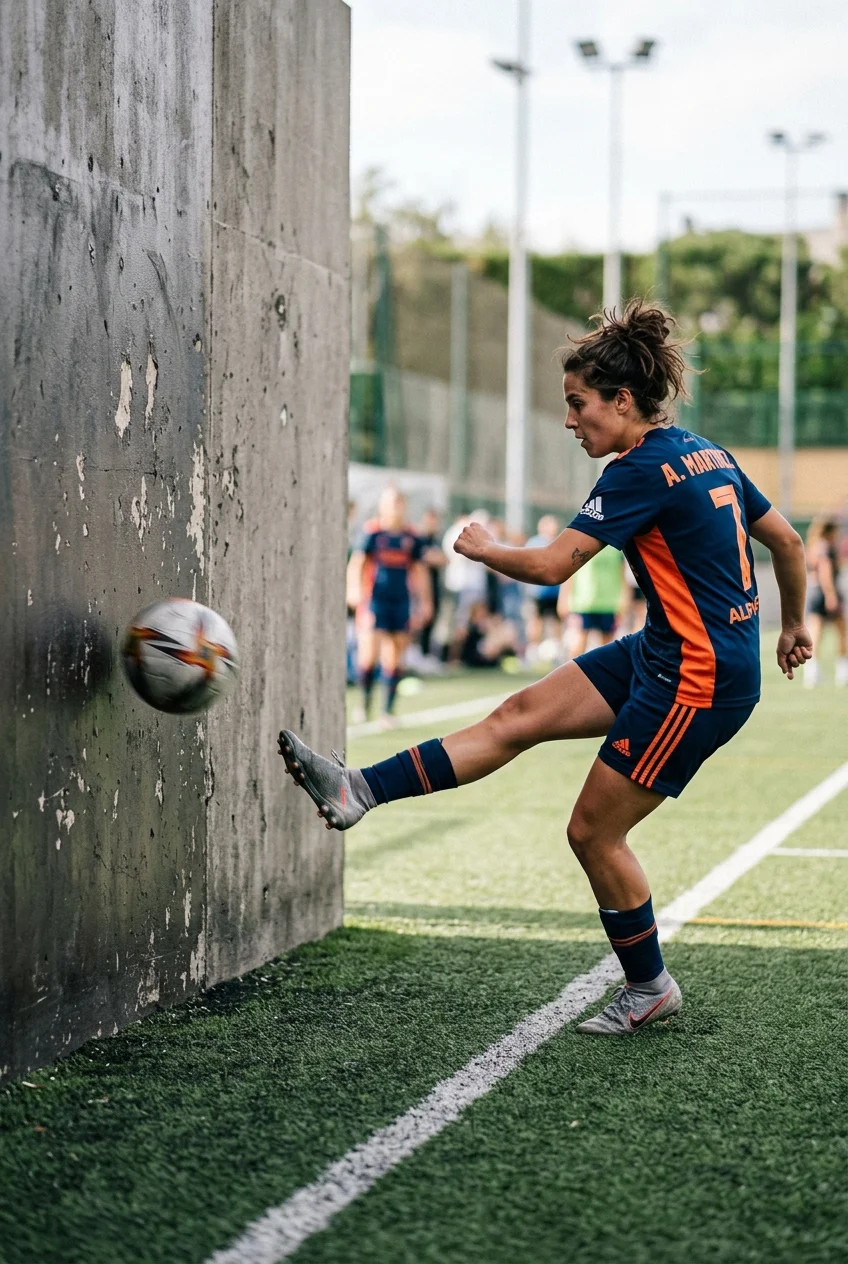
Coaches unanimously agree that this drill is an expert pick for players looking to transition from static passing to fluid, game-realistic movement. The objective is to receive the rebound across your body, taking the ball into space rather than stopping it dead at your feet. Executing a flawless Two-Touch Directional Wall Pass requires you to open your hips before the ball arrives, allowing your back foot to smoothly guide the ball into a new attacking lane. This simple yet profound mechanic is what separates average players from elite midfielders who effortlessly evade pressure.
One of the worst habits you can develop in solo training is Standing Still / Flat-Footed Waiting for Rebound, as it completely negates the dynamic nature of actual matches. Instead, pass the ball firmly, immediately check your shoulder, and adjust your feet with quick, chopping steps to meet the returning ball at an angle. To mix things up, you can introduce a Kwik Goal Multi-Rebounder to create slightly unpredictable return angles, forcing you to adjust your body shape at the last second. Focus on making your first touch act as the first step of your next sprint, keeping the ball fluidly in motion.
Creating your own training environment with a DIY mindset allows you to simulate high-pressure game situations right in your backyard. Master the art of the directional touch, and you’ll find yourself gliding past defenders with a single, decisive movement.
4. Weak-Foot Rebound Isolation Protocol (Day 7: Non-Dominant Balance)
⏱️ Daily Rep Target: 200 Reps (Weak-foot only) | 🎯 Primary Focus: Non-dominant leg muscle memory & weight transfer | 📊 Difficulty Level: Intermediate
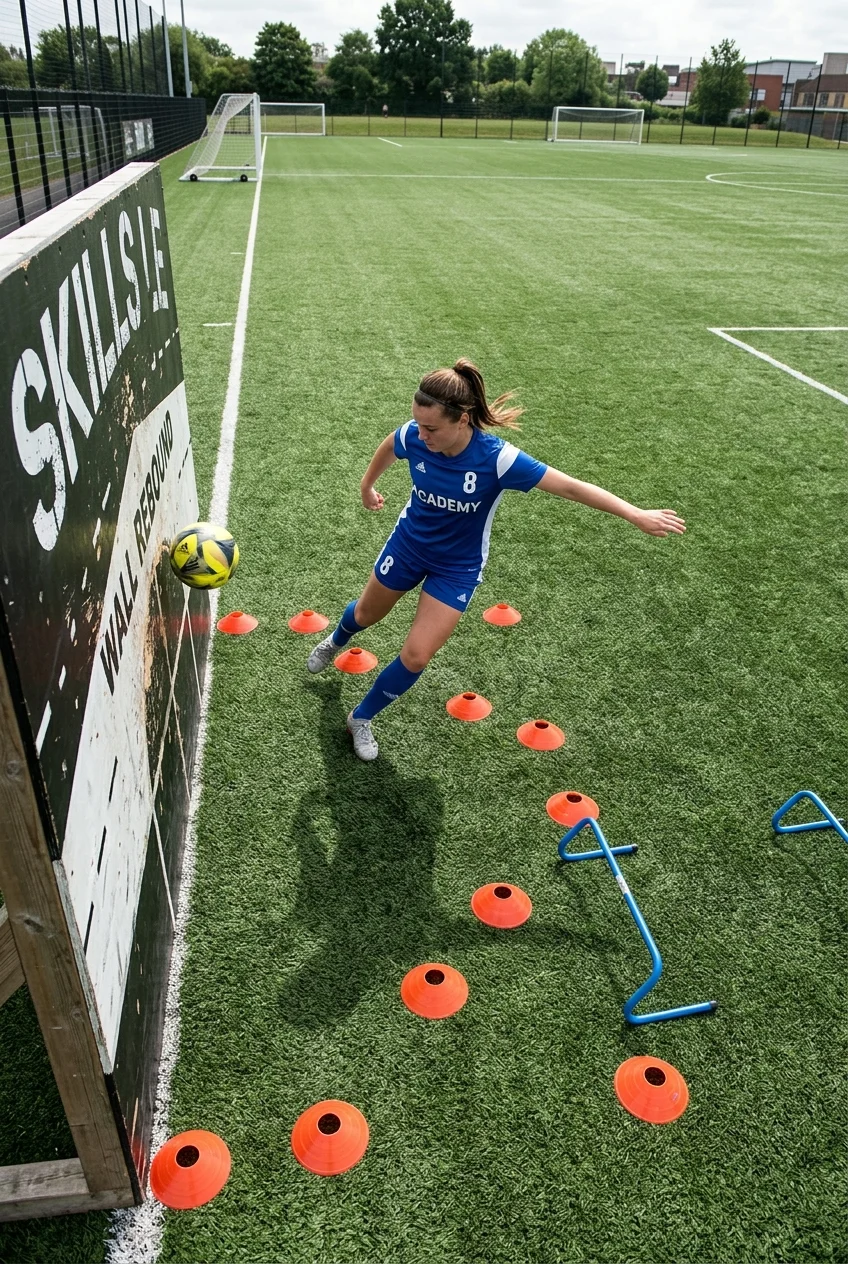
Developing genuine two-footed ability is a hidden gem of a skill that instantly makes any player significantly more dangerous and unpredictable on the pitch. This dedicated protocol forces you to completely abandon your dominant side, breaking down the awkwardness and rewiring your neurological pathways. By focusing exclusively on Weak-Foot Non-Dominant Isolation Rebounds, you build vital muscle memory that translates to seamless, confident passes during high-stakes moments. You’ll quickly discover that the real challenge isn’t just the strike itself, but properly balancing your weight on your dominant plant leg.
To ensure you’re getting true match-quality feedback, it is highly recommended to use a premium, responsive ball like the Nike Flight Match Ball during this intensive session. Pay close attention to your non-kicking arm, using it for counterbalance as you swing your weak foot through the ball’s equator. Start close to the wall to dial in your technique and prevent frustration, then gradually step back to increase the power and distance requirements. Consistent, deliberate repetition is the only proven method for eliminating the natural mechanical clunkiness of your non-dominant side.
Embracing a purely minimalist approach here means stripping away all distractions and focusing entirely on the biomechanics of your weaker foot. Push through the initial discomfort, and you will unlock a new dimension of tactical versatility on match day.
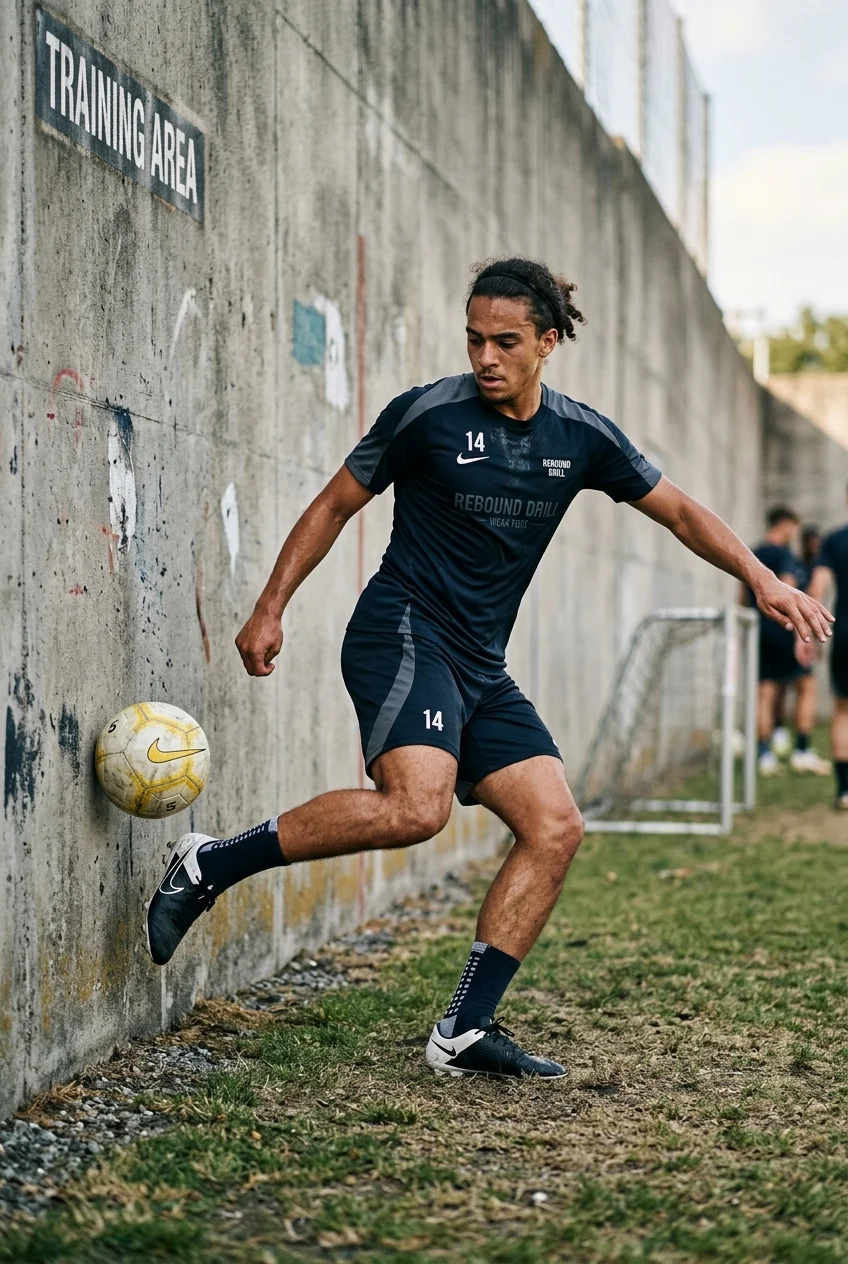
5. Aerial Cushion & Half-Volley Wall Rebounds (Days 8–9: Controlling High Balls)
⏱️ Daily Rep Target: 100 Volley Reps | 🎯 Primary Focus: Mid-air ball absorption & thigh/laces control | 📊 Difficulty Level: Intermediate
There is a massive trend alert in modern soccer training focusing heavily on aerial supremacy and the ability to pluck long balls cleanly out of the sky. This drill shifts your focus from the ground to the air, challenging your spatial awareness and your ability to soften the ball’s trajectory upon impact. Mastering the Wall-Rebound Volley & Half-Volley demands excellent timing, requiring you to read the flight of the ball and adjust your footing before making contact. Whether using your thigh, chest, or laces, the goal is to kill the ball’s momentum so it drops perfectly into your playing radius.
If you don’t have access to a tall brick wall, utilizing an Open Goaaal Soccer Trainer & Rebounder Net can safely simulate these high, looping returns without losing your ball over a fence. Practice serving the ball out of your hands against the surface, then react quickly to cushion the rebound before it hits the ground. Focus on withdrawing your receiving surface slightly at the exact moment of impact to act as a shock absorber. This subtle withdrawal technique prevents the ball from bouncing wildly off your shin or chest and directly to an opponent.
Executing clean aerial control is a hallmark of a truly professional skill set, allowing you to bypass defensive lines and immediately launch counterattacks. Dedicate yourself to this mid-air mastery, and you’ll dictate the tempo of the game regardless of how the ball arrives.
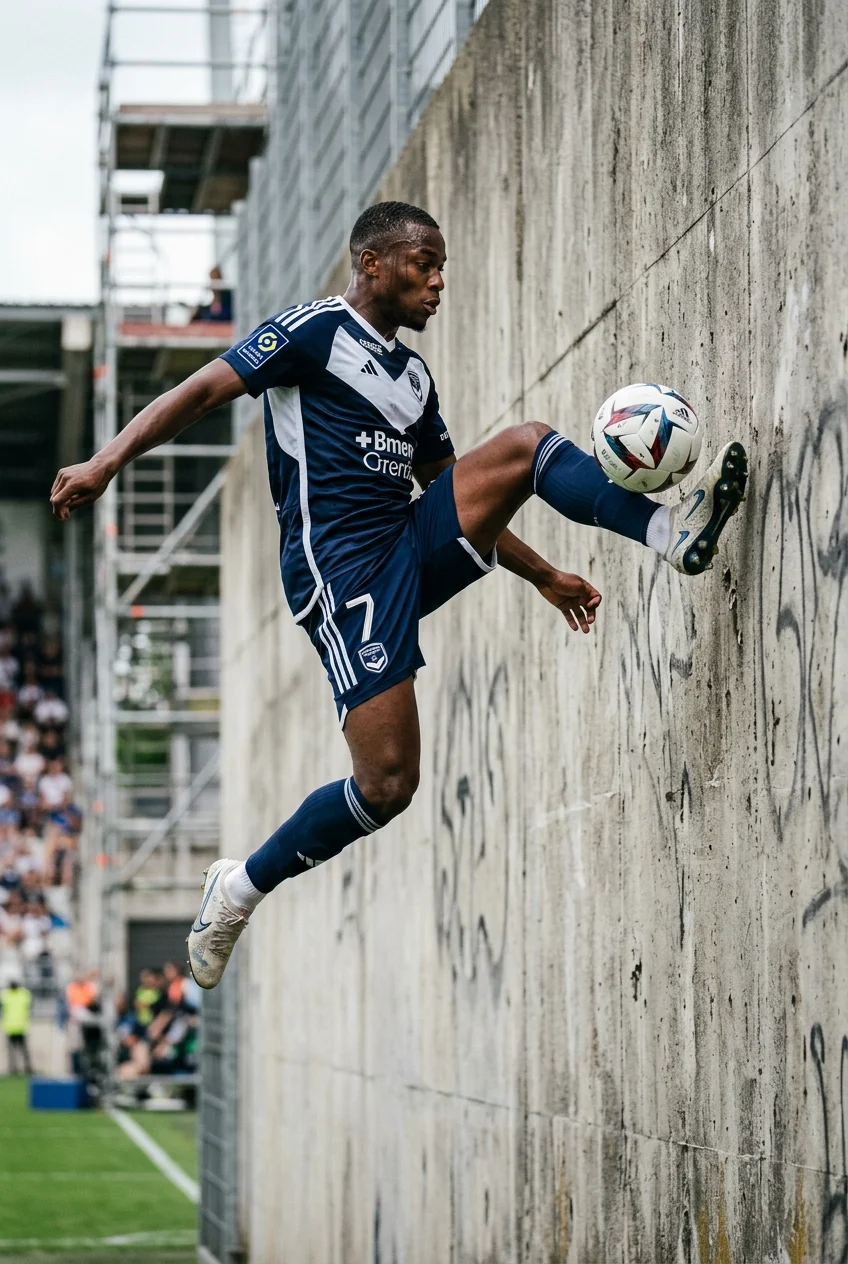
6. Over-the-Shoulder Blind Scanning Wall Pass (Day 10: Spatial Awareness)
⏱️ Daily Rep Target: 80 Reps with Shoulder Check | 🎯 Primary Focus: Blind-turn vision & head-turning scan prior to touch | 📊 Difficulty Level: Advanced
Top coaches consistently highlight the Blind-Turn Shoulder Check Before Wall Touch as an expert pick for elevating spatial awareness on the pitch. Elite players never receive a pass without knowing exactly what is happening behind them, and this drill ingrains that crucial habit permanently.
To execute this properly, strike a firm pass and immediately glance over either shoulder before the ball returns. Utilizing a high-quality Kwik Goal Multi-Rebounder ensures the return trajectory remains predictable enough for you to focus entirely on your scanning technique.
Replicating professional match scenarios requires you to gather data quickly and make snap decisions under extreme physical constraints. Consistently practicing this blind scanning movement will dramatically reduce turnovers and increase your overall playmaking confidence.
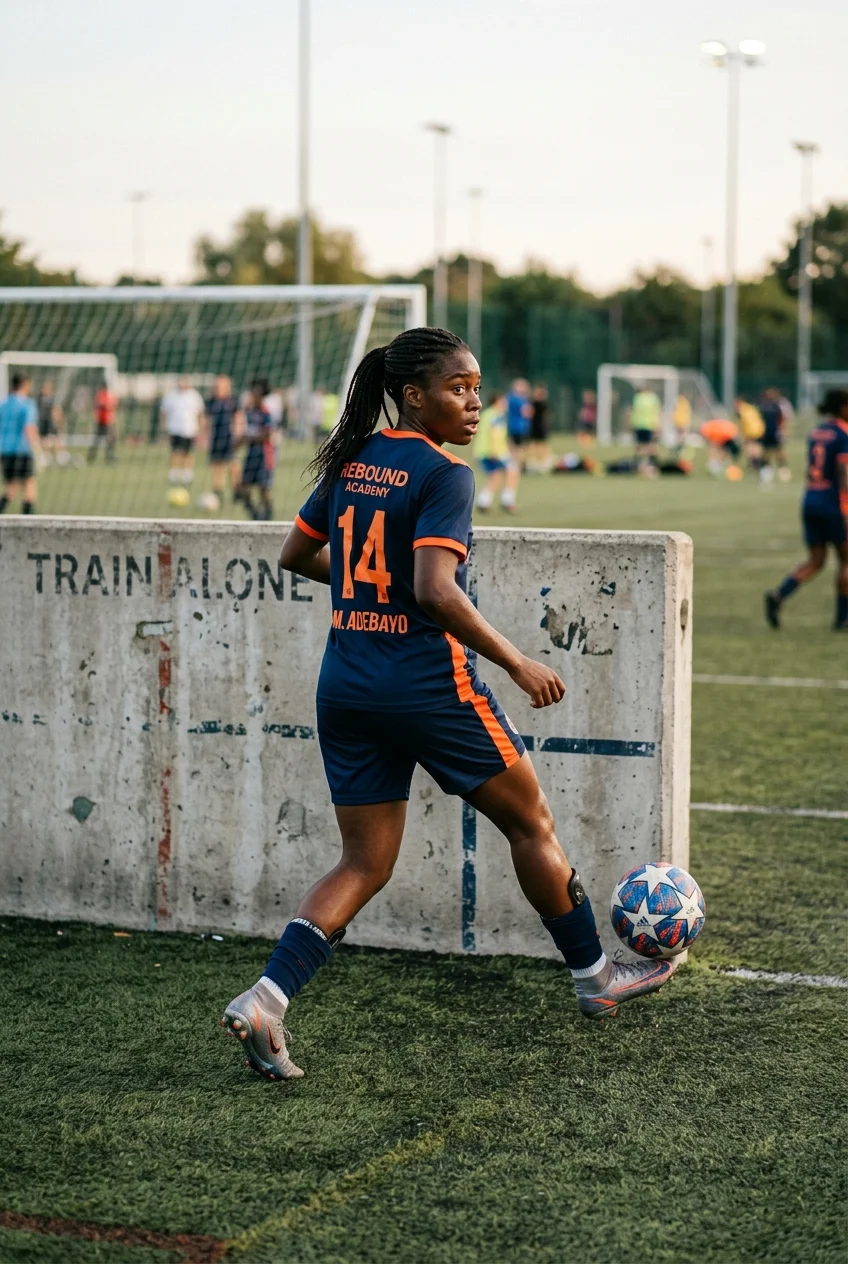
7. Agility Cone Grid Wall Shuttle (Day 11: Dynamic Footwork & Passing)
⏱️ Daily Rep Target: 10 Cone Grid Sets (30s sprint/pass) | 🎯 Primary Focus: Lateral footwork speed & short-rebound accuracy | 📊 Difficulty Level: Intermediate
Integrating an Agility Cones Grid Set into your routine is a fantastic time-saver for simultaneously building cardiovascular fitness and technical sharpness. This dynamic setup forces you to move laterally with urgency between passes, mimicking the chaotic, non-stop motion of competitive gameplay.
Position your markers a few yards apart and sprint rapidly from side to side, delivering crisp passes as you reach the edges of your defined workspace. This continuous shuffling challenges your balance and ensures your feet are constantly active rather than planted heavily into the turf.
Building your own DIY obstacle course empowers you to customize the spacing specifically for short-distance passing accuracy under elevated heart rates. Finish strong by maintaining perfect technical form even as your legs grow heavy during the final sets.
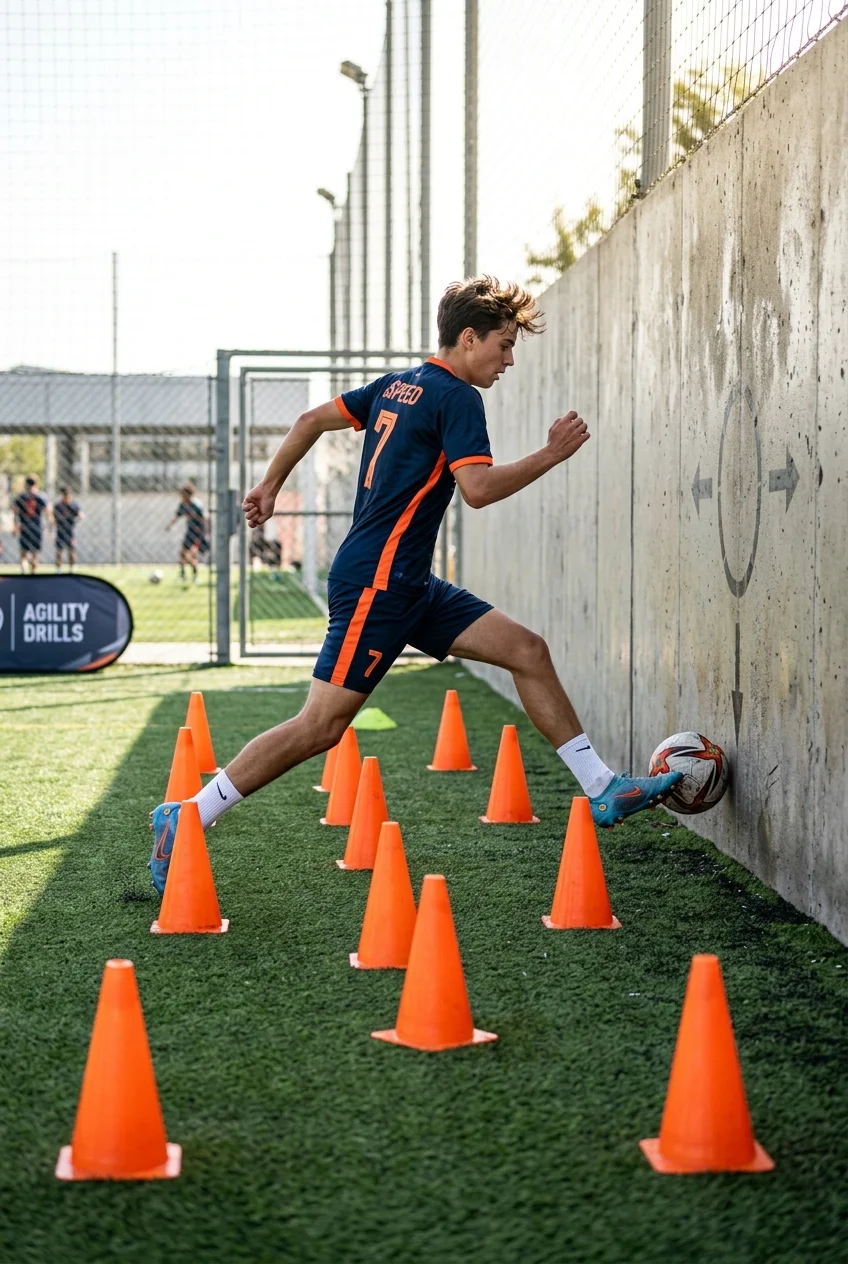
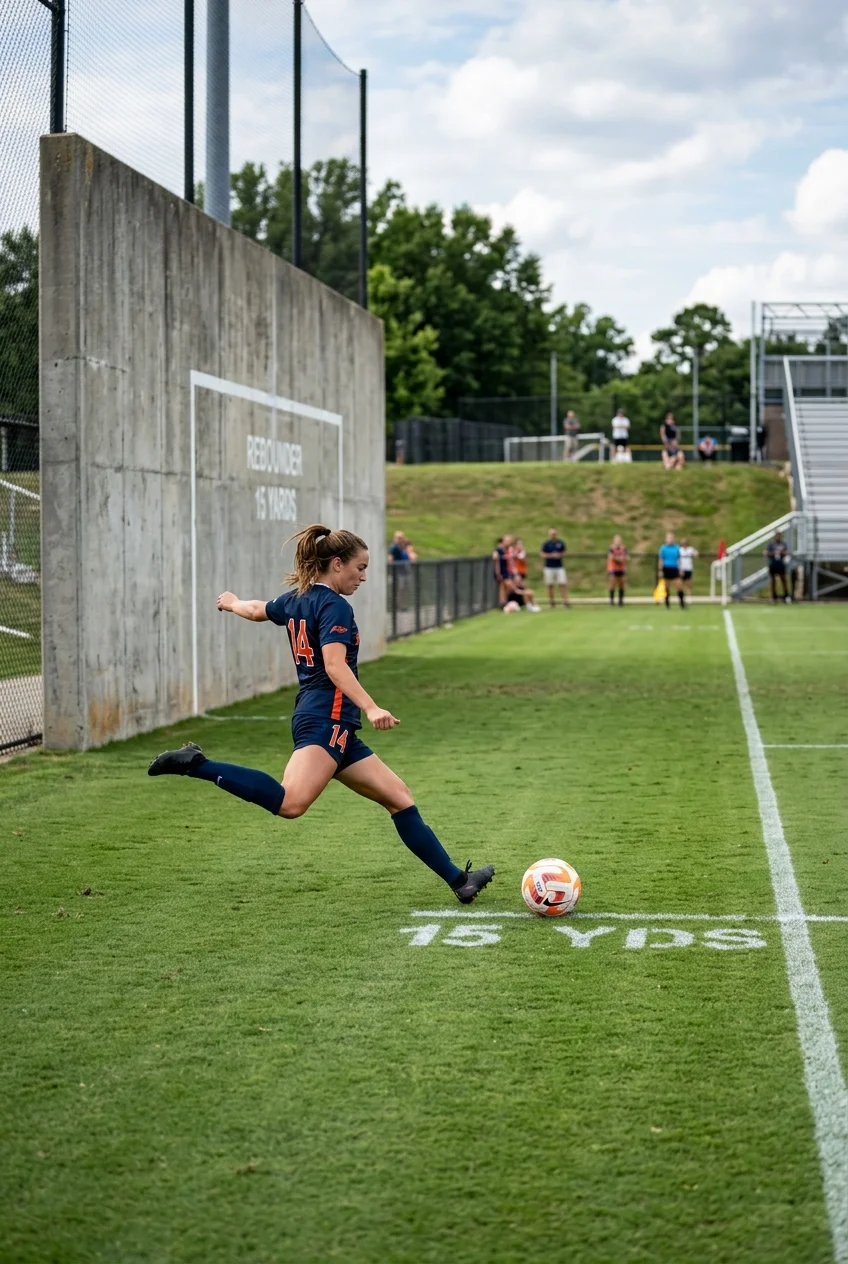
8. Long-Range Power Passing against Concrete Rebounders (Day 12: Weight of Pass)
⏱️ Daily Rep Target: 60 Power Passes (10-15 yards) | 🎯 Primary Focus: Passing weight, driven ground technique & long reception | 📊 Difficulty Level: Intermediate
Finding a sturdy public wall serves as an incredible budget swap when you want to practice driving the ball with genuine power and aggressive intent. Striking from a distance of ten to fifteen yards demands a pristine connection through the center of the ball to keep the trajectory flat.
If you prefer a specialized setup, the SKLZ Quickster Soccer Trainer Rebounder provides excellent tension for returning heavy strikes back to your feet. Focus intensely on locking your ankle and following completely through the strike zone to generate maximum velocity on every single repetition.
Embracing a minimalist approach to training allows you to concentrate entirely on mastering the precise weight and pace of your long-range deliveries. Your ultimate takeaway should be learning how to perfectly cushion a fast-moving ball that is zipping back toward you from a distance.
9. Wall Rebounder Board Speed Challenge (Day 13: High-Intensity Touch Speed)
⏱️ Daily Rep Target: 3 Rounds x 60 Seconds Rapid Fire | 🎯 Primary Focus: High-frequency touch speed & reaction velocity | 📊 Difficulty Level: Advanced
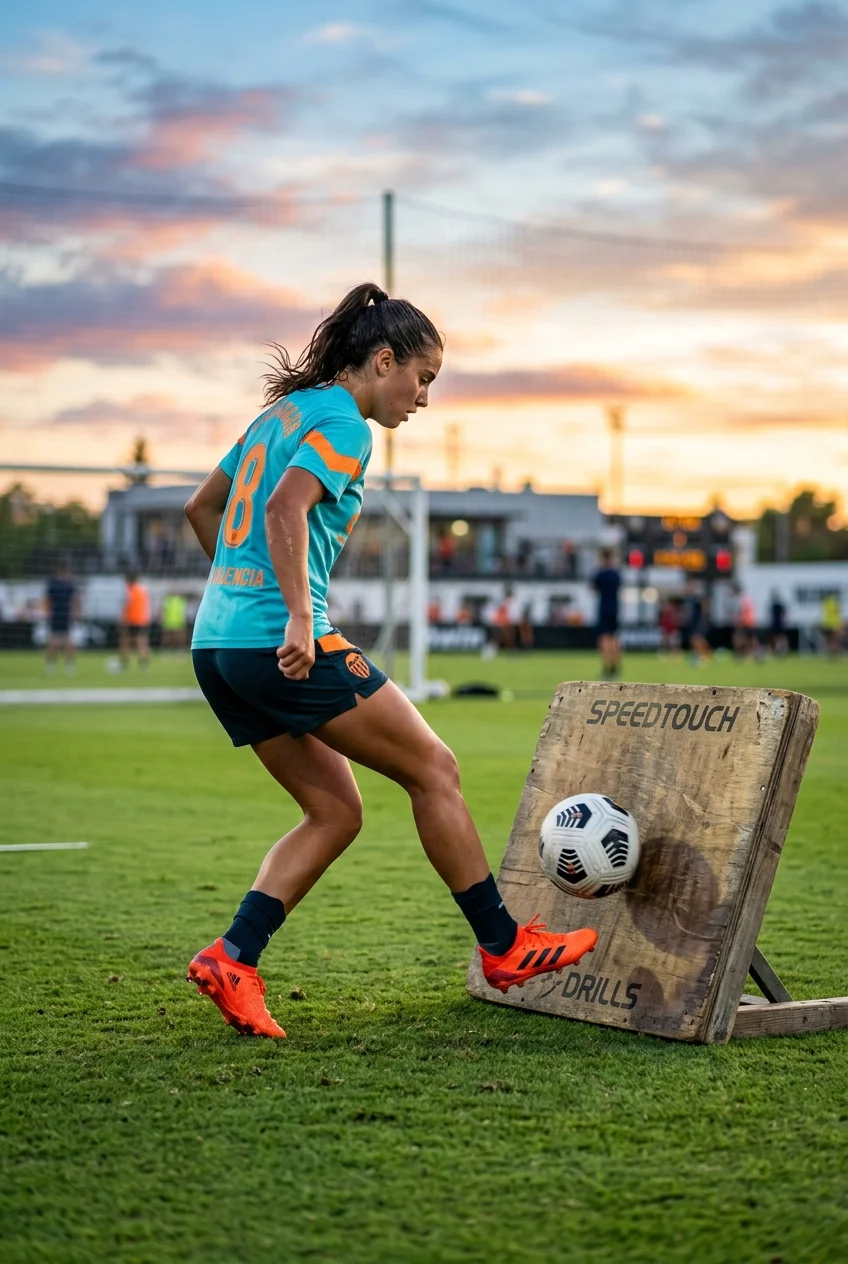
The recent surge in high-intensity technical drills makes this rapid-fire challenge a major trend alert for serious athletes looking to accelerate their reaction times. Operating at maximum velocity forces your brain to process sensory input faster, creating a seamless connection between your vision and your footwork.
Position yourself incredibly close to a Tekkerz Soccer Rebounder Board and blast continuous one-touch passes for sixty seconds straight without taking a single break. This chaotic barrage of touches demands absolute concentration, as even a millimeter of incorrect foot placement will send the ball flying out of control.
Pushing yourself to a maximalist state of physical exhaustion reveals exactly how your touch degrades under severe pressure and immense fatigue. Strive to beat your total repetition count in each successive round, letting the burning sensation in your legs drive you toward measurable improvement.
10. The 14-Day Final Benchmark: 500-Pass Continuous Rebound Circuit (Day 14)
⏱️ Daily Rep Target: 500 Total Passes (Full Circuit) | 🎯 Primary Focus: 14-Day mastery test, endurance & zero-blunder touch | 📊 Difficulty Level: Advanced
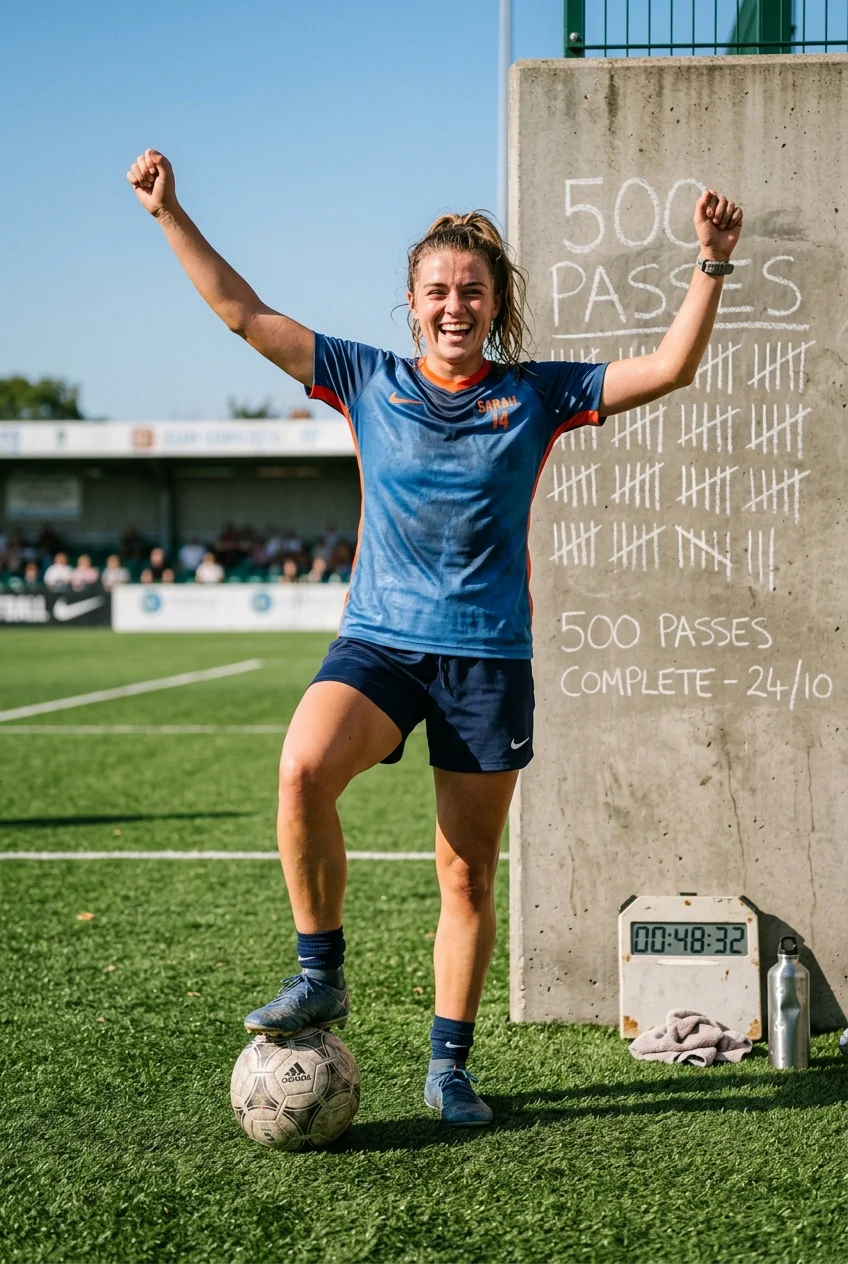
Reaching the final day of this protocol calls for an expert pick challenge that truly tests the limits of your newfound technical endurance. This grueling milestone requires you to complete a continuous sequence of five hundred passes without losing your focus or sacrificing your fundamental mechanics.
Every repetition during this lengthy circuit must exhibit the crispness and urgency you would demonstrate in the opening minutes of a crucial cup final. If you want to understand what elite volume looks like, exploring professional footballers training routines provides fantastic insight into these demanding daily requirements.
True professional development hinges on your ability to maintain a zero-blunder touch rate even when your muscles are screaming for relief. Celebrate completing this exhausting benchmark, and seamlessly integrate these refined receiving skills into your regular team training sessions moving forward.
Frequently Asked Questions
How do I improve my wall passing touch at home?
To improve your touch, implement a daily wall passing routine using a flat brick or concrete rebound wall. Focus heavily on a cushioning soft first touch by keeping your toe up and heel down. This absorbs the ball’s momentum cleanly instead of letting it bounce away.
What is the biggest mistake when doing solo passing drills?
The most common error is having a floppy ankle or unlocked foot when striking the ball. To generate crisp, accurate passes against a rebounder, you must use a locked ankle plant technique. This ensures maximum power transfer and prevents sloppy, inaccurate passes.
How many wall passes should I do a day to see results?
For noticeable improvement, aim for 100 to 150 passes per day as part of your solo wall passing routine. As you advance, you can work up to a 500-pass continuous rebound circuit. Consistency over 14 days will build essential muscle memory and rapid reaction times.
What equipment is best for a solo passing routine?
While a basic concrete wall works perfectly, many players prefer dedicated rebound nets for varied returns. Options like the SKLZ Quickster Soccer Trainer Rebounder or the Kwik Goal Multi-Rebounder are excellent for practicing volleys, half-volleys, and aerial touches at home.
Should I practice wall rebounds with my weak foot?
Yes, weak-foot non-dominant isolation rebounds are crucial for any serious player. Dedicating specific days to exclusively using your weaker foot improves balance and makes you a versatile two-footed threat on the pitch, preventing you from being too predictable to defenders.
Get our latest guides, news, and insights highlighted in your Google Search & AI Overviews.