Football Players Height represents a core tactical principle, athletic training pillar, and competitive performance standard in modern soccer. Mastering the underlying execution mechanics, positional discipline, and strategic game management enables players, coaches, and youth athletes to optimize on-pitch decision making, technical proficiency, and sustained athletic success.
Average soccer player height by position year rankings reveals fascinating trends about how the physical demands of the beautiful game have evolved. While soccer is a sport for all sizes, specific roles on the pitch often favor certain physical attributes.
Contents
- Quick Answer
- The Giants of the Pitch: Goalkeepers and Defenders
- Keep reading in this silo
- Agility in the Midfield: Why Shorter Players Thrive
- The Evolution of Strikers
- Average Height by Position
- Tactical Breakdown and Execution Methodology: Football Players Height
- Comparative Strategic Matrix: Formations, Roles & Performance Benchmarks
- Frequently Asked Questions & Coaching Best Practices (Football Players Height)
Quick Answer
The average professional soccer player is roughly 5’11” (181 cm) tall. However, heights vary significantly by position: Goalkeepers and Center Backs are the tallest (averaging 6’2″ / 188 cm+), while wingers and attacking midfielders tend to be shorter (averaging 5’9″ / 175 cm) to maximize agility and balance.
The Giants of the Pitch: Goalkeepers and Defenders
In the penalty area, height is a massive advantage. Goalkeepers must command the aerial space to punch away crosses and reach top-corner shots, making 6’2″ (188 cm) the baseline for elite keepers. Similarly, Center Backs require height to win aerial duels against opposing strikers during set-pieces and long balls. Historically, the year-over-year rankings show these defensive positions consistently drafting taller athletes.
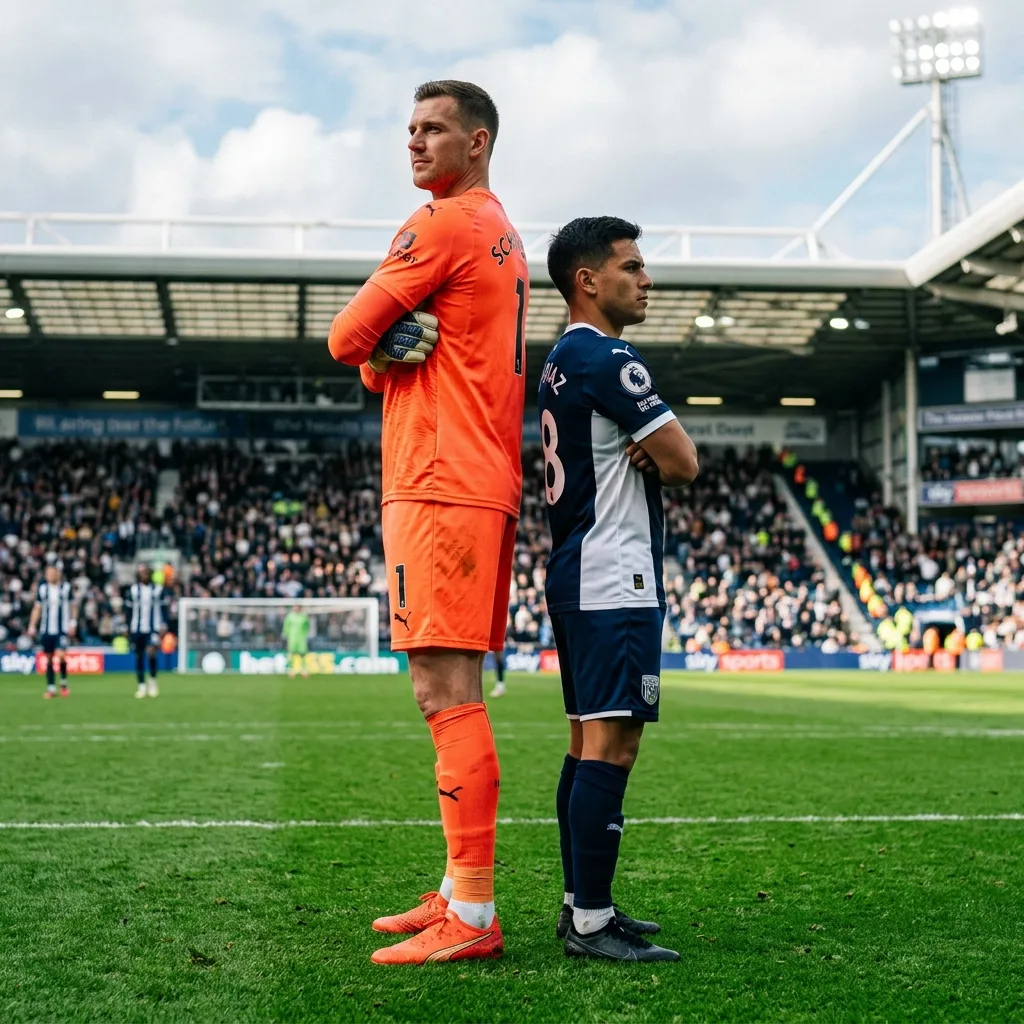
Agility in the Midfield: Why Shorter Players Thrive
When transitioning into the midfield and wide areas, a low center of gravity becomes an invaluable asset. Central attacking midfielders and wingers rely on quick directional changes, close ball control, and rapid acceleration. Legends like Lionel Messi and Diego Maradona exemplify how a shorter stature (under 5’8″ or 173 cm) provides the perfect biomechanics for dribbling past towering defenders.

The Evolution of Strikers
The forward position is uniquely diverse. Target men are traditionally tall and robust, built for hold-up play and heading. However, modern tactical shifts have popularized the “false nine” role, favoring shorter, highly technical forwards. The year rankings demonstrate a fascinating oscillation depending on the dominant tactical philosophies of the era.
Average Height by Position
| Position | Average Height |
|---|---|
| Goalkeeper | 6’2″ – 6’5″ (188 – 196 cm) |
| Center Back | 6’1″ – 6’4″ (185 – 193 cm) |
| Midfielder / Winger | 5’8″ – 5’11” (173 – 180 cm) |
| Striker | Variable (5’9″ – 6’3″) |
[contact_form]
Tactical Breakdown and Execution Methodology: Football Players Height
Executing high-level play involving football players height requires structured progression, athletic awareness, and systematic tactical execution across all competitive phases:
- Positional Spatial Awareness: Maintaining optimal spacing across the defensive, midfield, and attacking thirds prevents opponent overloads and creates forward passing lanes.
- Technical Execution & Ball Velocity: Crisp passing mechanics, directional first touches, and rapid transition speed allow players to exploit defensive gaps under pressure.
- Decision Making Under Cognitive Load: Scanning the field prior to receiving the ball reduces turnover rates and accelerates attacking momentum during transitional moments.
- Defensive Shape & Counter-Pressing: Immediate compactness upon possession loss restricts opponent counter-attacks and restores organized tactical stability.
Comparative Strategic Matrix: Formations, Roles & Performance Benchmarks
| Key Tactical Dimension | Execution Standard | Coaching Directive | Strategic Impact |
|---|---|---|---|
| Tactical Discipline | Rigorous alignment with system guidelines | Enforce rotational cues & trigger zones | Minimizes structural defensive lapses |
| Athletic Conditioning | High-intensity interval stamina & agility | Incorporate match-tempo small-sided games | Sustains physical output across 90 minutes |
| Technical Precision | Consistent touch accuracy and control | Focus on progressive pass completion | Drives possession retention in final third |
| Set-Piece Integration | Zonal marking & targeted delivery | Design repetitive dead-ball routines | Maximizes expected goals (xG) opportunities |
Frequently Asked Questions & Coaching Best Practices (Football Players Height)
Q1: What are the most common tactical errors when implementing football players height?
A1: The most frequent breakdown occurs when players lose positional discipline by over-committing forward, creating defensive vulnerabilities that can be exploited on swift counter-attacks. Consistent spatial management is critical.
Q2: How should youth and amateur coaches incorporate this into weekly training cycles?
A2: Begin each session with isolated positional drills to establish technical muscle memory, progress to constrained small-sided games (e.g., 5v5 + 2 neutrals) to build tactical context, and conclude with full-sided scrimmage application.
Q3: How does player conditioning impact the effectiveness of football players height late in matches?
A3: Cognitive fatigue late in the match causes delayed decision-making and poor defensive recovery runs. Progressive interval training ensures players maintain physical sharpness through stoppage time.
Get our latest guides, news, and insights highlighted in your Google Search & AI Overviews.