To concede in soccer means to let the opposing team score a goal. This happens when the ball completely crosses the goal line between the goalposts and under the crossbar, resulting in a point for the opponent.
Contents
- The Impact of Conceding a Goal
- How Goals Conceded Affect Goal Difference (GD) and Standings
- Common Reasons Why Teams Concede Goals
- Conceding from Open Play vs. Set Pieces: Tactical Differences
- How to Stop Conceding Goals in Soccer
- The Goalkeeper’s Role in Preventing Conceded Goals
- Frequently Asked Questions
- Closing Thoughts on Defensive Solidity
The Impact of Conceding a Goal
Conceding a goal is more than just a change in the scoreline; it alters the psychological landscape of the game. The team that concedes often experiences a drop in morale, forcing them to take more risks to equalize. Conversely, the team that scores gains confidence and a tactical advantage. Understanding this dynamic is crucial for players and coaches alike.
When a team concedes early, they are forced to abandon their initial game plan and adopt a more attacking, open approach. This shift can leave them vulnerable to counter-attacks, often leading to a second conceded goal if they aren’t careful.
The most vulnerable time for a team is often the five minutes immediately after conceding. Loss of focus and desperation to equalize quickly can lead to structural collapse.
How Goals Conceded Affect Goal Difference (GD) and Standings
In league competition, conceding a goal has direct mathematical consequences beyond the single match result. Goal Difference (GD)—calculated by subtracting total goals conceded from total goals scored—is the primary tiebreaker used across major soccer leagues and international tournaments to rank teams equal on points.
- League Tiebreakers: Every goal conceded reduces your Goal Difference by -1. When two teams finish the season with identical points, the team that conceded fewer goals almost always claims the higher standing.
- Expected Goals Against (xGA): Analytics departments use xGA to evaluate defensive performance. Unlike raw goals allowed, xGA measures the probability of every shot on target resulting in a goal based on position, angle, and defender proximity in the penalty area.
- Clean Sheet Value: Maintaining a clean sheet guarantees a team at least one point in league standings, serving as the foundation for successful tournament runs.
Teams with elite defensive units can maintain high league positions even during periods of low offensive output. A single goal allowed late in a match can drop a team multiple places in tight league tables or eliminate them during two-legged knockout ties where aggregate scores and away goals come into play.
Common Reasons Why Teams Concede Goals
Several tactical and individual factors lead to a conceded goal. Analyzing these mistakes helps coaches build better defensive structures.
| Defensive Error | Description & Consequence |
|---|---|
| Poor Marking | Leaving an opposing attacker open, especially in the penalty box, allowing an easy finish. |
| Set Piece Failures | Lack of organization during corners or free-kicks, resulting in uncontested headers. |
| Turnovers in Own Half | Losing possession close to the goal line, leading to immediate high-danger scoring chances. |
Conceding from Open Play vs. Set Pieces: Tactical Differences
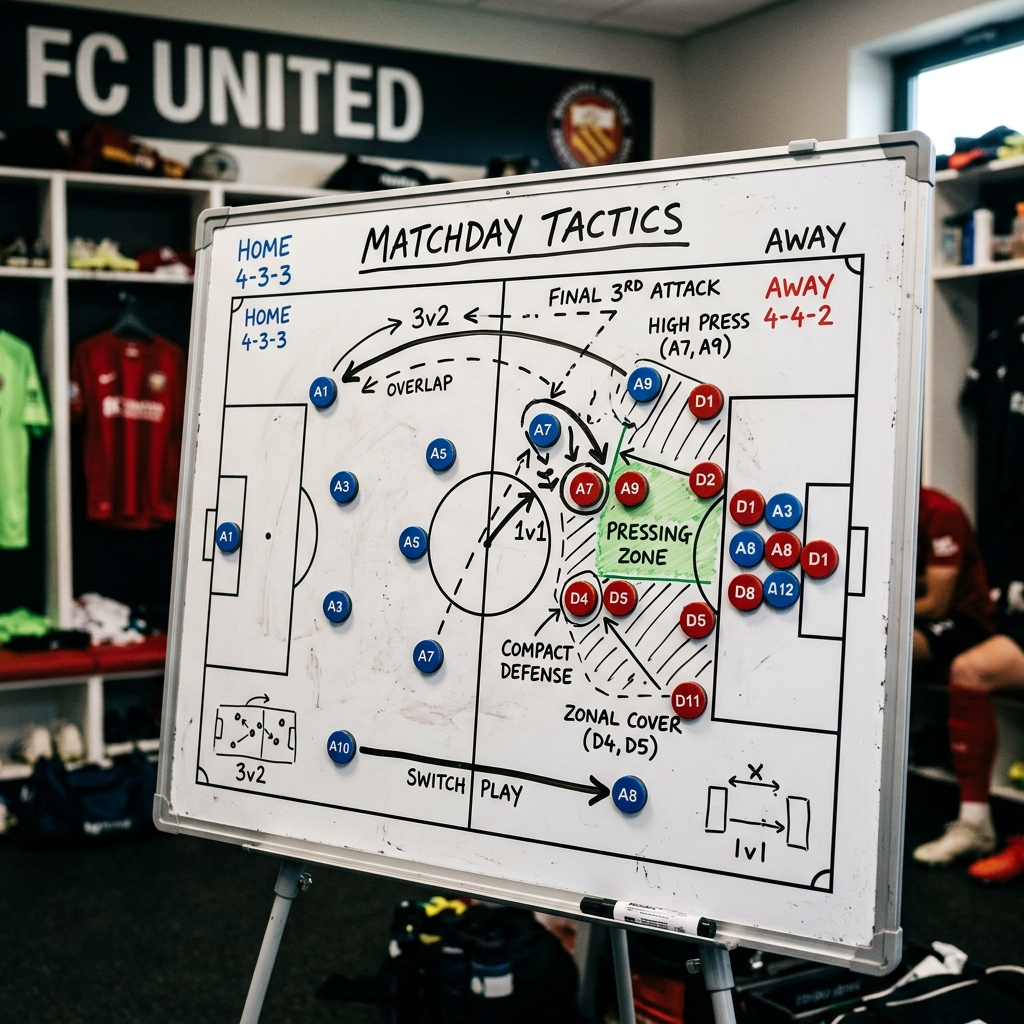
Defensive breakdowns leading to conceded goals generally fall into two distinct tactical categories: open play and set pieces. Analyzing how and where goals are surrendered allows coaches to adjust their defensive structures effectively.
| Category | Tactical Trigger & Vulnerability | Key Defensive Mechanism |
|---|---|---|
| Open Play | Through-balls piercing a high defensive line, fast counter-attacks, or individual tracking failures that allow an opponent to shoot before the ball crosses the goal line. | Maintaining compact defensive shape, pressing in mid-block, and swift recovery runs by wing-backs. |
| Set Pieces | Corners, free kicks, and throw-ins into the penalty area where miscommunication can lead to unassigned attackers or a misdirected clearance resulting in an own goal. | Disciplined zonal or man-marking schemes, strong goalkeeper commanding of the six-yard box, and aerial dominance. |
Understanding these tactical differences helps teams pinpoint systemic flaws. While open-play conceded goals often signal structural pacing or pressing breakdown, set-piece goals usually point to lapses in concentration, height mismatches, or physical positioning within the penalty box.
How to Stop Conceding Goals in Soccer
To prevent conceding, teams must focus on defensive organization and resilience. A solid defense is built on communication, positioning, and tactical awareness. High-pressure tactics can force opponents into making mistakes before they even reach the final third.
- Maintain a compact defensive line.
- Clear communication between center-backs and goalkeeper.
- Quick transitions to recover the ball.
- Diving into tackles unnecessarily.
- Ball-watching instead of tracking runners.
- Playing out from the back under heavy pressure.
The Goalkeeper’s Role in Preventing Conceded Goals
The goalkeeper is the final line of defense and plays a monumental role in whether a team concedes or keeps a clean sheet. A well-positioned goalkeeper narrows the angle, making it significantly harder for strikers to score.
Beyond shot-stopping, elite goalkeepers act as sweeping defenders, intercepting through balls and organizing the defensive wall during set-pieces. Their vocal leadership is just as important as their physical reflexes.
Goalkeepers should always aim to parry powerful shots wide of the goal posts rather than back into the center of the penalty area, preventing easy rebound goals.
Frequently Asked Questions
What does it mean to concede a penalty?
To concede a penalty means a defending player committed a foul inside their own penalty box, resulting in a penalty kick for the opposing team.
Is conceding a goal always the goalkeeper’s fault?
No, conceding a goal is rarely solely the goalkeeper’s fault. It is usually the result of a collective defensive breakdown or an exceptional attacking play.
What is a clean sheet in soccer?
A clean sheet is when a team successfully defends for the entire match without conceding a single goal.
Does conceding first mean you will lose?
While conceding first puts a team at a statistical disadvantage, comebacks are common in soccer. It requires mental resilience and tactical adjustments.
What is the difference between conceding a goal and an own goal?
Conceding a goal is the general term for letting the opponent score. An own goal is a specific scenario where a defending player accidentally knocks the ball into their own net.
What does ‘goals conceded per game’ measure?
Goals conceded per game is a key defensive metric calculated by dividing total goals allowed by total matches played, showing a team’s overall defensive consistency.
Closing Thoughts on Defensive Solidity
Conceding in soccer is the defining negative outcome for a defense, but it is an inherent part of the game. By minimizing errors, communicating effectively, and executing organized defensive tactics, teams can drastically reduce the number of goals they concede. Focus on defensive fundamentals during practice to build a team that is notoriously difficult to score against.