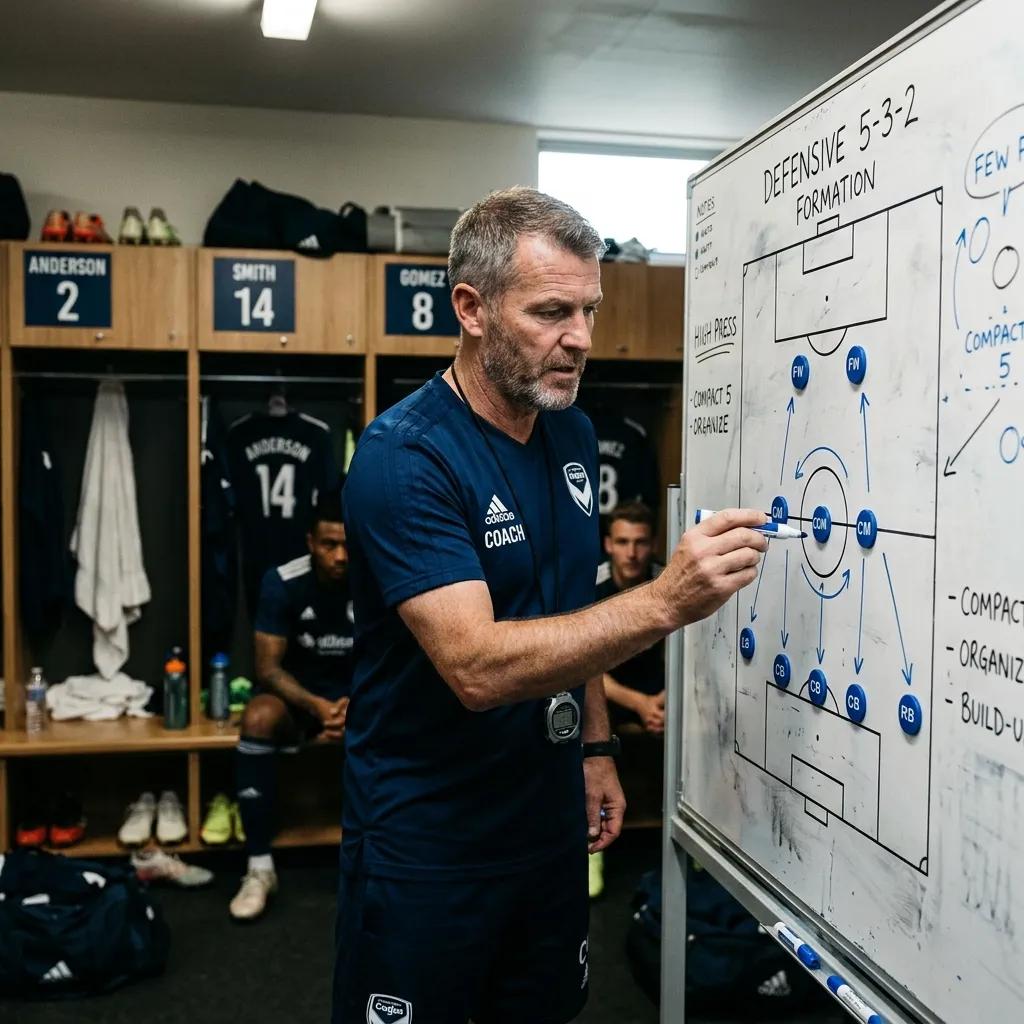
When facing an opponent that clearly dominates in terms of individual skill, speed, or physical strength, your team’s tactical setup becomes the great equalizer. The best soccer formation against a stronger team isn’t just about parking the bus; it’s about creating a cohesive defensive block while maintaining the ability to strike back on the counter-attack. In modern football, managers like José Mourinho and Diego Simeone have proven that structural discipline can overcome raw talent.
In this guide, we will break down the most effective formations for neutralizing superior opponents, the roles required to execute them, and the psychological approach needed to secure a result against the odds.
Contents
1. The 5-3-2 / 5-4-1: The Low Block Masterclass
The most resilient formation to deploy against a vastly superior team is the 5-3-2 (which often transitions into a 5-4-1 out of possession). By adding a third center-back, you instantly solidify the central channel, forcing the stronger team to play out wide where crosses can be dealt with more easily.
Why it works:
- Central Solidity: Three center-backs eliminate the space for opposition strikers to operate.
- Wing-Back Flexibility: The wing-backs drop deep to create a flat back five during defensive phases, making it nearly impossible to stretch the defensive line.
- Counter-Attacking Outlet: In a 5-3-2, keeping two strikers up top ensures that when the ball is won, there is an immediate outlet to relieve pressure and launch a quick counter.
2. The 4-5-1: Packing the Midfield
If the stronger team plays possession-based football (like a classic 4-3-3 tiki-taka), conceding the midfield will lead to a slow, suffocating defeat. The 4-5-1 formation is designed to clog the center of the pitch, denying playmakers the time and space they need to operate.
Why it works:
- Numerical Advantage in Midfield: With five midfielders, you can easily outnumber the opponent’s midfield trio.
- Screening the Defense: Two holding midfielders (a double pivot) can sit right in front of the back four, sweeping up loose balls and blocking passing lanes to the striker.
- Frustrating the Opponent: By denying space in the middle third, the stronger team is forced into low-percentage long balls or predictable wing play.
3. The 4-4-2 (Two Banks of Four)
Sometimes, simplicity is the ultimate sophistication. The traditional 4-4-2, when played with narrow, disciplined lines (two banks of four), is incredibly difficult to break down. This was the hallmark of Diego Simeone’s Atlético Madrid when they dismantled technically superior teams like Barcelona and Bayern Munich.
Why it works:
- Compactness: The distance between the defense and midfield lines can be compressed to just 10-15 yards, leaving no space “between the lines” for attacking midfielders.
- Clear Roles: Every player knows their defensive assignment, minimizing the risk of positional errors.
- Pressing Triggers: The two strikers can initiate a mid-block press, forcing the opposition center-backs to make uncomfortable decisions.
Key Tactical Principles When Playing a Stronger Team
1. Master the Low Block
A low block involves dropping your defensive line deep into your own half, conceding possession in non-threatening areas, and fiercely defending your penalty box. The goal is to reduce the space behind your defense, nullifying the pace of the opponent’s wingers and strikers.
2. The Counter-Attack is Your Best Weapon
You won’t have 60% possession, so when you do win the ball, you must be lethal. Transition quickly from defense to attack using direct, vertical passes. Fast wingers or a strong target man capable of holding up play are essential for this strategy.
3. Exploit Set Pieces
When open play opportunities are rare, set pieces become golden opportunities. Corners, free kicks, and even long throw-ins can level the playing field. Dedicate time in training to perfect set-piece routines, as a single well-executed corner can win the game.
Conclusion
The best soccer formation against a stronger team ultimately depends on the specific players you have available, but the 5-3-2 and 4-5-1 offer the best balance of defensive rigidity and counter-attacking potential. Remember that playing against a superior opponent requires immense mental discipline, clear communication, and a willingness to suffer without the ball. With the right tactical setup, the underdog can always have their day.
Get our latest guides, news, and insights highlighted in your Google Search & AI Overviews.