Few moments in soccer ignite as much tension and drama as the flash of a yellow card. But what exactly happens when a player is shown this caution? Beyond signaling a formal warning,a yellow card carries critically important consequences that can shape the flow of the game,influence player behavior,and even affect a team’s strategy. For fans passionate about the beautiful game, understanding the impact of a yellow card is vital-not just to grasp the rules, but to truly appreciate the tactical battles unfolding on the pitch. Whether it’s a hard-fought local derby or a high-stakes international clash, the yellow card symbolizes both discipline and drama, reflecting the player’s fighting spirit and the referee’s authority. As we explore what a yellow card means and how it can alter the momentum of a match, you’ll gain insights that bring those intense moments to life, deepening your connection to every tackle, every challenge, and every pivotal decision that electrifies the game.
Contents
- understanding the Purpose and Impact of a Yellow Card
- Practical Considerations and tactical Impact
- real-World Example
- Common Reasons Players Receive Yellow Cards
- Key Reasons Yellow Cards Are Issued
- Immediate Consequences During the Match
- Practical Impacts for Players and Teams
- How Yellow cards Affect Player Behavior and Strategy
- Strategic Adjustments Following a Caution
- Yellow Card Accumulation and Suspension Risks
- Practical Insights for Fans and Players
- Historical Moments Defined by Yellow Card Decisions
- Iconic Examples That Shaped Matches
- Lessons for Fans and Players
- Famous Player Reactions to Yellow Cards
- Memorable Player Responses
- Referee Insights: What Shapes Yellow Card Calls?
- Key Factors Influencing Referee Decisions
- Embracing the Human Element
- Yellow Cards Across Different Leagues and Tournaments
- How League Styles Shape Yellow Card Impacts
- What Fans Should Know About Fair Play and Sportsmanship
- how Teams Adapt Tactically After Yellow Cards
- Practical Steps Teams Take After a yellow Card
- Exploring the Psychological Battle Behind Yellow Cards
- Mastering the Mental Game After a Booking
- Psychological Influence on Refereeing and Player Behavior
- Frequently Asked Questions
- Q: how does receiving a yellow card influence a soccer player’s playing style for the rest of the match?
- Q: Can a yellow card be rescinded after a soccer match, and how does that process work?
- Q: What impact does a yellow card have on a team’s substitution strategy during a game?
- Q: Are there differences in yellow card rules between major soccer leagues and international tournaments?
- Q: How do players and coaches emotionally and mentally cope with receiving or witnessing a yellow card?
- Q: What role do yellow cards play in maintaining fair play and discipline in soccer matches?
- Q: When during a match are yellow cards most likely to be issued, and why?
- Q: How can fans best interpret the significance of a yellow card in pivotal moments of a soccer match?
- Future Outlook
understanding the Purpose and Impact of a Yellow Card
The yellow card, a symbol instantly recognized within the tapestry of soccer’s drama, embodies far more than just a warning; it’s a pivotal tool that shapes the rhythm and discipline of the beautiful game. When the referee reaches into their pocket and displays this cautionary card, the moment crystallizes into a strategic crossroads-not merely for the player penalized but for their entire team. It serves as both a reminder and a constraint: a player is still effective but now walks a fine line, where one more misstep could lead to dismissal. Legendary coaches like Sir Alex Ferguson have long emphasized that managing players on a yellow card requires sharp tactical awareness, balancing aggression and prudence to maintain tempo without losing competitive edge.
Beyond its immediate role in enforcing rules, the yellow card resonates deeply on psychological and communal levels. Players often describe the surge of adrenaline mixed with caution after receiving one,forcing them to rethink their approach-whether to curb aggressive tackles or refine positional discipline. Veteran midfielder Andrés iniesta once remarked, “A yellow card is not just about the foul you made; it’s about playing smart afterward.” Fans, too, feel the ripple effect: the collective breath held as the cautioned player becomes a tantalizing wildcard, a potential game-changer or a fragile link. This interplay highlights how the yellow card is woven into soccer’s narrative fabric,a storytelling device that spices every match with suspense and strategic adaptation.
Practical Considerations and tactical Impact
- Player Management: Coaches often substitute yellow-carded players to prevent risk, especially in tactically intense or knockout games.
- team dynamics: Teams may shift formations to support cautious players,reinforcing defense or altering marking schemes.
- Referee Influence: Players known for discipline often avoid second cautions by leveraging their reputation and dialog with officials.
real-World Example
In the 2014 FIFA World Cup, germany’s Bastian Schweinsteiger received a yellow card early in the knockout stages but was masterful at maintaining composure. His ability to adjust his playstyle without losing influence on the game exemplifies how experienced players turn the yellow card from a threat into a strategic asset, reassuring teammates and intimidating opponents together. This blend of discipline and determination underscores the nuanced purpose of the yellow card-far from mere punishment,it’s a catalyst for heightened awareness and controlled fervor.
Common Reasons Players Receive Yellow Cards
Few moments in soccer capture tension quite like the flash of a yellow card. This small,bold rectangle embodies a referee’s judgment call,a signal that a player has stepped across the line of acceptable conduct but remains on the pitch – for now. Yellow cards emerge as unscripted pauses in the flow, where players and fans alike instantly recalibrate their expectations. From hard tackles to dissent, the reasons behind these cautions are as varied as the sport itself, reflecting both the physicality of the game and the human emotions entangled within it.Legendary defender Paolo Maldini once noted, “A yellow card tells you how close you are to the edge - it’s a chess game with grit.” Understanding why these cautions occur reveals the delicate balance referees maintain between fair play and fierce competition.
At their core, yellow cards serve as warnings for a range of infringements that threaten the spirit or safety of the game. The most common triggers include reckless challenges or tackles that endanger opponents, persistent fouling aimed at disrupting the opponent’s rhythm, delaying the restart of play to frustrate the flow, or unsportsmanlike conduct such as dissent and verbal outbursts at officials. Tactical fouls-those calculated fouls designed to stop promising attacks-are another frequent cause, illustrating the strategic use of discipline within the game’s chessboard of movements. Take, for example, N’Golo Kanté’s style of play, famed for interceptions and timely fouls; even the cleanest midfielders walk a tightrope risking cautions when breaking up attack surges. Coaches frequently enough remind their teams that these infractions, while sometimes a tactical necessity, carry risks not just for the player but the entire squad.
Key Reasons Yellow Cards Are Issued
- Reckless or Dangerous Tackles: Challenges with excessive force or that endanger opponent safety.
- Persistent Fouling: Repeated infringement disrupting the flow and fairness of play.
- Dissent and Unsportsmanlike Behavior: Arguing with officials, simulation (diving), or provocative gestures.
- Delaying the Restart: Tactics to waste time such as holding the ball or obstructing opponents.
- Tactical Fouls: Strategic fouls to stop promising attacks or counterattacks.
Many iconic games have been shaped by the subtle but impactful art of cautioning players. In UEFA Champions League history, when Sergio Ramos received a yellow for a tactical foul, his team’s defensive structure shifted instantly - his awareness of the card shaped every challenge and touch thereafter. From grassroots matches to World Cup finals, yellow cards tell stories of split-second decisions, where instinct and discipline collide under the unblinking eyes of referees. For fans, grasping these common reasons deepens recognition for the game’s rhythm and the relentless mental calculus players perform mid-action, blending passion with precision in pursuit of victory.
Immediate Consequences During the Match
Few moments in a soccer match shift dynamics as suddenly as the issuing of a yellow card. The caution signifies more than just a warning; it instantly recalibrates a player’s approach and colors how teammates, opponents, and coaches view the unfolding battle on the pitch. Take the 2012 UEFA Champions League final, such as, when Andrés Iniesta’s yellow card forced him into a more reserved role, balancing his natural attacking instinct with the threat of a subsequent sending off. Players who receive a yellow card must exhibit heightened discipline-each tackle, pass, and sprint is now calculated to avoid further infractions. This immediate psychological shift impacts not only the individual’s gameplay but often alters team formation and risk tolerance as well.
The repercussions ripple through the entire squad. Coaches frequently signal for tactical adjustments, encouraging teammates to cover for the cautioned player to prevent exposing the team to vulnerability if that player’s caution escalates to a red card. During the 2018 World Cup, Germany’s Toni Kroos, aware of his yellow card, consciously avoided physical confrontations, relying more on precise positioning and distribution than on aggressive pressing. For fans seeking to understand the flow of the game post-card, it’s essential to watch these subtle shifts-players on a yellow card often demonstrate an urgent blend of caution and strategic opportunism, making for intriguing battles of skill and nerves.
Practical Impacts for Players and Teams
- Restriction on Aggressive Play: Players are compelled to temper tackles and avoid risky challenges, which can limit defensive effectiveness.
- Increased Vigilance by Opponents: Opponents exploit a cautioned player’s restraint by targeting them in duels or forcing fouls to draw a second booking.
- Substitution Considerations: Coaches may preemptively replace players carrying a yellow card to maintain tactical stability.
- Communication and Leadership: Teammates often support cautioned players by providing tactical cover and verbal reminders.
Understanding these immediate consequences offers fans deeper insight into the evolving storylines within a match.The yellow card transforms more than just a moment-it reshapes strategy and psychology, amplifying the drama that encapsulates soccer’s finest contests.
How Yellow cards Affect Player Behavior and Strategy
Few moments force a player to rethink their entire approach quite like receiving a yellow card. suddenly, every defensive tackle, forward dart, and contested ball must be weighed against the looming threat of a second booking that means an immediate sending off. This caution transforms raw aggression into calculated restraint, demanding not only technical discipline but a subtle psychological recalibration. Reflecting on matches like the 2010 world Cup quarterfinal between Spain and Paraguay, veteran defenders known for their physicality had to instantly adapt, slowing down their challenges and relying more heavily on positional awareness. Coaches often emphasize mental resilience here; as one famed manager once said, “A player with a yellow card must become a game’s strategist within the game itself.”
This shift in behavior also reshapes team strategy. Opponents smell possibility, targeting the cautioned player to provoke a second foul, while teammates rally to protect their vulnerable comrade. Midfield maestros like Xavi Hernández famously moderated their relentless pressing once booked, opting instead to dictate tempo and pass their team forward without risking reckless fouls. Simultaneously occurring, coaches might shuffle formations or call on substitutes preemptively, valuing collective balance over individual prowess. Fans watching these shifts witness a chess match unfolding in real time - where risk management,tactical intelligence,and psychological grit blend beautifully into the evolving drama of the match.
Strategic Adjustments Following a Caution
- Enhanced Positional Discipline: Avoiding unnecessary physical contact means players must anticipate opposition moves earlier and rely on sharp spatial awareness.
- Targeted Teammate Support: Teams frequently enough assign a nearby player to provide cover, reducing exposure to risky one-on-one duels for the cautioned player.
- Calibrated Aggression: Players balance the fine line between assertiveness and caution, often retooling their style within moments of the booking.

Yellow Card Accumulation and Suspension Risks
Few elements in soccer underscore the relentless tension of tournament play quite like the creeping threat of yellow card accumulation. Each caution isn’t just a reprimand but a ticking clock counting down to potential suspension, forcing players to navigate a razor’s edge between aggression and caution. Consider the 2014 FIFA World Cup, where key players like Neymar and Thiago Silva treaded this thin line, fully aware that a single misstep could derail their teams’ ambitions. Coaches often monitor these disciplinary tallies closely, knowing that beyond the impact in one game, accumulated bookings can rob squads of critical talent in later, more decisive fixtures. This cumulative risk transforms each yellow card into a strategic puzzle: how to maintain competitive fire without inviting long-term consequences.
Managing this dynamic requires sharp understanding and cooperation between players and coaching staff. Teams frequently enough employ deliberate rotation policies or tactical changes to rest those nearing suspension thresholds, preserving both player availability and team rhythm. Players themselves evolve a sense of “disciplinary intelligence,” learning to temper their style-balancing tenacity with tactical prudence. This survival instinct can be just as vital as technical skill on the pitch. As legendary midfielder Andrés Iniesta once remarked, “Knowing when to push and when to hold back keeps you in the game longer, and that’s where experience counts.” For fans,grasping these subtleties adds layers to the drama,transforming yellow cards from mere rule infractions into a strategic narrative that echoes through every kick of the ball.
Practical Insights for Fans and Players
- Tracking Suspensions: Different leagues and tournaments set varying thresholds-typically every 3 to 5 yellow cards within a span trigger a one-match ban, making attention to accumulation critical.
- Impact on Team Selection: Coaches may bench or substitute players with multiple yellows in more tactical games to avoid risking suspension during key matches.
- Player Discipline Strategies: Players may consciously avoid tackles or confrontations late in games or in earlier fixtures to safeguard eligibility for crucial fixtures.
| Competition | Yellow Card Suspension Rule | Typical Consequence |
|---|---|---|
| UEFA Champions League | Accumulation of 3 yellow cards in group stage | One match suspension |
| English Premier League | 5 yellow cards within first 19 matches | One match suspension |
| FIFA World Cup | Two yellow cards across different matches | One match suspension |

Historical Moments Defined by Yellow Card Decisions
Few moments in soccer history have carried the raw intensity and strategic weight of a single yellow card turning the tide of iconic matches. Take, such as, the 2006 FIFA World Cup Round of 16 clash between Italy and Australia, where fabio Grosso’s decisive penalty followed a tense buildup involving cautionary bookings that shaped player behavior on both sides.Players and coaches alike recognize how the looming threat of an additional yellow card frequently enough forces a recalibration of aggression and risk assessment. As legendary coach Vicente del Bosque once noted, *”A yellow card is never just a punishment-it’s a chess move that can define the entire flow of the match.”* From gritty defensive stands to tactical fouls disguised as game management, yellow cards have punctuated countless moments that fans remember for their drama and lasting impact on outcomes.
Beyond individual matches, yellow card decisions have written chapters in the broader narrative of tournaments, highlighting the delicate balance between discipline and desire. Arguably, no tournament illustrates this better than the 2010 World Cup, where players like Luis Suárez, who was famously sent off for a handball but initially played under caution, demonstrated how yellow cards influence player psychology and team tactics.Teams often face the difficult choice: push the boundaries and risk losing key players or dial back intensity and compromise their competitive edge. This tension adds an emotional layer for fans, who witness the sport’s beauty wrapped tightly with a fine thread of caution. Understanding these moments encourages supporters to appreciate not only the flash of brilliance on the field but also the nuanced decisions-by players, referees, and coaches-that drive the sport’s narrative forward.
Iconic Examples That Shaped Matches
- Zinedine Zidane’s 2006 Caution: Zidane’s yellow card in the final was a prelude to the infamous headbutt and red card, showing how tempers flare under disciplinary pressure.
- Diego Maradona’s Tactical Fouls: Maradona often walked the line, using clever fouls and managing cards to protect Argentina’s momentum, illustrating strategic disciplinary awareness.
- Steven Gerrard’s 2005 Champions League Push: His careful approach to avoid bookings helped Liverpool remain at full strength during their dramatic comeback.
Lessons for Fans and Players
Appreciating the critical impact of yellow cards means recognizing how they are more than simple warnings-they are pivotal narrative tools that shape player decisions and game tempo. Fans who follow the history of such moments gain a richer understanding of the stakes involved every time a card is shown. Players, simultaneously occurring, develop what some call “disciplinary intelligence,” learning to anticipate and manipulate these dynamics without crossing the line. So, next time you see a yellow card waved on the pitch, remember it’s a symbol steeped in strategy, tension, and the history of soccer’s beautiful game.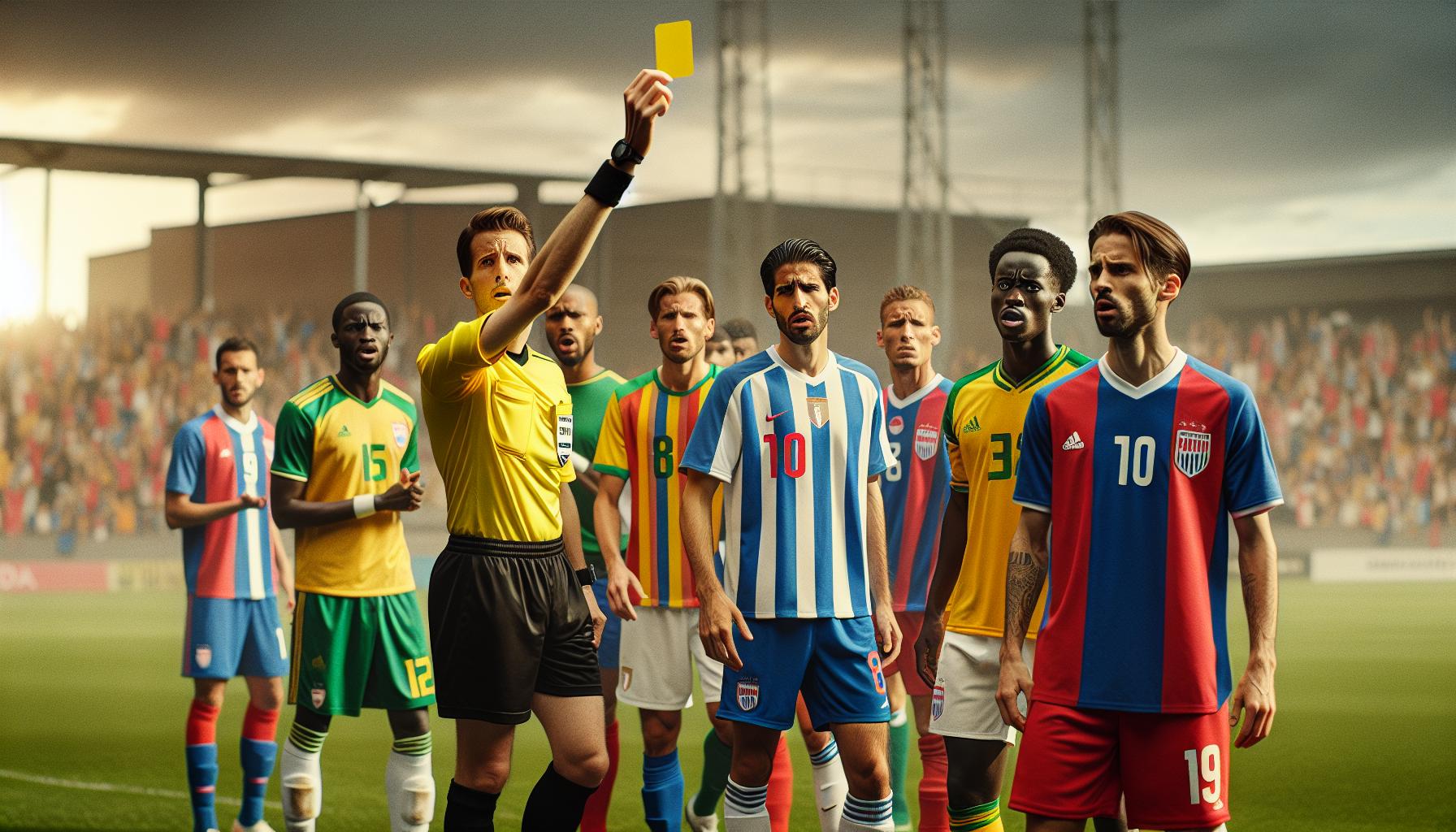
Famous Player Reactions to Yellow Cards
Few moments on the pitch ignite as much tension and drama as the instant a yellow card is brandished toward a player. The reactions that follow frequently enough reveal as much about a player’s character and mindset as their technical skills do. Some heroes of the game channel the caution into renewed discipline and focus, while others burst with frustration or strategic cunning.take Cristiano Ronaldo’s measured acknowledgment of a warning: his composed acceptance reflects a seasoned understanding that each card carries weight beyond the 90 minutes, influencing future play and availability. In contrast, players like Sergio Ramos have been known to push the envelope, responding to bookings with bold, provocative gestures that can electrify fans but risk further disciplinary action. These divergent reactions highlight the psychological chess match between players and referees-a silent dialogue full of meaning and consequence.
The emotional spectrum of receiving a yellow card is as diverse as the players themselves. Legendary figures such as Johan Cruyff famously turned moments of dissent into poetic expressions of sportsmanship, using a card as a prompt to reset focus rather than rebel. Simultaneously occurring, fiery competitors like Eric Cantona at times transformed their cautions into defining acts of bravado, channeling frustration into galvanizing their teams. Coaches often advise players to manage their emotions carefully following a booking, understanding that composure preserves tactical options and avoids unnecessary risk. Players have shared how they mentally prepare for such moments, employing “disciplinary intelligence” to maintain aggression without crossing the line.For fans, witnessing these reactions enriches the narrative of the game, reminding us that every booking is a pulse point in the unfolding human drama of soccer.
Memorable Player Responses
- lionel Messi’s Silent Resolve: Known for his calm demeanor, Messi often responds to cards by doubling down on precision and control rather than protest.
- Roy Keane’s Defiant Stare: Famous for intimidating opponents and officials alike through sheer presence,Keane’s reaction to a card was as much a psychological tactic as a personal statement.
- Zlatan Ibrahimović’s Theatrical Gestures: Zlatan uses his flair to turn bookings into moments of entertainment,blending humor with challenge.
This rich interplay between caution and character illustrates that while a yellow card is a referee’s tool for control, it is also a canvas on which players paint their resilience, personality, and strategic thinking. Recognizing these layers broadens the appreciation of every card shown-not merely as a mark of fault, but as a vivid chapter in the story of the match and its protagonists.
Referee Insights: What Shapes Yellow Card Calls?
Few moments in a match test a referee’s judgment as acutely as the decision to issue a yellow card. This delicate act is far more than a simple warning; it is a nuanced exercise in game management, shaped by the referee’s interpretation of fairness, flow, and player safety. Referees balance an array of factors before reaching for that familiar yellow card, including the severity of the infraction, its impact on the game’s momentum, and the player’s previous conduct on the pitch. As legendary referee Pierluigi Collina once noted, “A yellow card is not just about stopping a foul – it is indeed about sending a message both to players and spectators about the boundaries of acceptable conduct.” This communication is vital to maintaining discipline while preserving the spirited, competitive edge that makes soccer captivating.
Each booking also reflects the unique atmosphere and style of the tournament or league. Such as, referees officiating in the Premier League frequently enough face a relentless, high-intensity tempo where physicality is woven into the fabric of play, sometimes leading to stricter cautioning to prevent escalation. Meanwhile, UEFA Champions League officials might emphasize tactical fouls differently, aware that yellow cards carry heavy consequences across home-and-away ties. Coaches and players themselves recognize this variability and tailor their approach accordingly.As Arsène wenger famously remarked, ”Understanding the referee’s mindset is as much a part of the game as mastering your skills.” Practical advice for players and fans alike is to observe how referees handle minor clashes and dissent early in the game,as this can signal their threshold for issuing cards,influencing team strategy and player discipline throughout the match.
Key Factors Influencing Referee Decisions
- Context of the foul: Tactical fouls that stop promising attacks often warrant caution, while accidental or minimal contact might be overlooked.
- Player behavior: Repeat offenders usually attract faster bookings, while respectful acknowledgment of warnings can delay or prevent a card.
- Game situation: Referees may weigh the scoreline and time remaining, sometimes opting for leniency to keep the game fluid or strictness to maintain control.
- Match significance: High-stakes games tend to have heightened scrutiny, leading referees to be more vigilant in their cautions.
Embracing the Human Element
Referee decisions, including yellow cards, are an inescapably human element that adds drama and unpredictability to soccer. Veteran referees frequently enough share insights into managing the emotional rhythm of matches, stressing the importance of communicating clearly and fair-mindedly with players. This dialogue,though silent to most fans,fosters mutual respect and can defuse tension before it escalates. When players like Andrés iniesta accept cautions with grace, acknowledging the referee’s role, it reflects a deep understanding of the game’s spirit and mutual accountability. In contrast, contentious calls-whether viewed as harsh or lenient-spark debates that enrich the fan experience and highlight soccer’s passionate community. Recognizing the complexity behind yellow card calls deepens appreciation for referees as custodians of the game’s integrity, whose split-second decisions shape both sporting outcomes and unforgettable moments in soccer history.
Yellow Cards Across Different Leagues and Tournaments
Yellow cards resonate differently depending on where the game is played, reflecting the rich diversity of soccer cultures around the world.In leagues like the English premier League, the pace and physical intensity are relentless; referees here often adopt a proactive approach, issuing yellow cards early to curb aggressive challenges and manage player tempers. This was famously illustrated during the 2019 derby between Manchester United and Manchester City, where referee Mike Dean’s swift warnings set the tone, preventing what could have spiraled into a highly charged brawl. Contrastingly, competitions like La Liga prize technical skill and fluid play, with referees occasionally showing more latitude in physical contests to allow the game’s artistry to shine, though tactical fouls still draw a firm response. UEFA Champions League matches introduce another layer of complexity-yellow cards carry over between legs, increasing the stakes and forcing players to balance aggression with caution. Legendary coach José Mourinho has remarked, “In European nights, a single yellow can redefine how you approach the return fixture,” highlighting how different rules and contexts shape player behavior and strategy.
How League Styles Shape Yellow Card Impacts
Each tournament or league imprints its own rhythm on the caution system. As an example, the Bundesliga blends high-intensity pressing with disciplined fairness, often resulting in a moderate rate of bookings that promote swift, seamless play without frequent stoppages. Meanwhile, in international tournaments such as the World Cup, referees must reconcile a melting pot of playing styles and temperaments, making yellow card decisions critical in managing diverse matches under global scrutiny. Coaches prepare their squads accordingly,advising players on regional refereeing tendencies to minimize card risks. Fans tuning in can gain deeper appreciation by watching how referees’ thresholds fluctuate-not just from fouls committed, but from dissent, timewasting, or unsporting behavior that varies in tolerance level worldwide. Understanding these nuances enriches the viewing experience and connects fans more intimately with the tactical chess game unfolding in each unique soccer theater.
- Premier League: Early and firm cautioning to control physical play.
- la liga: Leniency towards artistic play, with tactical fouls still punished.
- Champions League: Yellow card consequences span multiple matches, affecting player availability.
- Bundesliga: Balance of intensity and fairness, promoting fluidity.
- World cup: Managing diverse styles, emphasizing restraint to maintain global appeal.
What Fans Should Know About Fair Play and Sportsmanship
A yellow card is far more than just a cautionary symbol on the pitch-it’s a crucial reminder of the delicate balance between competitive intensity and respect for the game.For fans, understanding this balance deepens the appreciation of soccer’s intricate tapestry of sportsmanship and fair play. When a player receives a yellow card, it often highlights a moment where the line was crossed-be it a mistimed tackle, dissent, or unsporting behavior.Yet, these moments also reveal the emotional stakes and tactical battles that define the sport’s drama. Legendary referee Pierluigi Collina once said, “Fair play is the soul of the game; without it, soccer loses its magic.” This ethos shapes not only how players approach the game but how fans interpret what unfolds in front of them-reminding everyone that passion must be channeled within the sport’s spirit.This outlook is essential for fans who wish to engage with the game on a deeper level. Recognizing that not all fouls or cautions are equal helps viewers appreciate the multiple layers involved-from referees’ split-second decisions to players’ strategic responses to pressure. Take the example of Antonio Conte’s Inter Milan in the 2020-21 Serie A season: his team’s disciplined approach minimized reckless challenges, showing how smart management of aggression can lead to success without excessive bookings. fans can also celebrate acts of sportsmanship that emerge even after a yellow card, such as players helping each other up or acknowledging a foul with humility. To savor the full experience, consider these takeaways:
- Respect the referee’s role: Their decisions govern the integrity of the match and ensure safety on the pitch.
- Understand the tactical context: Some cautions stem from crucial tactical fouls intended to protect team shape or block dangerous counterattacks.
- Celebrate sportsmanship: Moments of grace after a foul, apologies, or shaking hands showcase the game’s human side.
- Engage beyond emotion: channel enthusiasm into supporting fair play rather than dissent, preserving the sport’s respect and joy.
Appreciating fair play from the fans’ seat invites a richer connection to soccer’s strategic and emotional complexity.It reinforces the idea that every yellow card is a piece of a broader narrative-a subtle dialogue between competitive fire and mutual respect that keeps the game vibrant,respectful,and endlessly captivating.
how Teams Adapt Tactically After Yellow Cards
A single yellow card can dramatically shift the rhythm and tactics within a soccer match, instantly raising the stakes for the cautioned player and their teammates.Coaches often respond swiftly to protect key players from the risk of a second booking, which could lead to a sending-off and a numerical disadvantage. this tactical recalibration usually involves instructing the booked player to adopt a more conservative style - avoiding risky tackles or aggressive challenges - while teammates may be asked to provide additional defensive cover or adjust their positioning to compensate for this newfound restraint. The strategic dance that unfolds frequently enough reveals the subtle layers of managing risk mid-game, where preserving player availability sometimes takes precedence over aggressive play.
One iconic example is pep Guardiola’s approach during his tenure at FC Barcelona. When a defender received a yellow card,Guardiola frequently rebalanced the defensive line,sometimes shifting to a more possession-oriented style to reduce pressure on vulnerable players. This not only minimized the likelihood of further disciplinary action but also emphasized control and patience, allowing the team to dictate play and avoid dangerous counters. Players like Gerard Piqué understood this nuanced shift, frequently enough backing off from tackles deemed too risky and focusing on intercepting passes rather than ground challenges. Such tactical adjustments underscore how coaches blend psychology,player strengths,and game context in real-time,turning the challenge of a yellow card into an opportunity for strategic innovation.
Practical Steps Teams Take After a yellow Card
- Optimizing player roles: Shifting the cautioned player into less combative roles, often emphasizing positioning over physical engagement.
- Introducing substitutions: Coaches may opt to bring in fresh legs or more disciplined players to stabilize the defensive or midfield lines.
- Reorganizing team shape: Adjusting formation slightly to cover potential defensive gaps created by a restrained player.
- Communication and leadership: Encouraging vocal teammates to support and mentor the cautioned player, maintaining composure through sustained pressure.
This tactical recalibration not only preserves the team’s competitive edge but also highlights the broader human element of the game – managing emotions, upholding discipline, and fostering resilience. For fans, witnessing such adaptability enriches the viewing experience, as it reveals how a seemingly simple card becomes a catalyst for intelligent, dynamic problem-solving within soccer’s ever-evolving narrative.
Exploring the Psychological Battle Behind Yellow Cards
Few moments in soccer ignite as much tension and mental wrestling as the instant a player is shown a yellow card. Beyond the visible caution, a psychological duel unfolds-a complex interplay of self-control, mind games, and heightened awareness. Players must quickly recalibrate their mindset: balancing aggression and caution to avoid a second booking while staying effective in their role. Legendary midfielder Xavi once reflected, “After a booking, your game becomes a question of discipline. You fight the urge to prove toughness without crossing the line, and that battle is as much in your head as on the pitch.” This psychological tightrope walk frequently enough triggers subtle shifts-players become more measured in tackles, yet visibly assertive in positioning and anticipation, striving to influence the game without risk.
This internal contest extends beyond the cautioned player to ripple through the entire team and its adversaries. Coaches recognize this and often leverage the moment to inject calm or intensity, reading into not just the physical but the emotional state of their squad. The yellow card can become a catalytic spark in the mental chess match: opponents may sense vulnerability and press harder, while the booked player fights to maintain composure and leadership under pressure. Such dynamics were famously observed during the 2014 World Cup final, where Sergio Ramos’s early booking forced Spain to adopt a more cautious style that ultimately impacted the match’s flow. Understanding these invisible psychological currents enriches fans’ appreciation of the game’s nuances, revealing how discipline and mental resilience are every bit as crucial as skill and tactics in soccer’s grand theater.
Mastering the Mental Game After a Booking
- Stay grounded and focused: Players benefit from deep breathing and mental resets to prevent frustration or rash decisions.
- Use experience as a guide: Veteran players frequently enough draw on past matches to manage their reactions and anticipate referee tendencies.
- Communicate clearly: Team leaders provide encouragement and help keep morale high, reinforcing composure under pressure.
- Read the opponent’s mindset: Recognizing when opponents target a booked player can guide strategic responses, including tactical fouls or protective positioning.
Psychological Influence on Refereeing and Player Behavior
Referees themselves are attuned to this mental battle, frequently enough using verbal warnings or controlled gestures to regulate player aggression before it escalates to a second card. The psychological interplay between referees and players adds another layer of drama-both strive to assert control while maintaining fairness, sometimes trading subtle signals that can influence the course of the game. In this way, every yellow card is not just a penalty but a moment charged with strategic and emotional significance, reflecting soccer’s enduring dance between authority, passion, and restraint.
Frequently Asked Questions
Q: how does receiving a yellow card influence a soccer player’s playing style for the rest of the match?
A: A yellow card often makes players more cautious to avoid a second booking, which can lead to a red card and ejection.This tends to reduce aggressive tackles and risky challenges, influencing a more strategic, disciplined approach.Understanding this shift is key to appreciating in-game tactical adaptations in soccer. For deeper insight, see our section on How Yellow Cards Affect Player Behavior and Strategy.
Q: Can a yellow card be rescinded after a soccer match, and how does that process work?
A: Yes, yellow cards can sometimes be overturned by football governing bodies upon review if refereeing errors are evident. Teams can appeal to contest unjust bookings, which helps protect players’ disciplinary records. This appeals process ensures fairness and maintains sportsmanship, supporting the broader discussion in referee Insights: What Shapes Yellow Card Calls?
Q: What impact does a yellow card have on a team’s substitution strategy during a game?
A: Coaches often substitute players on a yellow card to avoid risking a sending-off, especially in critical positions or late in the match. This tactical move balances player safety and team stability, complementing the How Teams Adapt Tactically After Yellow cards section for a holistic understanding.
Q: Are there differences in yellow card rules between major soccer leagues and international tournaments?
A: Yes, yellow card rules and accumulation policies vary between leagues and tournaments, affecting suspensions and player availability. For example, some competitions reset cards after group stages while others carry them through knockout rounds. This complexity is explored in Yellow Cards Across Different Leagues and Tournaments.
Q: How do players and coaches emotionally and mentally cope with receiving or witnessing a yellow card?
A: Receiving a yellow card can cause stress and heightened focus, influencing both player confidence and team morale. Coaches frequently enough use these moments to motivate or calm the squad, highlighting the psychological dynamics covered in Exploring the Psychological Battle Behind Yellow Cards.
Q: What role do yellow cards play in maintaining fair play and discipline in soccer matches?
A: Yellow cards act as a key deterrent against unsporting behavior, promoting fair play by signaling warnings before harsher penalties. This disciplinary tool supports the spirit of the game and enriches What Fans Should Know About Fair Play and Sportsmanship.
Q: When during a match are yellow cards most likely to be issued, and why?
A: yellow cards are often issued during high-pressure moments like late in a game or during intense rivalries, where players push boundaries. Referees use cards strategically to maintain control, a theme tied to Immediate Consequences During the Match.
Q: How can fans best interpret the significance of a yellow card in pivotal moments of a soccer match?
A: Fans should view yellow cards as game-changing signals that influence player behavior, match tempo, and tactical shifts. Recognizing this enriches the viewing experience and connects with stories in Historical Moments Defined by Yellow Card Decisions. Engage with these perspectives to deepen your appreciation for soccer’s drama and strategy.
Future Outlook
Understanding the impact of a yellow card in soccer goes beyond the simple warning-it shapes the flow of the game, tests player discipline, and can sway the outcome of pivotal moments on the pitch. Whether it’s a strategic caution or a hard-fought battle for control, recognizing what a yellow card truly means empowers every fan to read the game with deeper insight and passion. To stay ahead of the action, explore our guide to red cards and fouls and discover how discipline intertwines with tactics in every match.
Curious about how yellow cards influence player behavior or tournament dynamics? Dive into our player profile series and match analysis coverage to see these moments come alive through the eyes of legendary players and coaches. Don’t let the conversation stop here-join our community by signing up for the newsletter to receive expert breakdowns, exclusive stories, and insider tips delivered straight to your inbox. Share your own favorite yellow card moments below and keep the passion for soccer’s drama thriving!