Few moments in soccer spark as much drama and debate as the issuing of a red card. Whether it’s a raw tackle, a second caution, or an act of dissent, a red card instantly changes the game’s rhythm and stakes, leaving players, coaches, and fans grappling with its consequences. Understanding exactly how and why players receive red cards is crucial-not onyl for aspiring athletes aiming to stay on the field but also for fans who want a deeper appreciation of the sport’s rules and emotional intensity. This guide takes you inside the rules, exploring the tactical and human sides of red cards, from historic moments that shaped careers to coaches’ insights on managing the game after sending-offs. by unpacking what leads to a red card and how it impacts matches, this ultimate guide empowers everyone involved in the soccer community to see beyond the whistle and connect with the gorgeous game’s passionate pulse. Whether you’re a player eager to avoid early exits or a fan thirsty for informed discussions,join us on a journey through the red card’s pivotal role in soccer’s soaring highs and dramatic lows.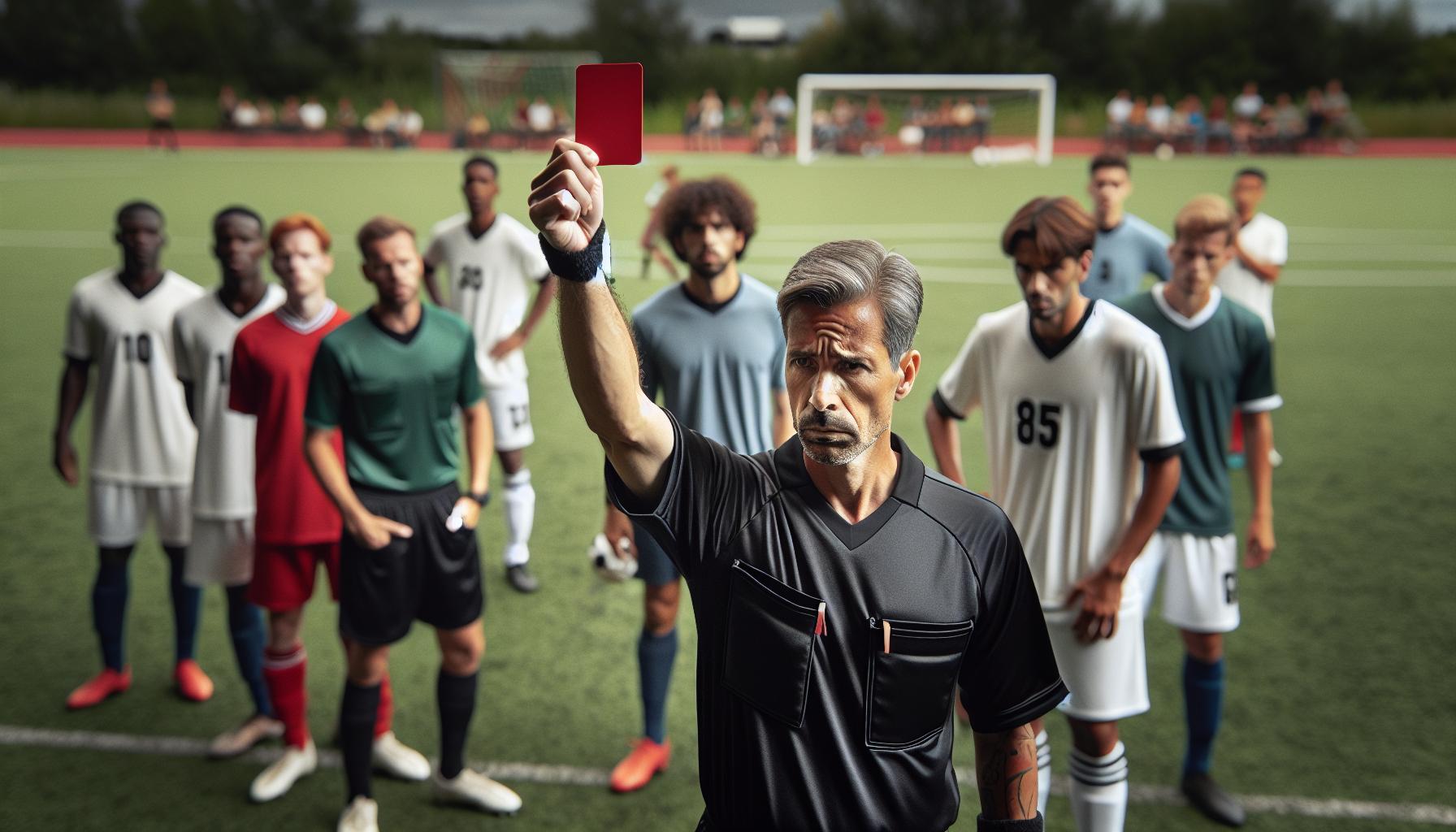
Contents
- What Does a Red Card Mean in Soccer?
- Key Implications of a red Card
- Common Fouls and Offenses Leading to Red Cards
- Key Fouls That Result in Red Cards
- Real-World Insight: Tactical and Emotional Dimensions
- Famous Red Card Moments That changed Matches
- Iconic Red Card Moments
- How Referees Decide to Show a Red Card
- Factors Referees Weigh Before Showing a Red Card
- Tactical impact of a Red Card on Teams
- How Players Can Avoid Getting a Red Card
- The Career-Saving Value of Discipline
- The Role of Video Assistant Referee (VAR) in red Cards
- Practical Tips for Players Under VAR Scrutiny
- Consequences and Suspensions After Receiving a red Card
- Practical Steps to Manage Red Card Suspensions
- Psychological Effects of a Red Card on Players and Teams
- Managing the Emotional Fallout
- Psychological Tools for Recovery
- Strategies for Playing with One Less Player
- Core Strategies to Maintain Competitive Edge
- Red Card Rules Across Different Soccer Leagues and Tournaments
- Variations in Suspension Lengths and Appeal Processes
- Impact of VAR and technological Adoption
- FAQ
- Q: How does a player’s behavior outside the field impact the likelihood of receiving a red card?
- Q: What specific actions during a set-piece increase red card risks?
- Q: Why do some leagues show more red cards than others?
- Q: How do referees communicate red card decisions to players and fans?
- Q: Can tactical fouls ever lead directly to a red card? A: Yes, tactical fouls intended to stop clear goal-scoring opportunities can result in straight red cards. Players must weigh the risk as such fouls sacrifice immediate advantages but often lead to suspensions. This ties into key tactics discussed in Tactical Impact of a Red Card on Teams. Q: How do players mentally prepare after earning a red card during a critical match?
- Q: What role do captains play in preventing teammates from receiving red cards?
- Q: Are there any examples of players who changed their playing style to avoid red cards?
- Final Thoughts
What Does a Red Card Mean in Soccer?
A red card in soccer instantly transforms the rhythm and stakes of a match, signaling a severe breach of the game’s rules that results in a player’s ejection from the field. Unlike the cautionary yellow card, the red card carries an unmistakable finality: no substitutions can replace the sent-off player, leaving their team to battle with one fewer member for the remainder of the match. This not only tests the physical endurance and tactical flexibility of the team but also dramatically shifts momentum, often becoming a defining moment in high-stakes contests. Legendary matches, such as Zinedine Zidane’s 2006 World Cup final red card, remind us that this singular act can alter legacies and fan memories alike, revealing the intense human drama behind every decision made by referees.
The power of the red card lies not just in its punishment but in its role as a strict guardian of sportsmanship and safety on the pitch. It enforces the discipline needed to maintain the sport’s beauty and flow by penalizing actions considered dangerously unfair or violently reckless.From the outlook of players and coaches, understanding the consequences of a red card transcends mere rule enforcement-it’s about respecting the spirit of competition and the welfare of every participant. Coaches often emphasize that maintaining composure under pressure is as critical as skillful play; as Sir Alex Ferguson once pointed out, “A red card can decide a title, so every player must know what’s at stake.” Players who grasp this can often avoid impulsive decisions, embodying the precision and grace soccer celebrates at its highest level.
Key Implications of a red Card
- Immediate Ejection: The player must leave the pitch instantly, unable to continue the game.
- Numerical Disadvantage: The team plays with one fewer player, forcing strategic adjustments.
- Disciplinary Consequences: Suspensions and fines often follow, impacting future matches.
- Psychological Ripple: The incident can energize the opposing team and demoralize the offender’s side.
Common Fouls and Offenses Leading to Red Cards
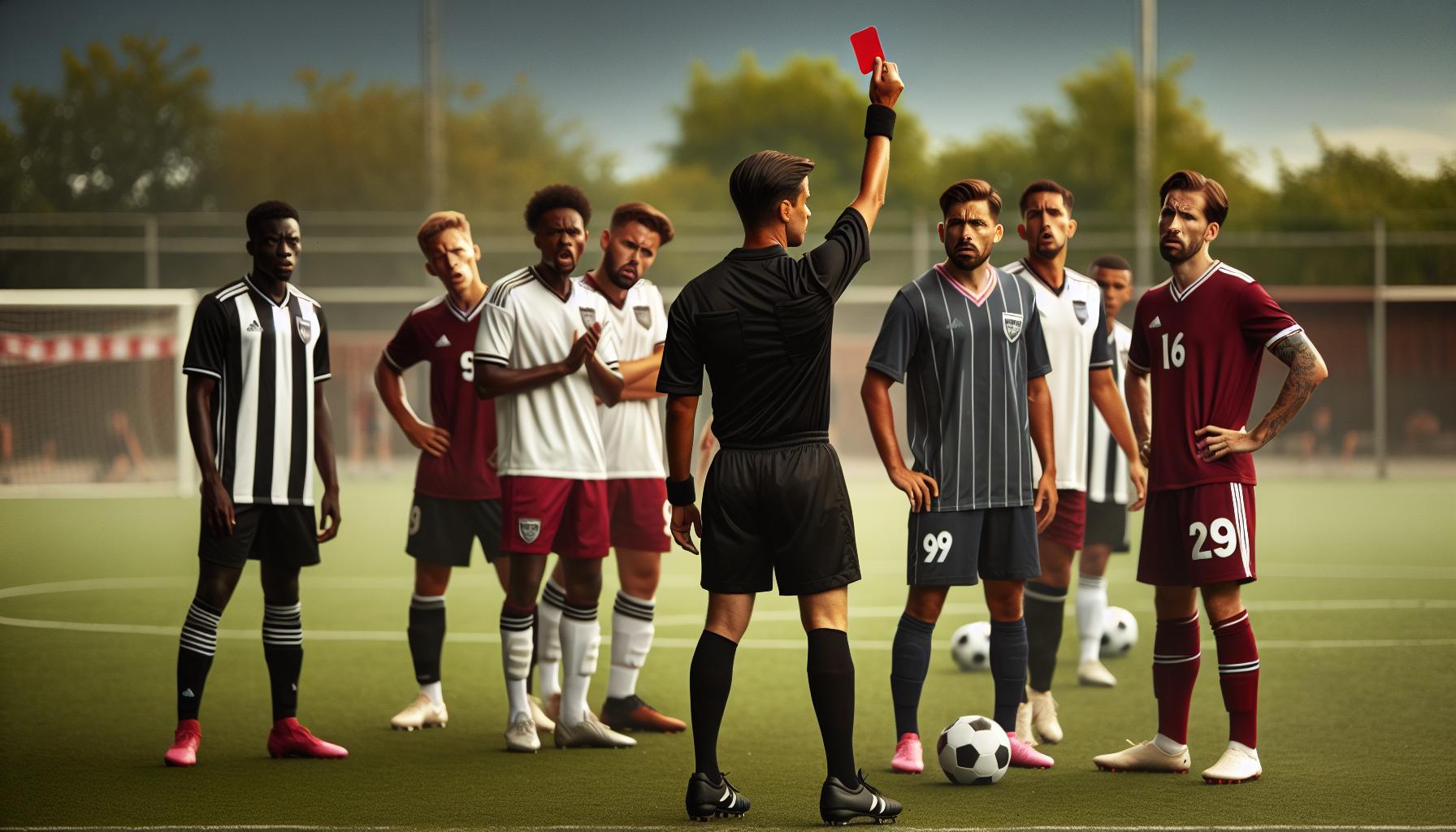
Few moments in soccer ignite as much drama and controversy as the flash of a red card. It’s a stark signal that something has crossed the line-not just a foul, but a serious offense that threatens the integrity and safety of the game. From bone-crunching tackles to unsportsmanlike conduct, the actions that lead to a dismissal often reveal a player’s raw emotional edge or split-second misjudgment, forever imprinting a moment in soccer history. Take, such as, Wayne Rooney’s infamous red card in the 2006 World Cup against Portugal, were a retaliatory stamp shifted the momentum and left fans debating fairness and passion in sport for years. Understanding the exact fouls and offenses that incur this harsh penalty can definitely help players and fans alike appreciate both the spirit and strict discipline soccer demands.
At the heart of what triggers a red card are fouls that endanger players or undermine fair play. These include violent conduct, such as deliberately striking an opponent or using excessive force in a tackle, and serious foul play, which covers reckless challenges that put others at risk. Professional referees are trained to watch for clear intent, whether it’s a risky lunge aimed at injuring or a cynical last-man foul to stop a sure goal-scoring possibility. Beyond physical aggression, other offenses include spitting at an opponent or official, using offensive or abusive language, and receiving a second yellow card in the same match-each a betrayal of soccer’s respect and sportsmanship. Coaches frequently enough remind players that discipline isn’t just about avoiding red cards but sustaining a team’s focus and morale, underlining how even the most technically gifted players must balance passion with control.
Key Fouls That Result in Red Cards
- Serious Foul Play: Dangerous tackles or challenges that risk injury (e.g., studs up, late sliding tackles).
- Violent Conduct: Intentional acts like punching, kicking, or wrestling that go beyond the ball.
- Denial of Goal-Scoring Opportunity: Committing a foul that stops a clear goal chance, often called a “last-man foul.”
- Spitting: A rare but automatic red card offense due to its disrespect and health risks.
- Offensive or Abusive Language and Gestures: Actions that damage the decorum and respect essential to the game.
- Second Yellow Card: Repeated infringements that accumulate and lead to sending off.
Real-World Insight: Tactical and Emotional Dimensions
Beyond the rulebook, the context of these fouls often highlights the emotional intensity of soccer matches. Coaches like Pep Guardiola have noted that players under immense pressure sometimes miscalculate in crucial moments, turning a potential advantage into a liability through a red card.Conversely, defenders like Sergio Ramos have built reputations for tenacity-pushing the boundaries of physicality while staying just on the right side of a sending off. These nuances remind us that red cards aren’t just about breaking rules; they are narrative turning points where strategy,temperament,and humanity collide,and where players must constantly measure their aggression against the collective mission of the team and the elegance of the sport itself.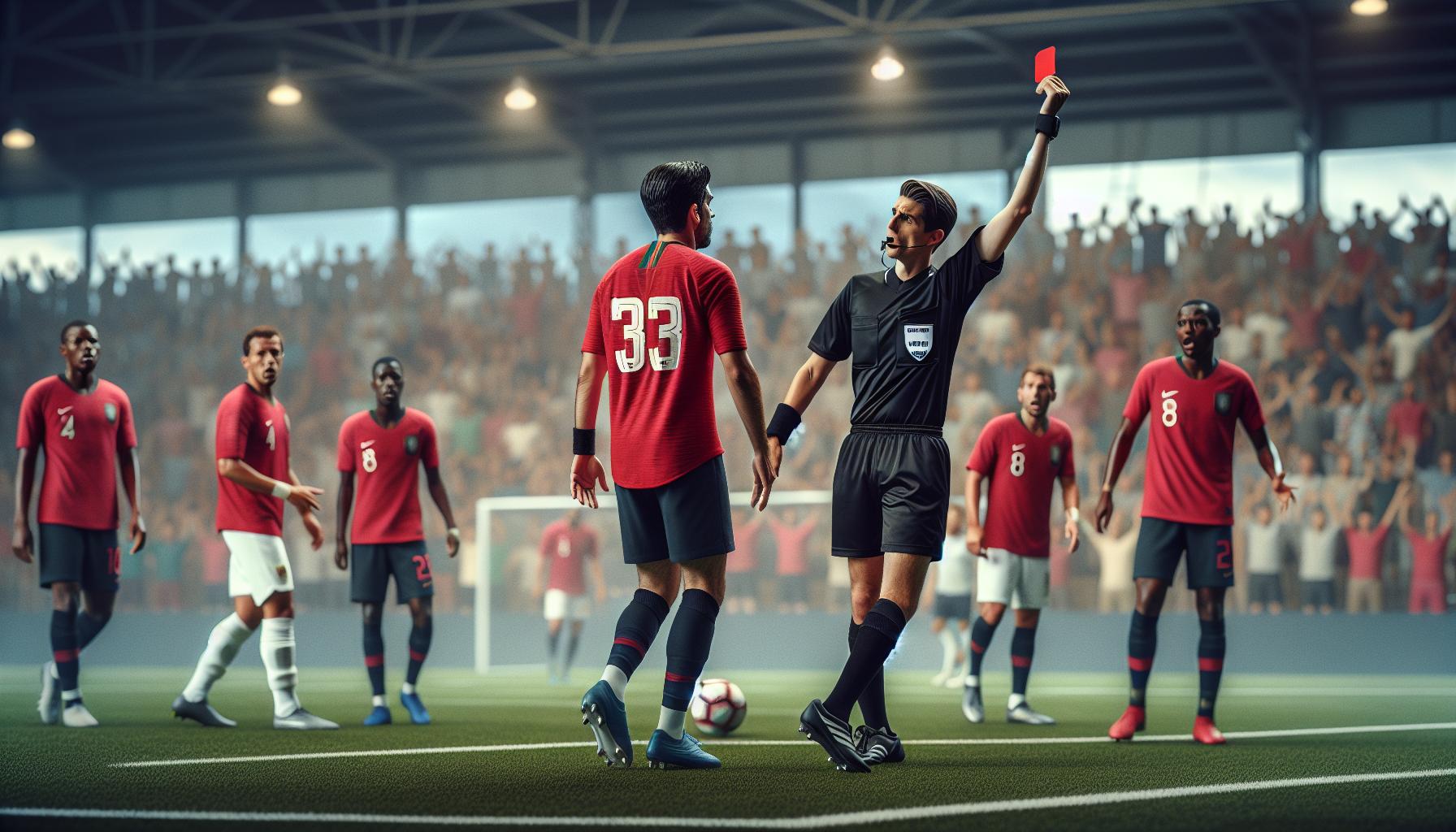
Famous Red Card Moments That changed Matches
Few moments in soccer have electrified fans or altered the course of history quite like a red card shown at a pivotal juncture. These send-offs do more than reduce a team’s numbers-they fracture momentum, test tactical resolve, and frequently enough rewrite the narratives of some of the sport’s most legendary contests. Take, for exmaple, Zinedine Zidane’s 2006 World Cup final headbutt, a stunning climax that not only ended his illustrious international career but also left France a man down in extra time, tipping the balance toward Italy. Red cards like these amplify the human drama inherent in soccer, revealing the thin line between passion-fueled brilliance and costly lapses in discipline.
Such moments offer invaluable lessons for players and coaches alike on the importance of emotional control and strategic awareness. the infamous dismissal of Paulo Di Canio in a Premier League match illustrates this-his reckless push on a referee not only ended his game early but also sparked debates on player conduct and respect. On the tactical front, teams facing a red card frequently enough employ immediate formation shifts, turning toward more defensive shapes or rapid counter-attacks to mitigate their disadvantage. Coaches like José Mourinho have praised teams that embrace resilience in the face of adversity, emphasizing disciplined dialog and role adaptation. For players striving to avoid the pitfalls that lead to a red card, studying these historic incidents reinforces the critical balance between assertive play and measured restraint, key to maintaining both team integrity and individual reputation.
Iconic Red Card Moments
- Zinedine Zidane, 2006 FIFA World Cup Final: A decisive moment where Zidane’s headbutt on Marco Materazzi resulted in an early exit for France, profoundly impacting the final’s outcome.
- Ricardo Carvalho, UEFA Champions league 2007: A tactical foul denying a key scoring chance, triggering a red card that forced Chelsea to reorganize under immense pressure.
- Paolo Di Canio, Premier League 1998: Push on referee Paul Alcock sparked widespread discussion on the limits of player discipline.
- Sergio Ramos, multiple La Liga send-offs: Known for teetering on the edge of aggression and control, showcasing the fine margins defenders must navigate.
How Referees Decide to Show a Red Card
Few decisions on the pitch are as pivotal and scrutinized as the referee’s choice to issue a red card. This moment,charged with instant drama and consequence,is not taken lightly-it is indeed a blend of rule interpretation,split-second judgment,and an acute sense of game context. Referees are guided by the Laws of the Game,but the decision to show a red card often hinges on factors far beyond what a rulebook can capture: the nature of the offense,player intent,potential danger to opponents,and the overall flow of the match. As former referee Howard Webb explained, “you are a ruler of conduct but also a guardian of the game’s spirit.” This dual role means the red card becomes both a disciplinary tool and a theatrical signal that something unusual-often game-altering-has occurred.
When a referee reaches for that red card, it usually follows a few critical considerations. Was the foul violent or reckless,putting a player’s safety at risk? Did a player deny an obvious goal-scoring opportunity by committing a foul,or was dissent so extreme that it disrupted the authority required to maintain order? These judgments are informed not only by observing the act itself but also by interpreting the player’s demeanor and subsequent behavior-whether there is contrition or confrontation. Take, for example, a match where Liverpool’s Virgil van Dijk received a straight red for a late, studs-up tackle; the referee’s decision reflected a priority on player safety and deterrence of dangerous challenges. Coaches like Carlo Ancelotti emphasize that referees “must balance firmness with fairness,” because an overly harsh or lenient red card can ripple through a team’s morale and tactics. In this light, referees become custodians of fairness, managing the fine line where competitive intensity can escalate into unfair play.
Factors Referees Weigh Before Showing a Red Card
- Severity of the Incident: Deliberate violence, serious fouls, or abusive language.
- Potential Damage: Risk posed to the injured player and wider match implications.
- Intent vs. Accident: Was the offense accidental or a calculated act?
- player Reaction: Compliance or escalation after the offense.
- Game Situation: Referee’s awareness of momentum, scoreline, and time remaining.
The advent of Video Assistant Referee (VAR) technology has added a new dimension to these decisions, providing referees with replay footage to reinforce or reconsider red card calls. yet even with VAR’s assistance, the human element remains central. Former player and pundit Gary Neville remarked, “The referee is the heartbeat of the game, and their decisions must resonate with both justice and the spectacle we all crave.” In essence, showing a red card is not merely enforcing rules-it’s about preserving the integrity of soccer while unleashing the passion and unpredictability that define this beautiful game.
Tactical impact of a Red Card on Teams
Few moments in soccer alter the course of a match as dramatically as a team losing a player to a red card.The immediate tactical upheaval tests a coach’s ingenuity and the players’ resilience, forcing a swift recalibration of strategy under intense pressure. When a team drops to ten men, they must balance conserving defensive solidity with maintaining enough attacking threat to avoid total collapse.This delicate balancing act often leads to a defensive reshuffle, where midfielders drop deeper and fullbacks tighten their marking, while offensive shape shifts into more purposeful counterattacks. Legendary manager José Mourinho once remarked, “A red card is as much a test of character as it is a tactical challenge.” Teams that successfully navigate this adversity frequently enough show exceptional discipline, physical endurance, and collective spirit.
| Common Tactical Adjustments After a Red Card | Purpose |
|---|---|
| Reinforcing Defensive Lines | To prevent being overrun and protect the goalkeeper |
| Compact Midfield Formation | To cut passing lanes and disrupt opponent rhythm |
| Counterattacking Focus | To exploit spaces left by aggressively pressing opponents |
| Player Role Adjustment | Players adopt more versatile or deeper positions to cover gaps |
For example, during the 2014 FIFA World Cup quarter-final, Germany’s tactical discipline after Phillip Lahm’s early red card in a crucial qualifier helped them remain resolute, ultimately securing victory despite being a man down. Coaches often instruct their teams to “play smarter, not harder,” emphasizing smart pressing traps and speedy transitions to frustrate numerical superiority. It’s also a mental battleground-players must maintain focus and composure as fatigue sets in and opponents intensify pressure. The shift to ten men can galvanize a team’s fighting spirit, turning perceived weakness into a rallying point that amplifies collective performance and fan connection. Ultimately, how a team adapts tactically to a red card can be the difference between a crushing defeat and a heroic comeback, celebrating soccer’s unpredictable and thrilling nature.
How Players Can Avoid Getting a Red Card
Few experiences on the pitch are as deflating-or game-changing-as the moment a player sees red.staying disciplined in the heat of battle requires acute self-awareness and an unwavering commitment to both skillful play and emotional control. Stars like Spain’s Sergio Ramos, who famously walked the fine line between assertive defending and aggressive fouling, reveal that understanding when to apply pressure and when to pull back can be the decisive factor between hero and villain. Embedding a sense of measured intensity within every tackle or challenge is essential; it’s about winning the ball, not the confrontation. Champions train not only their bodies but their minds to track the lines that separate fair physicality from reckless behavior.
Learning to avoid red cards hinges on cultivating a continuous dialogue between player instincts and tactical discipline. developing this balance means embracing several practical habits:
- Mastering timing and technique: Clean tackles executed with perfect timing diminish the risk of dangerous fouls that referee scrutiny penalizes harshly.
- Controlling emotions: Players must anticipate moments when frustration or provocation could cloud judgment, deploying breathing techniques or mental resets on the fly.
- Effective communication: Collaborating with teammates to share defensive responsibilities reduces desperation tackles born from isolation or panic.
- Studying referees: Understanding an official’s style and tolerance early in the match allows players to adapt their aggression levels appropriately.
The Career-Saving Value of Discipline
Reflect on the career of Paolo Maldini, whose longevity and grace under pressure were built on his legendary composure and impeccable timing. Maldini’s insight-“To be remembered is not just about defeating opponents, but about respecting the game and its rules”-reflects a mindset that every player should strive for. Similarly, coaches often stress disciplined decision-making in training sessions, using video analysis to highlight moments when instinctive reactions could have led to costly red cards. Employing scenario-based learning and mindfulness strategies, modern teams transform potential liabilities into assets. This proactive approach not only safeguards players from suspension but also enhances team cohesion and competitive edge.
| Key Practices to Avoid Red Cards | How It Helps |
|---|---|
| Controlled Aggression | Maintains intensity without dangerous fouls |
| Situational Awareness | Prevents late or reckless tackles |
| Emotional Regulation | Reduces reactions to provocation |
| Clear Communication | Avoids desperate defensive errors |
By embracing discipline both on and off the ball, players not only protect themselves but also contribute to the increasingly refined drama of soccer-a contest as much about brains as brawn. Avoiding red cards means respecting the beautiful game’s integrity and seizing the opportunity to rise above adversity, showcasing tactical intelligence and sporting spirit in every challenge.
The Role of Video Assistant Referee (VAR) in red Cards
Few innovations have reshaped the modern game as profoundly as the Video Assistant Referee (VAR), especially when it comes to the issuance of red cards. This technology brings a heightened level of scrutiny to the fast-paced, often chaotic moments on the pitch where a split-second decision can alter the outcome of a match and a player’s career. Rather than relying solely on the referee’s immediate view, VAR introduces a second pair of expert eyes watching multiple angles in real time. As a result, many contentious red card decisions are now reviewed with an emphasis on clarity and fairness, reducing instances of wrongful expulsions that could unfairly tip the scales. The introduction of VAR prompts players and coaches alike to maintain impeccable discipline, knowing that errant behavior is more likely to be caught and sanctioned with the match’s integrity firmly upheld.
Integrating VAR into red card decisions also offers a rich case study in human and technological collaboration within sport. Coaches regularly speak about its impact on tactical adjustments, where a controversial tackle once ignored can now be precisely judged minutes after it happens. Legendary defenders like Carles Puyol expressed initially mixed feelings about VAR, emphasizing the human element in refereeing, but later acknowledging its role in protecting players and preserving fair play. While VAR cannot remove all subjectivity-it remains a tool aiding referees rather than replacing them-it has certainly encouraged players to practice greater restraint, understanding that severe fouls will be harder to hide. For supporters, VAR’s role also sparks passionate debate, underscoring the sport’s dramatic tension between instantaneous emotion and considered justice, a balance that continues to evolve alongside the beautiful game’s rich traditions.
Practical Tips for Players Under VAR Scrutiny
- Maintain composure in high-stakes moments: Knowing the play will be reviewed encourages players to avoid rash challenges or retaliatory fouls.
- Play with awareness of camera angles: Players can inadvertently worsen their case by appearing aggressive from certain angles; controlled challenges minimize this risk.
- Work with teammates on clean defensive techniques: Coordinated pressing reduces desperation tackles that often trigger VAR reviews.
| VAR Influence | effect on Red Card Decisions |
|---|---|
| Multiple camera angles | Ensures accurate assessment of fouls and violent conduct |
| Pause and review process | Allows referees to confirm or overturn red card calls |
| Heightened player awareness | Promotes disciplined play to avoid scrutiny |
Embracing the VAR era means understanding that while the technology elevates fairness, it also demands a higher standard of professionalism from every player. The resulting balance between upholding soccer’s intense competitive spirit and ensuring just conduct underscores the ongoing evolution of officiating in football’s grand narrative.
Consequences and Suspensions After Receiving a red Card
Few moments in soccer carry the same immediate weight as the flash of a red card. Beyond the dramatic sending off on the pitch,the consequences ripple far beyond the final whistle,shaping a player’s season and,at times,their career trajectory. Receiving a red card doesn’t just mean an abrupt end to participation in the current match; it frequently triggers a mandatory suspension that can vary in length depending on the severity and nature of the offense. Such as, violent conduct or denial of an obvious goal-scoring opportunity typically results in at least a one-match ban, but more serious infractions-such as abusive language or elbowing an opponent-can lead to extended suspensions and fines. Clubs and players alike know that these disciplinary measures are designed to uphold the sport’s integrity, emphasizing accountability while safeguarding the game’s flow and spirit.
The impact stretches into team dynamics as well. Coaches must swiftly recalibrate tactics and squad selection,often calling on bench players to fill voids left by suspended teammates. Legendary coach Sir Alex Ferguson once commented on how crucial it is to “build resilience in a squad to absorb these moments,” revealing the strategic depth required behind the scenes. Moreover, disciplinary records from red cards feed into future refereeing decisions, with repeat offenders facing stricter penalties. Players like Sergio ramos, renowned for their passionate yet often fiery style, exemplify this delicate balance between aggressive competitiveness and the fine line of disciplinary risk. Clubs often engage in proactive education for players, encouraging emotional control and situational awareness to mitigate the long-term costs of red card suspensions-measures that underline how discipline is as vital to soccer success as skill and strategy.
Practical Steps to Manage Red Card Suspensions
- Understand the specific suspension rules for the league or tournament: Regulations can differ; knowing these helps in planning player availability.
- use suspensions as a moment for player reflection and growth: Encourage disciplined training and mental conditioning to prevent future infractions.
- Leverage squad depth strategically: Rotate players and adjust tactical formations to compensate without losing competitiveness.
| Type of Offense | Typical Suspension Length | Additional Consequences |
|---|---|---|
| Serious foul play or violent conduct | 1-3 matches | Possible fines, disciplinary hearings |
| Denial of a clear goal-scoring opportunity | 1-2 matches | Warning or fine depending on context |
| Use of offensive or abusive language | 3+ matches | Hefty fines, possible extended bans |
By viewing the aftereffects of a red card through the dual lenses of individual duty and collective team resilience, fans and players alike can appreciate its profound role in soccer’s drama. The beauty of the sport is not diminished by these disciplinary moments; rather, they add a crucial layer of challenge and redemption, underscoring the enduring human spirit that drives football forward.
Psychological Effects of a Red Card on Players and Teams
Few moments in soccer alter the emotional landscape of a match as abruptly and intensely as a red card.For the player sent off, the immediate aftermath can be a storm of frustration, disappointment, and self-reproach, often compounded by the pressure of knowing their absence will burden teammates. This psychological turbulence is not limited to the individual; an entire team can spiral into doubt or galvanize around adversity depending on their collective mindset. Legendary coach Jurgen Klopp has remarked on how crucial mental resilience becomes in these moments, stating, *”How a team responds mentally to setbacks defines their character.”* The psychological shock of losing a key player can undermine confidence, forcing players to battle not just opponents, but their own nerves and perceived disadvantage.
Yet, the twin edges of this emotional challenge can also awaken extraordinary solidarity and focus.Teams that embrace the collective fight frequently enough elevate their intensity, driven by a deepened sense of responsibility and camaraderie. An iconic case unfolded during the 2010 world Cup when Spain’s Xabi Alonso received a red, yet the squad’s composure grew stronger, paving the way for their eventual victory. Practical steps for players and coaches to harness these emotions include fostering open communication, emphasizing discipline to avoid rash penalties, and working with sports psychologists to manage pressure. For players, recognizing that a red card is not just a personal failure but a shared moment in a team’s ongoing journey encourages growth, not despair.
Managing the Emotional Fallout
- Acknowledge emotions: Encourage players to express frustration constructively rather than suppress it.
- Reframe the setback: View the red card as a learning opportunity to improve decision-making under pressure.
- Strengthen team cohesion: Use group meetings to reinforce collective goals and trust.
Psychological Tools for Recovery
| Tool | Purpose | How It Helps |
|---|---|---|
| Visualization | Mentally preparing for high-pressure situations | Builds confidence and improves focus to avoid impulsive fouls |
| Mindfulness Training | Enhancing emotional regulation during matches | Reduces reactive tendencies that cause disciplinary issues |
| Team Workshops | Developing empathy and resilience within squads | Transforms adversity into unity and collective strength |
By understanding and addressing the psychological ripple effects of a red card, players and teams transform a moment of exclusion into an opportunity for renewed mental toughness. The rich tapestry of soccer is woven not only through technical skills and tactical brilliance but also the emotional tenacity teams display when facing the unexpected challenge of playing down a man. In this way, red cards become more than setbacks-they become stories of character, courage, and the indomitable spirit that defines the beautiful game.
Strategies for Playing with One Less Player
Few challenges in soccer test a team’s character more sharply than adjusting to life with one less player. When the referee reaches for a red card, the dynamic shifts instantly-space disappears, stamina is taxed, and tactical discipline becomes paramount. Legendary moments, like Chelsea’s disciplined rearguard action against Barcelona in the 2012 Champions League final after sending-off, show that adversity can be a crucible for brilliance. To succeed in these situations, teams must adopt a mindset that blends resilience with smart positioning, turning numerical disadvantage into a display of collective grit and tactical intelligence.
Effective adaptation starts with reorganization-prioritizing defensive solidity without sacrificing every ounce of attacking intent. Teams often shift to a compact shape, usually abandoning a forward or a midfielder to reinforce the defensive blocks. The key is communication: every player must understand their expanded responsibilities, often covering more ground and closing passing lanes. As former Spain captain Xavi Hernandez reflected, “It’s about controlling the game you can still influence, not the one you lost.” This strategic mindset fuels urgency balanced with composure,allowing teams to frustrate opponents while capitalizing on swift counterattacks.
Core Strategies to Maintain Competitive Edge
- Compact Defensive Formation: Shrinking the defensive block reduces space for opponents, forcing them wide or into risky passes.
- Midfield Support: Midfielders drop deeper to help defense, cutting off supply lines and aiding quick recovery when possession is lost.
- Selective Pressure: Instead of pressing high everywhere, teams focus on key zones, conserving energy and avoiding vulnerable gaps.
- Counterattack Focus: swift transitions exploit moments when opponents overcommit attacking the extra player advantage.
- Enhanced Communication: Leadership on the pitch-often from a seasoned defender or captain-keeps the team organized and emotionally grounded.
These strategies are underpinned by physical conditioning and mental resilience. Coaches like José Mourinho have often emphasized fitness and tactical discipline to navigate these moments successfully, asserting that “a team that moves collectively is always stronger than the sum of its parts.” Adaptations during matches also depend heavily on players reading the flow, showing patience rather than panic. In tournaments, such composure has vaulted underdog teams into unforgettable upsets, proving that playing with one less is not a death sentence but an opportunity to rewrite the game’s narrative.
Red Card Rules Across Different Soccer Leagues and Tournaments
Across the world’s soccer leagues and tournaments,red card regulations share a foundation in the Laws of the Game but are nuanced by competition-specific rules,disciplinary procedures,and interpretations that reflect the spirit and stakes of each contest. What sets apart a red card decision in the English Premier League, the FIFA World Cup, or local youth leagues often comes down to how disciplinary committees apply suspensions, the presence of technological aids, and the cultural weight assigned to certain fouls. For instance, the UEFA Champions League maintains a unified disciplinary framework that ensures consistent red card consequences across diverse national teams and leagues, strengthening the global integrity of these fiercely contested matches. Meanwhile, some domestic leagues like Mexico’s Liga MX or Brazil’s Serie A may apply additional fines or extended suspensions for repeat offenders, reflecting their distinctive approach to game management and player conduct.
Historically, referees in leagues such as the Italian Serie A have gained reputations for strict enforcement of red card-worthy infractions, contributing to tactical caution in midfield battles – a trend vividly illustrated by past Serie A classics where teams played with fierce intensity yet remained wary of losing a player due to harsh officiating. In contrast, Major League Soccer has evolved rapidly in embracing video assistant referee (VAR) technology to reduce subjective errors, showing how leagues adapt rules and review processes for fairness. This dynamic habitat means players and coaches alike must not only master the Laws of the Game but also stay abreast of competition-specific disciplinary codes, including how appeals and suspensions are handled. Understanding these differences empowers teams to strategize smarter under pressure, avoiding needless dismissals that can swing momentum dramatically.
Variations in Suspension Lengths and Appeal Processes
- FIFA and International Tournaments: Red cards typically incur an automatic one-match ban, with possible extensions for violent conduct or serious foul play.
- english Premier League: Straight reds frequently enough result in a three-match ban, though the FA offers appeal opportunities that can reduce or uphold initial decisions.
- UEFA Competitions: Coordinated disciplinary panels review red cards, combining suspensions with potential fines or warnings to preserve tournament standards.
- Local and Youth Leagues: Procedures vary widely, frequently enough emphasizing education and rehabilitation alongside punitive measures to promote long-term player growth.
Impact of VAR and technological Adoption
Video assistance has become a pivotal factor influencing red card rulings across many top leagues and international events. From real-time reviews overturning wrongful expulsions to clarifying off-the-ball violent incidents invisible to the referee’s eye, VAR shifts how discipline is meted out. This transparency boosts player confidence in fair officiating but also demands heightened professionalism, as even split-second indiscretions can be scrutinized post-game. Coaches frequently emphasize this evolving landscape, reminding players that “there are no shadows for your actions anymore”-a warning that resonates deeply amid the razor-thin margin for error at elite levels.
FAQ
Q: How does a player’s behavior outside the field impact the likelihood of receiving a red card?
A: A player’s off-field behavior, such as disciplinary history or previous conflicts, can influence a referee’s perception during a match. Players with a reputation for aggressive conduct often face closer scrutiny, increasing their risk of a red card. Maintaining professionalism both on and off the pitch helps reduce this risk. Learn more about referee decisions in our section on How Referees Decide to Show a Red Card.
Q: What specific actions during a set-piece increase red card risks?
A: Actions like violent challenges or deliberate handballs in set-pieces, such as corners or free kicks, often trigger red cards. Jumping with excessive force or fouling to prevent goal-scoring chances during these moments demands caution. Players should focus on timing and clean challenges to avoid harsh penalties, complementing the analysis found in Common Fouls and Offenses Leading to Red Cards.
Q: Why do some leagues show more red cards than others?
A: Red card frequency varies due to differences in refereeing styles, league policies, and cultural playing styles. Some leagues enforce stricter discipline or interpret rules with less tolerance for physical contact, resulting in more red card incidents.Explore how this impacts competition in our Red Card Rules Across Different Soccer Leagues and Tournaments section.
Q: How do referees communicate red card decisions to players and fans?
A: Referees use a clear, authoritative gesture by showing the red card visibly to both players and spectators, often accompanied by verbal explanations. This transparency helps maintain match flow and player understanding. For deeper insight,check our breakdown in How Referees Decide to Show a Red Card.
Q: Can tactical fouls ever lead directly to a red card?A: Yes,
tactical fouls intended to stop clear goal-scoring opportunities can result in straight red cards. Players must weigh the risk as such fouls sacrifice immediate advantages but often lead to suspensions. This ties into key tactics discussed in Tactical Impact of a Red Card on Teams.Q: How do players mentally prepare after earning a red card during a critical match?
A: Players frequently enough use mental resilience techniques like visualization and self-reflection to stay focused post-red card. acknowledging the setback while planning for future matches aids recovery and team morale, as detailed in Psychological Effects of a Red Card on Players and Teams.
Q: What role do captains play in preventing teammates from receiving red cards?
A: Captains act as on-field leaders who calm teammates, manage aggression, and communicate with referees, helping reduce reckless behavior that could lead to red cards. Their influence is crucial during tense moments,highlighted under the team strategy discussions in Strategies for Playing with One Less Player.
Q: Are there any examples of players who changed their playing style to avoid red cards?
A: Yes, players like Sergio Ramos have famously adapted by becoming more disciplined while maintaining aggression. Adjusting tactics to balance intensity with restraint often extends careers and benefits teams, a transformative journey you can read about in the stories within Famous Red Card Moments That Changed Matches.
Dive deeper into these facets to enrich your understanding and elevate your appreciation of soccer’s intense drama and discipline.
Final Thoughts
Mastering the art of understanding how a red card changes the game can truly elevate your soccer insight, whether you’re a player, coach, or passionate fan. From the strategic implications on the pitch to the emotional highs and lows that define historic matches,recognizing when and why these critical moments happen brings the drama of soccer to life. Don’t miss exploring our in-depth breakdown of common fouls and referee decisions to sharpen your grasp even further.
Ready to dive deeper? Explore our guides on “Top Soccer Fouls That Lead to Penalties” and “How Referees Make Crucial Game-Changing Calls” to keep your edge sharp. Subscribe to our newsletter for weekly updates, pro tips, and player interviews that let you experience the beautiful game from every angle. Share your thoughts below-have you witnessed any unforgettable red card moments? Your story could inspire fellow fans and players alike. Stay connected, keep learning, and let every card shown deepen your passion for soccer’s unforgettable drama.
Get our latest guides, news, and insights highlighted in your Google Search & AI Overviews.