Did you know that the transition from small-sided youth soccer games to the full 11v11 format marks a pivotal moment in a young player’s progress? Understanding exactly when adn why youth soccer teams shift to 11v11 is essential for players, coaches, and parents aiming to maximize growth, teamwork, and tactical understanding. This change isn’t just about more players on the field-it’s a gateway to experiencing the full beauty and strategic complexity of the sport.
As youth players advance in age and skill, the move to 11v11 introduces new challenges and opportunities that shape their soccer journey. Coaches witness a transformation in how players read the game, communicate, and execute team strategies with greater sophistication. Parents see their children embrace larger roles on a dynamic, flowing field where individual brilliance blends with collective effort. Whether you’re curious about the age guidelines or eager to support your young athlete during this critical phase, exploring the timing and impact of moving to 11v11 deepens your recognition for the game’s evolving drama and the community it builds. Keep reading to uncover the milestones,expert insights,and real stories that make this transition a defining chapter in youth soccer’s narrative.
Contents
- Understanding Youth Soccer age Divisions and Format changes
- The Framework of Age Divisions and Format Transitions
- Why Transitioning to 11v11 Is a Game Changer
- Age Guidelines and Governing Body Standards for 11v11
- Practical Age Guidelines at a Glance
- Balancing Standards with Player Needs
- Physical and Tactical Readiness: When Players Are Ready
- Key Indicators of Readiness
- Common Challenges During the Shift to Full-Sided Play
- Practical Tips to Navigate the Transition
- How 11v11 Impacts player Development and Team Dynamics
- Key Elements Driving Growth and Teamwork
- Coaches’ Perspectives on Timing the 11v11 Move
- Key Considerations from Coaches on Transition Timing
- Parental Insights: Supporting Kids Through the Transition
- Building Confidence and Connection
- training Drills to Prepare for 11v11 Soccer success
- Bringing Tactical Concepts to life
- Adjusting Field Size and Rules for Age Progression
- Practical Guidelines for Field Size and Rule Adaptation
- Celebrated Youth Players Who thrived Post 11v11 Transition
- Lessons from the Greats: What Their Transitions Teach Us
- FAQ
- Q: At what age do most youth soccer leagues transition players to 11v11 games?
- Q: How can coaches assess if players are ready for the 11v11 full-sided soccer?
- Q: What challenges do players commonly face when switching to 11v11 soccer?
- Q: Are there variations in when youth soccer transitions to 11v11 across different countries?
- Q: How does transitioning to 11v11 affect a youth player’s tactical development?
- Q: What role do parents play in supporting kids through the switch to 11v11 soccer?
- Q: How does field size adjustment align with age progression toward 11v11 soccer?
- Q: What training drills best prepare youth players for success in 11v11 soccer?
- to sum up
Understanding Youth Soccer age Divisions and Format changes
The journey through youth soccer is marked by a fascinating evolution in both age divisions and playing formats, designed to nurture player development while honoring the spirit of the game. As children grow,so does the complexity and scale of the game they play-moving from smaller-sided formats like 4v4 or 7v7 toward the traditional 11v11 that mirrors the professional level. This progression isn’t arbitrary; it’s carefully structured to match the physical, cognitive, and emotional maturity of young athletes, ensuring they thrive rather than merely survive the increasing demands. Imagine a 9-year-old mastering close ball control in a 7v7 game, then transitioning with excitement (and a little nervousness) into the expansive field of 9v9 or 11v11 as their skills and understanding deepen. This gradual rise exposes players to new strategic dimensions, spatial awareness, and teamwork, cultivating a richer, more complete soccer experience.
The Framework of Age Divisions and Format Transitions
National and regional soccer organizations typically establish clear age brackets that dictate when players move between formats. These divisions are far more than administrative-they serve as developmental milestones. For example,many U.S. youth leagues encourage 9v9 or 7v7 play up to U12, followed by a transition to 11v11 at U13 or U14. This shift is supported by guidelines from bodies like US Youth soccer and FIFA, which recognize that by early teens, players possess the stamina and tactical acumen necessary for full-sided play. In practical terms, this means coaches and parents should prepare kids with progressively larger field sizes, adjusted substitution rules, and greater emphasis on positional responsibility. One inspiring example: a regional U13 team that embraced the 11v11 format early reported improved communication and a stronger sense of teamwork as players adapted to broader field coverage and new roles. Such stories hint at how the right timing in format changes can ignite passion and accelerate growth, rather than overwhelm young athletes.
- Smaller-sided games (4v4 to 7v7): Focus on touches, creativity, and basic tactical awareness.
- Intermediate formats (9v9): Introduce larger spaces and formation understanding.
- Full-sided play (11v11): Emphasizes stamina, complex tactics, and positional discipline.
By understanding these age and format milestones, every player’s path can be crafted thoughtfully, ensuring the beauty and drama of soccer continue to inspire at every stage.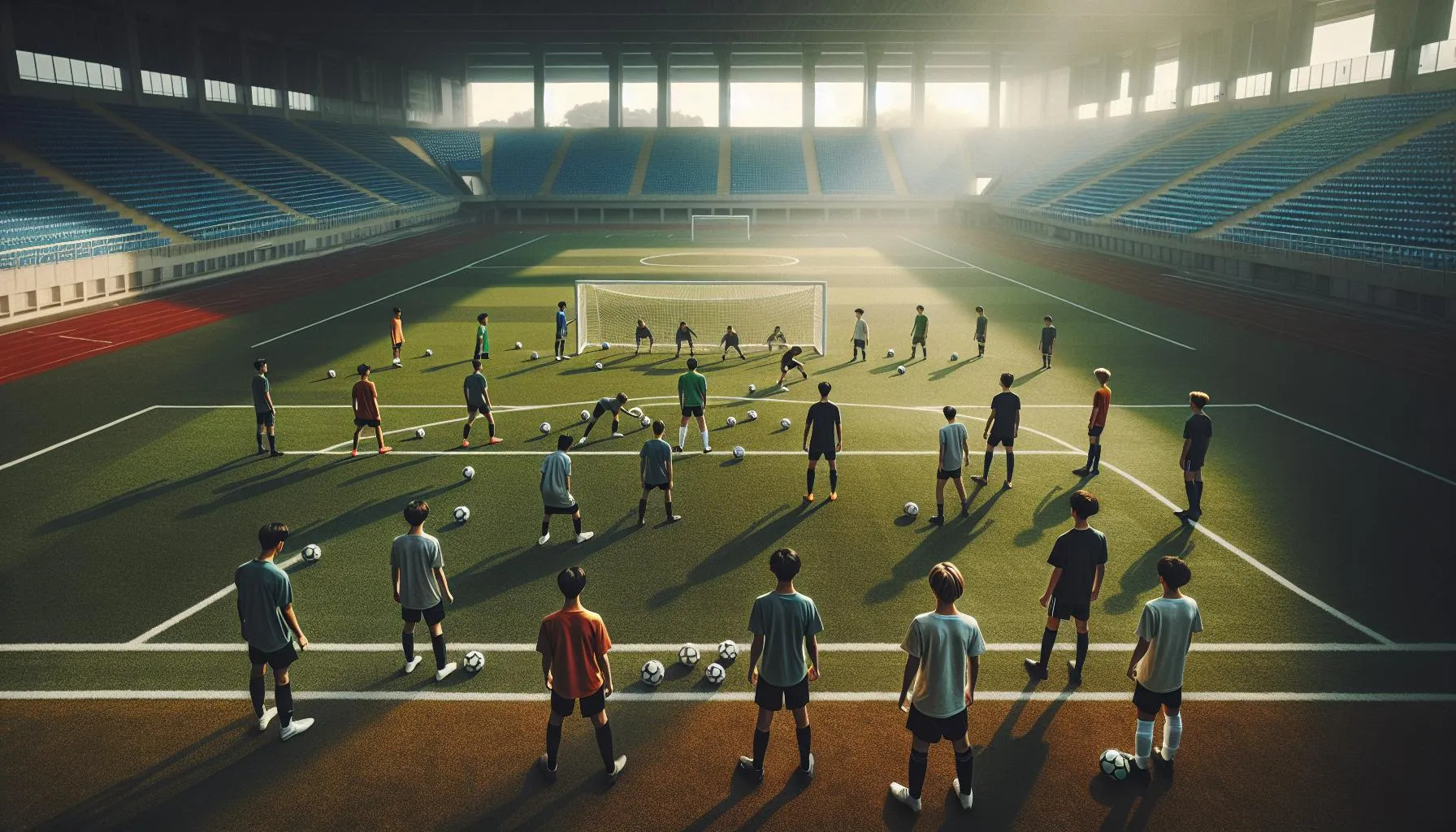
Why Transitioning to 11v11 Is a Game Changer
Stepping onto the expansive pitch in an 11v11 game transforms a young player’s experience from a localized skirmish to a full-scale tactical encounter, mirroring the professional level they aspire to reach. This shift challenges players to develop not only greater physical endurance but also heightened spatial awareness and refined decision-making skills. In smaller-sided games, the focus is ofen on close control and individual creativity, but the leap to 11v11 demands players learn to anticipate plays across a much broader field and integrate within a complex, interdependent system of teammates.Take, as an example, a U14 midfielder who suddenly must master both breaking lines with incisive passes and tracking multiple opposing runs simultaneously – this development is profound and catalytic. Coaches note that the transition often ignites a new level of engagement among players, who begin to appreciate the beauty of coordinated team movement and strategic positioning, fueling a deeper passion for the game.This evolution is not just about physical growth-it’s a pivotal stage for cognitive and emotional maturity as well. Players face new roles requiring specialized skills such as holding shape in defensive lines or orchestrating attacks from wide areas,presenting opportunities for young athletes to discover their unique strengths and soccer identities. The increased complexity also fosters leadership qualities; captains emerge who direct teammates and manage game tempo, while players learn resilience through more competitive, often high-stakes scenarios. Practical advice for coaches preparing teams includes gradually expanding field sizes during training and introducing tactical drills that emphasize communication and positional responsibility before making the official format switch. Parents can support their children by celebrating incremental milestones in this demanding transition rather than focusing solely on wins or losses, recognizing that mastering full-sided soccer is an essential chapter in their long-term development. Ultimately, 11v11 is a game changer because it reveals and cultivates the full spectrum of what soccer is-a thrilling, collective sport that blends individual artistry with unified purpose.
- Elevates tactical complexity: Players adapt to advanced positioning and strategic formations.
- Builds critical stamina: Match demands improve physical conditioning for longer, more intense play.
- Encourages team cohesion: Requires continuous communication and understanding of teammates’ movements.
- Promotes player identity: Offers varied roles so players can specialize and grow confidence.
- Develops leadership: Necessitates on-field decision-makers who inspire and organize effectively.
Age Guidelines and Governing Body Standards for 11v11
Youth soccer’s progression into the 11v11 format is governed not only by developmental readiness but also by carefully crafted standards set by national and international soccer bodies. Most associations, including US Youth Soccer and UEFA, recommend transitioning players to 11v11 around the U12 to U14 age groups-a period when athletes typically exhibit sufficiently advanced physical growth, spatial awareness, and tactical comprehension. This timing is no coincidence; it aligns with a critical window where players can meaningfully engage with the demands of the full-sized pitch without compromising confidence or enjoyment. Such as, US youth Soccer’s Player Development Initiatives emphasize age-appropriate formats, highlighting that premature exposure to 11v11 may overwhelm players still mastering the fundamentals on smaller fields.Conversely,waiting too long risks delaying exposure to the complexity and richness that full-sided soccer uniquely offers.
Coaches and program directors often cite the governing bodies’ manuals and guidelines to structure progression seamlessly while customizing to local and individual contexts.FIFA’s grassroots framework and the Long-Term Player Development (LTPD) model provide clear age demarcations but underscore versatility, inviting clubs to factor in player maturity, team dynamics, and competition level.A coach from a club renowned for nurturing elite talent recently shared, “We respect the standards but watch players closely-some U11s show tactical instincts beyond their years, so we integrate them into 11v11 selectively.” This approach reflects an evolving understanding: guidelines act as a foundation, not a ceiling.The resulting harmony between official standards and tailored coaching philosophies fuels more robust player development pathways and richer, more competitive youth leagues.
Practical Age Guidelines at a Glance
| Age Group | common Format | Field Size (Yards) | Ball Size | Notes |
|---|---|---|---|---|
| U8-U10 | 4v4 or 7v7 | 35-50 x 25-35 | Size 3 | Focus on skill building, small-sided play |
| U11-U12 | 7v7 transitioning to 9v9 | 50-70 x 35-45 | Size 4 | Introduction to tactical spacing, gradual field enlargement |
| U13 and up | 11v11 | Full field, approx. 100-110 x 64-75 | Size 5 | Full tactical and physical demands of competitive soccer |
Balancing Standards with Player Needs
While governing bodies set the framework, successful implementation depends on recognizing the human element both on and off the field. Some clubs adopt ”hybrid” models for transitional seasons, mixing formats to ensure players gradually acclimate to spacing and stamina demands. Coaches recommend open communication with parents, sharing the rationale behind timing transitions to manage expectations and celebrate developmental milestones beyond scoresheets. As one youth academy director noted, “These standards ensure fairness and challenge, but at heart, it’s about nurturing a lifelong love for soccer, not just ticking boxes.” For families, understanding that age guidelines help shape a resilient, versatile player can transform anxieties into excitement for what the 11v11 adventure brings-richer competition, sharper skills, and the thrill of becoming part of a full, intricate team story.
- Recognize that official age guidelines serve as a flexible framework,not a rigid rulebook.
- Observe individual player development closely; some may thrive in 11v11 earlier, others benefit from extended small-sided play.
- Encourage clubs and leagues to communicate clearly about format transitions for cohesive community support.

Physical and Tactical Readiness: When Players Are Ready
A player’s readiness to step onto the full 11v11 field is a moment in their development that blends physical capacity with emerging tactical intelligence. One vivid example comes from a local youth academy where a U12 midfielder, previously dominant in smaller formats, faced the first brisk winds of the expansive pitch. His first few games revealed the greater demands of stamina and spatial awareness; the long sprints and rapid shifts in positioning tested his fitness and decision-making like never before. Yet over a season, under the watchful eye of coaches prioritizing gradual exposure, he evolved not just physically but mentally-learning when to conserve energy, how to read teammates’ runs, and mastering the timing of defensive transitions. His story echoes a crucial truth: players become ready when their bodies can sustain the pace and their minds grasp the richer tactical web of full-sided soccer.
This readiness is not solely a measure of age or size but a confluence of development milestones that coaches and parents should observe closely. Effective adaptation requires a foundation in endurance, strength, and coordination, paired with growing comfort in advanced concepts such as maintaining shape, off-the-ball movement, and strategic positioning. Coaches often look for signals like consistent stamina through match halves, an ability to execute team strategies, and increasing independence in decision-making.as veteran youth coach Maria Hernandez explains, ”We watch for when players stop just reacting and start anticipating.That mental leap, combined with their physical readiness, signals it’s time.” Supporting this transition means embracing flexible timelines rather than rushing, with tailored training drills focusing on conditioning and situational awareness to prepare young athletes for the complex dance of the 11v11 game. This approach respects each player’s unique journey while unlocking the full beauty and challenge inherent in the sport’s most celebrated format.
Key Indicators of Readiness
- Endurance: Ability to sustain high-intensity play for two halves with minimal performance drop-off.
- Tactical Awareness: Understanding team shapes, spatial responsibilities, and basic strategy execution.
- Physical coordination: Mastery over balance, agility, and strength to handle increased physical duels and running demands.
- Psychological Maturity: resilience to handle setbacks, pressure, and an evolving role within a larger team unit.
Common Challenges During the Shift to Full-Sided Play
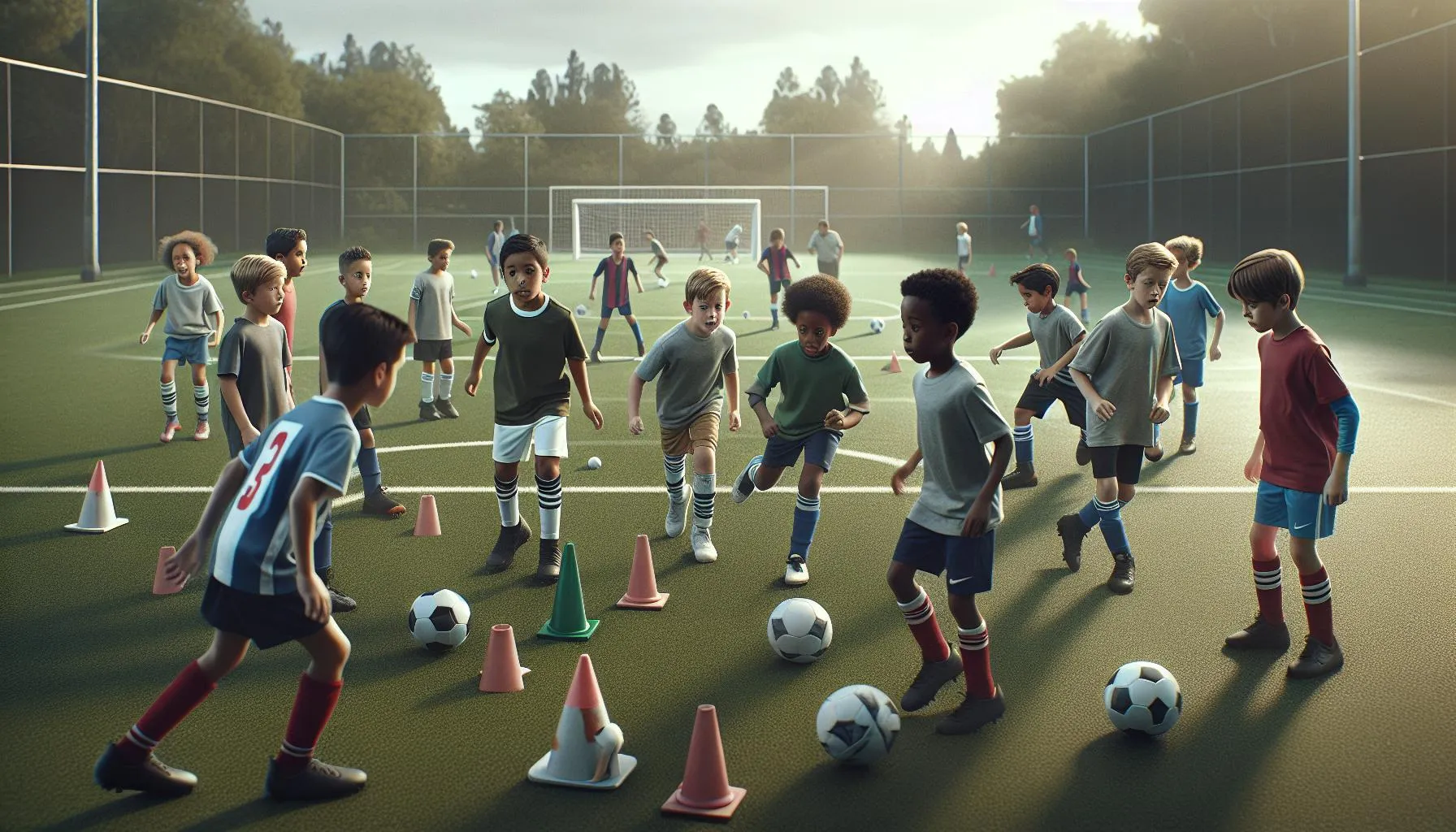
the leap from small-sided games to the expansive landscape of 11v11 often feels like stepping onto a new stage where every player’s skills and mindset are tested in unprecedented ways. one of the most immediate hurdles is the sheer physical demand-suddenly, young athletes grapple with longer distances to cover, increased stamina requirements, and more intense physical duels. Take,as an example,a recent regional tournament where a standout U13 striker,skilled in 7v7 settings,found himself outpaced as the game stretched across the full pitch. His challenge wasn’t just running tougher sprints but learning how to intelligently conserve energy-knowing when to press aggressively and when to hold position. This shift tests endurance but also demands a strategic evolution that can frustrate players used to the fast, constant touches of smaller formats.
Adapting to the tactical complexities introduces another layer of challenge. The transition brings a heightened need for spatial awareness, pattern recognition, and communication within a larger team unit. Coaches frequently enough recount early-season frustrations where players “get lost” in the breadth of the field or struggle to coordinate defensive shape, leaving gaps exploited by savvy opponents. Veteran youth coach Maria Hernandez recalls, “We had to build patience into our sessions because young players often feel overwhelmed by the 11-person chessboard-they miss cues, forget their roles, or become passive, not from lack of ability but from sheer volume of new facts.” Players learn that success relies on synchrony-reading teammates’ runs, maintaining formation integrity, and embracing off-ball movement. This mental workload, combined with the natural awkwardness of adapting physically, underscores the need for tailored training, consistent encouragement, and a community that values growth over swift results.
- Progressive Conditioning: Emphasize endurance training that balances structured sprints with recovery play.
- Tactical Education: Use video breakdowns and on-field walkthroughs to teach positioning and team shape incrementally.
- Encourage Communication: Build exercises focused on verbal and non-verbal cues to strengthen on-field dynamics.
- Patience and Positive Reinforcement: Celebrate small successes to build confidence and persistence during adaptation.
This carefully scaffolded approach not only mitigates the mental and physical challenges but also celebrates the rich tapestry that 11v11 soccer offers-a platform where skills mature alongside friendships, resilience, and a deeper appreciation for the game’s strategic beauty.
How 11v11 Impacts player Development and Team Dynamics
Stepping onto a full-sized pitch with 11 players on each side transforms the youth soccer experience in ways that profoundly accelerate both individual growth and collective synergy. Unlike smaller-sided games where touches are frequent and roles fluid, 11v11 demands a more refined understanding of space, timing, and teamwork. Players quickly learn that success hinges not just on technical skill but on an ability to read the unfolding story of the match, anticipate teammates’ actions, and fulfill specialized roles within intricate tactical frameworks. For example, midfielders, once roaming widely, now must master balancing defensive duties with orchestrating attacks, while defenders face new challenges in organizing a coherent backline that covers much more ground. This increased complexity broadens player perspectives, fostering mental agility alongside physical prowess. Veteran coach Luis Ramirez observes, “The jump to 11v11 is where young players truly begin to see soccer as a chess match-every movement has purpose, and every decision ripples across the team.”
This shift also catalyzes dynamic changes in team chemistry. With nearly double the players on the field, communication transforms from a casual habit into a strategic lifeline. Teams that thrive are those who cultivate an habitat of trust and shared responsibility, where players encourage each other vocally and non-verbally throughout all phases of the game. Players like rising star Ava jackson, who transitioned at age 13, describe the challenge and reward vividly: “You realize soccer isn’t just about scoring goals-it’s about helping your teammates find space, closing down opponents before they get the ball, and making split-second choices together.” Coaches reinforce this growth by designing training sessions that emphasize synchronized movement and situational awareness, using drills that replicate match scenarios demanding constant verbal cues and positional discipline. By embracing these demands, young athletes develop resilience, leadership, and an intuitive grasp of collective tactics that continue to shape their development well beyond youth soccer.
Key Elements Driving Growth and Teamwork
- Role Specialization: Players learn to master position-specific skills and responsibilities, fostering deep tactical understanding.
- Enhanced Communication: Developing verbal and non-verbal cues becomes essential to maintain team structure and respond to rapid play changes.
- Spatial Intelligence: Recognizing and exploiting space on a full pitch teaches players how to control tempo and influence play shape.
- Leadership Development: The complexity of 11v11 nurtures emerging leaders who guide teammates and make strategic decisions on-field.
- Physical and Mental Endurance: Prolonged play over larger areas builds stamina, concentration, and the ability to manage energy efficiently.

Coaches’ Perspectives on Timing the 11v11 Move
The moment to introduce young players to 11v11 soccer is often less about strict age cutoffs and more about a nuanced blend of readiness factors that coaches carefully gauge. Veteran youth coach Maria hernandez recalls, “It’s a leap, not just a step-moving to 11v11 isn’t about rushing kids onto a big field; it’s about timing the move so they’re physically ready, tactically aware, and mentally confident.” Coaches emphasize that this transition ideally occurs when players have solidified basic skills in smaller-sided formats and are eager to embrace the increased demands on communication, positioning, and endurance.For many clubs and leagues, this sweet spot often aligns with the U13 age group, but seasoned coaches stress tailoring the timing based on the team’s unique development curve rather than just hitting a calendar milestone.
what stands out in the coaching community is the recognition that patience and preparation pay enormous dividends. Coach Luis Ramirez, who has worked extensively with youth athletes moving to full-sided play, shares a guiding philosophy: ”We watch for moments when players start asking bigger questions-how do we protect space as a unit? How do I support my teammates consistently over 70 minutes? When that curiosity sparks, the stage is set for 11v11.” This approach respects each player’s individual trajectory and encourages gradual exposure to tactical complexity.Coaches also design phased training programs that blend situational drills replicating full-pitch dynamics with targeted physical conditioning. This preparatory work helps players develop endurance and spatial intelligence crucial to thriving in 11v11, ultimately turning a challenging progression into a celebrated rite of passage.
Key Considerations from Coaches on Transition Timing
- Technical Competency: Mastery of ball control, passing accuracy, and defensive fundamentals in smaller formats.
- Tactical Curiosity: Players demonstrating questions about positioning, teamwork, and game flow.
- Physical Preparedness: Adequate stamina and speed to cover greater field areas without loss of focus.
- Mental Maturity: Ability to handle increased responsibilities and stay engaged for longer match durations.
- Team Chemistry: A cohesive group culture that can communicate and support one another amid added complexity.
Parental Insights: Supporting Kids Through the Transition
Nothing tests a young player’s resilience quiet like stepping onto a full-sized field for their first 11v11 match. For parents,this milestone is both thrilling and daunting-a vibrant mix of pride and concern swirling as their child navigates the expanded space,longer game times,and amplified team communication demands. Understanding that this transition is more than just a new format is essential. It represents a pivotal growth phase where kids must adapt physically, mentally, and emotionally.Parents who foster an environment of encouragement, patience, and open dialog help their children embrace this challenge not as an overwhelming leap but as an exciting evolution in their soccer journey.
Supporting kids through this stage means more than cheering from the sidelines; it requires active engagement that respects each child’s pace and personality. Veteran mother and coach, Michelle Jennings, recalls her son’s early 11v11 experience: “He was nervous about covering so much ground and worried about letting teammates down.We talked through what ‘supporting teammates’ really meant-not just chasing the ball but being part of a moving unit.” Parents can equip their children by encouraging reflective conversations after games,focusing on effort and learning rather than just outcomes. Practical steps include:
- Creating routines to help children manage energy and focus during longer matches.
- Positively reinforcing ’small wins’ like effective communication or smart positioning.
- Engaging with coaches to understand the tactical concepts their children are learning.
- Celebrating progress in physical stamina and teamwork as much as ball skills.
Building Confidence and Connection
Parents who actively embrace the transition process foster not only better players but more confident young individuals. As players grow into their roles on a larger team, the parental role shifts to that of a steady supporter and advocate. Player interviews at youth tournaments frequently highlight how a parent’s calm presence and genuine interest can transform anxiety into motivation. “Knowing my parents understood the bigger picture, that not every touch had to be perfect, helped me relax and play more freely,” shares U14 midfielder Elena Torres. Parents can also help children cultivate patience for themselves and teammates,crucial for mastering the complexities of 11v11’s tactical environment.
Communication is key, both within the family and between parents and coaches. Attending team meetings,watching practice sessions when possible,and staying informed about training focuses allows parents to reinforce learning without pressure or confusion.Encouraging kids to voice their questions or frustrations at home creates a safety net where concerns can be unpacked constructively. This holistic, community-minded approach-anchored in respect for varied skill levels and playing styles-helps families celebrate the sport’s drama and joy, even amid the inevitable growing pains of this important transition.Ultimately, parental support in these early full-sided years becomes a cornerstone for both athletic and personal success on and off the field.
training Drills to Prepare for 11v11 Soccer success
Stepping onto an 11v11 pitch demands far more than raw skill; it calls for refined spatial awareness,endurance,and a deep understanding of team dynamics. Players must master the art of reading the game across a much larger field, anticipating the flow of play and balancing their roles between attack and defense. To prepare young athletes for this leap, drills must move beyond individual ball control and touch into exercises that simulate real game scenarios-fostering communication, positional discipline, and quick decision-making under pressure. Coaches frequently enough recount how a well-designed “shadow play” drill, where players navigate without the ball following set patterns, can awaken instincts for movement off the ball, a critical component as each player’s role grows more complex.
Incorporating teamwork-focused drills enhances the transition by sharpening players’ ability to connect across wider distances and variable pacing. such as, ”third-man runs” where the third player creates pivotal space through timed runs, or small-sided possession games that emphasize maintaining shape under pressure, build tactical intelligence and comfort on a bigger pitch. Veteran youth coach Luis Santiago emphasizes, “At this stage, it’s not just about running harder-it’s about running smarter. Teaching players to find and exploit space creates confidence and control.” Practically, drills can be designed to include:
- Switch-the-play drills encouraging players to quickly shift the ball across the field, cultivating awareness of both teammates and open spaces.
- Conditioned games focusing on numbers down scenarios, teaching players how to support each other and recover defensively.
- endurance-building circuit training combined with ball handling to mimic the stamina needed for full 11v11 match duration.
- Communication exercises that develop clear, loud, and effective on-field talk, reducing confusion and increasing cohesion.
Bringing Tactical Concepts to life
Through these drills, players experience first-hand the shift from chasing individual glory to embracing collective responsibility. Anecdotes from players making this leap highlight the emotional journey-balancing nerves with excitement as they learn to trust their teammates more deeply. As U15 defender Maya Lin shared, ”Learning to cover a teammate’s run without always touching the ball was a game changer. It felt like I wasn’t just playing but truly defending as part of a unit.” Coaches who facilitate this evolution frequently enough emphasize repetition within varied contexts, keeping training dynamic to sustain engagement and accelerate learning.Embracing these targeted drills with passion and patience within a nurturing environment allows young players to unlock the beauty and drama of 11v11 soccer. as these future athletes grow into their broad roles, they develop not only physically but mentally sharpen attributes like vision, timing, and leadership-foundations for success far beyond youth soccer. This holistic approach taps into the sport’s deepest potential: crafting thoughtful, creative players who cherish the game’s complexity and the communal thrill of teamwork.
Adjusting Field Size and Rules for Age Progression
Moving from smaller-sided games to the expansive world of 11v11 soccer is as much about adapting the playing environment as it is about player readiness.Field size adjustment plays a pivotal role in this transition, ensuring the pitch dimensions match the physical and tactical abilities of the age group. For younger players stepping into full-sided play, the field is often scaled to strike a balance between challenging stamina and not overwhelming spatial awareness. For example, rather than immediately leaping to a full adult-size pitch, many leagues adopt intermediate dimensions, allowing players to develop their endurance and positioning without getting lost in excessive space. This gradual progression fosters confidence in strategic movement and reduces the risk of burnout or frustration, preserving the joy and competitive spirit intrinsic to youth soccer. Coaches often observe that when the field size aligns properly with age and skill, players better internalize spacing fundamentals, leading to more cohesive team dynamics on the pitch.
Rules adjustments also serve as an essential bridge to 11v11 soccer, supporting fair play and enhanced learning opportunities. Younger age divisions may use modified laws such as reduced game time, smaller goal sizes, or altered offside interpretations to emphasize skill development and encourage attacking play. As players gain maturity, these parameters incrementally shift toward standard FIFA regulations, inviting more complex tactical considerations and decision-making responsibilities. Veteran youth coach Carlos Mendez notes, ”It’s a matter of layering the complexity-too fast a jump risks undermining player confidence. When we tweak rules thoughtfully, kids learn the game’s subtleties in manageable steps, and their soccer IQ grows naturally.” Drills and matches under evolving conditions cultivate adaptability, enabling players to thrive when stepping onto the full-sized stage. Integrating these thoughtful modifications provides a nurturing platform where stamina, strategy, and skill converge, allowing young athletes to blossom into well-rounded soccer players who appreciate the sport’s drama and depth.
Practical Guidelines for Field Size and Rule Adaptation
- U9-U10: Use a 7v7 format on fields roughly 50-60 yards long and 30-40 yards wide with small goals, allowing focus on ball control and basic tactics.
- U11-U12: Introduce 9v9 matches on intermediate-size pitches (60-70 yards by 40-50 yards),increasing goal size and gradually integrating offside rules.
- U13 and above: Transition fully to 11v11 on standard pitches (around 100-110 yards long and 60-70 yards wide), implementing full FIFA regulations to mirror adult play.
| Age Group | Field Dimensions (Yards) | Format | Rule Modifications |
|---|---|---|---|
| U9-U10 | 50-60 x 30-40 | 7v7 | Smaller goals,no offside |
| U11-U12 | 60-70 x 40-50 | 9v9 | Partial offside,larger goals |
| U13+ | 100-110 x 60-70 | 11v11 | Full rules,standard goals |
These incremental changes ensure that the demands of larger fields and more intricate rules emerge in harmony with a player’s physical development and mental acuity. When players like Emma Torres from a local youth club moved through these stages, coaches witnessed her confidence soar as each shift opened new tactical vistas. Emma recalls, “Playing on a smaller field first let me hone my ball skills. when I moved up, learning to position myself in wider spaces felt like unlocking a new level of the game.” Through thoughtful field sizing and rule adjustments, youth soccer creates a vibrant developmental pathway that honors diverse playing styles while preparing players for soccer’s grand theater.
Celebrated Youth Players Who thrived Post 11v11 Transition
Few milestones in a youth soccer player’s journey carry as much significance as making the leap to full-sided 11v11 play.This transition often separates those who will rise to higher competitive echelons from those who struggle to adapt. Take these celebrated former youth stars who navigated this shift with exceptional grace and growth-not simply because of natural talent, but through a combination of mental resilience, tactical openness, and a supportive environment.Mia Hamm, for example, is well remembered not only for her dazzling technique but for how she mastered the demands of 11v11 play at just the right developmental moment, which allowed her to exploit the full width and depth of the pitch. Her early experience scaling from smaller-sided games progressively prepared her to read the game’s complexities and execute plays with maturity far beyond her years. Coaches recount that players like Mia benefited immensely from incremental exposure-adjusting to larger fields and full rules-and gaining confidence in managing space and stamina simultaneously.
Similarly, rising stars like Sergio Busquets and Sam Kerr exemplify how embracing the tactical and physical challenges of 11v11 at the right age fosters deep soccer intelligence and team synergy. Busquets’ understanding of positioning emerged during those formative transitions, giving him the ability to anchor one of the world’s greatest midfields. Kerr’s adaptability moving from smaller fields to full size unlocked new dimensions in her playmaking and finishing abilities,crucial for her rise on the global stage. Their stories underline the importance of not rushing but rather nurturing readiness, blending skill drills and match experience that mimic full-sized game scenarios.Parents and coaches can take heart from these examples and focus on fostering patience, consistent feedback, and encouragement during this pivotal leap. As Kerr once noted, “Stepping onto an 11v11 field felt like discovering a new game. the space, the speed-it demanded everything, but I knew every small step before prepared me to shine.” These celebrated journeys remind us that successful transition is as much about mindset and environment as it is indeed about technical ability,creating a nurturing roadmap for future generations.
Lessons from the Greats: What Their Transitions Teach Us
- Patience and progression: Incremental exposure to field size and rule complexity allows players to build tactical awareness dynamically.
- Support Systems Matter: Coaches and parents who offer consistent encouragement help players face the physical and mental demands confidently.
- Game Intelligence Over raw Skill: Thriving players often shine most by understanding space, timing, and team dynamics at 11v11.
- Celebrate Growth,Not Just Goals: Meaningful development includes learning from mistakes and appreciating evolving roles on the field.
FAQ
Q: At what age do most youth soccer leagues transition players to 11v11 games?
A: Most youth soccer leagues transition players to 11v11 format between ages 12 and 14, aligning with governing body age guidelines. This progression matches players’ physical growth and tactical skills, ensuring a smoother shift to full-sided play. Learn more in the Age guidelines and Governing Body Standards section for deeper insights.
Q: How can coaches assess if players are ready for the 11v11 full-sided soccer?
A: Coaches can assess readiness by evaluating players’ stamina, spatial awareness, and tactical understanding in smaller formats. Successful mastery of 7v7 or 9v9 games often signals readiness for 11v11. Regular fitness and decision-making drills provide practical benchmarks-see Physical and Tactical Readiness for training tips.
Q: What challenges do players commonly face when switching to 11v11 soccer?
A: Players frequently enough struggle with increased field size, positional responsibilities, and communication demands during the 11v11 transition.These challenges can impact confidence and team cohesion but can be tackled through targeted drills and consistent coaching support,as detailed in the Common Challenges During the Shift section.
Q: Are there variations in when youth soccer transitions to 11v11 across different countries?
A: Yes, transition ages vary internationally, with some countries starting 11v11 matches as early as U12, while others wait until U14 or U15, based on local soccer development philosophies and league rules. Understanding regional standards helps tailor development plans-refer to Age Guidelines and Governing Body Standards for comparisons.
Q: How does transitioning to 11v11 affect a youth player’s tactical development?
A: Moving to 11v11 enhances tactical awareness by exposing players to complex formations, roles, and game strategies, accelerating their understanding of soccer as a team sport. This shift is pivotal for long-term growth and is explored extensively in How 11v11 Impacts Player Development and Team Dynamics.
Q: What role do parents play in supporting kids through the switch to 11v11 soccer?
A: Parents play a crucial role by encouraging patience, fostering a positive mindset, and supporting extra practice time during the transition. Emotional support eases adjustment challenges and boosts confidence. For practical parental advice, see the Parental Insights section of the main article.
Q: How does field size adjustment align with age progression toward 11v11 soccer?
A: Field sizes increase incrementally with age to prepare players for 11v11’s larger playing area, improving stamina and spatial tactics. This gradual adaptation is essential to physical and strategic readiness, detailed thoroughly in Adjusting Field Size and Rules for Age progression.
Q: What training drills best prepare youth players for success in 11v11 soccer?
A: Effective drills focus on positional awareness, passing accuracy over longer distances, and collective defensive shape, mimicking 11v11 scenarios. Incorporating small-sided tactical exercises enhances decision-making under pressure. Explore Training Drills to Prepare for 11v11 Soccer Success for actionable practices.
for a deeper dive into the full transition experience and expert insights, explore the related sections of our article. Your journey to mastering 11v11 starts with understanding these essentials-stay engaged and watch young players thrive on the full field!
to sum up
Understanding when youth soccer transitions to the full 11v11 format is a pivotal moment in a young player’s development, marking a shift into a more dynamic, team-oriented game that hones tactical skills and builds lasting camaraderie. As players move through age progressions, adapting to this classic formation not only enhances their on-field vision but also prepares them for the competitive challenges ahead. If you’re eager to dive deeper, explore our guides on youth soccer training drills and effective coaching strategies to support this transition.
Don’t miss out on staying ahead of your game-subscribe to our newsletter for expert insights, player stories, and the latest updates on youth soccer structures. Whether you’re a parent, coach, or player, embracing these age-based changes unlocks new opportunities to elevate skills and passion. Join our community by commenting below with your experiences or questions about youth soccer’s progression, and keep exploring related topics like “Youth Soccer Positions Explained” and “Best Practices for Team Development” to fuel your journey.
The move to 11v11 is more than a rule-it’s a festivity of growth and teamwork that shapes future champions. Take the next step today and empower your player’s path with knowledge, resources, and support tailored to this exciting evolution in youth soccer.
Get our latest guides, news, and insights highlighted in your Google Search & AI Overviews.