Few moments in soccer spark as much drama and debate as the waving of a card-those small, colored signals that can change the course of a match in an instant. Understanding what each card color represents isn’t just for referees or players; passionate fans, coaches, and analysts alike need to grasp these critical tools of the game to fully appreciate the tactical battles unfolding on the pitch. This complete reference chart demystifies the colors, peeling back the layers of soccer’s discipline system to reveal how yellow, red, and other cards influence player behavior, team strategy, and the sport’s fiercely contested moments. By exploring the meaning behind each card, its historical roots, and the impact on memorable matches, you’ll gain fresh insight into the game’s intensity and fairness. Whether you’re here to sharpen your knowledge for spirited debates, coaching decisions, or simply deepening your love for soccer’s rich drama, this guide will equip you with clear, expert understanding-and inspire you to see those moments of judgment from a whole new outlook. Dive in and discover how these simple cards carry stories of passion, outcome, and the beautiful game’s enduring spirit.
Contents
- Understanding Soccer Card Colors: What They Mean on the Field
- Common Soccer Card Colors and Their Importance
- The Role of yellow Cards: Warnings and Tactical Impacts
- Practical Advice for Players and Teams Facing Yellow Cards
- Red Cards Explained: Game-changing Moments and Consequences
- Less Common Cards: When Are Orange or Blue Cards Used?
- Orange Cards: the Bridge Between Caution and Consequence
- Blue Cards: Tactical Management Beyond Traditional Sanctions
- Historical Evolution of Card Colors in Soccer
- Card Colors Through the years: milestones and Insights
- Famous Matches Defined by Card Drama and Player Reactions
- Iconic Matches Where Cards Defined the Outcome
- Players and Coaches Reflect on card Drama
- How referees Decide Card Issuance: Inside the Mind of the Official
- Key Considerations Behind Card Decisions
- Impact of Cards on Team Strategy and Player Behavior
- How Teams Adapt Strategically After a Card
- Player Behavior in Response to Card Warnings
- Comparing Card Rules Across Soccer Leagues and Tournaments
- Variations in Card Accumulation and Suspension Rules
- Strategic Impact on Teams and Players
- Player Perspectives: managing Discipline and Pressure on the Pitch
- Strategies for Navigating Card Pressure
- Technological Influence: VAR and Its Effect on Card Decisions
- Practical Tips for Players and Teams Navigating VAR Scrutiny
- VAR and the Future of Card Issuance: A Continuous Evolution
- Common Myths and Misunderstandings About Soccer Cards
- Clearing Up card Confusions: Key Insights
- Faq
- Q: Why are there different colors of cards used in soccer matches?
- Q: How do card colors affect player behavior during a soccer game?
- Q: What are the rare instances when orange or blue cards are shown in soccer?
- Q: How do soccer card colors differ between leagues and international tournaments?
- Q: When do referees decide to issue a second yellow card versus a direct red card?
- Q: Can teams challenge or appeal card decisions based on their colors in professional soccer?
- Q: How have soccer card colors evolved historically to improve game fairness?
- Q: What impact do card colors have on team strategy during crucial moments in a match?
- To Conclude
Understanding Soccer Card Colors: What They Mean on the Field
Every color flashed by a referee’s card carries a story-a sudden flare of tension on the pitch, a referee’s decisive moment, or a strategic turning point that can alter the tide of a match. Soccer cards are more than just symbols of discipline; they are vibrant signals that communicate rules, consequences, and respect for fair play in the heat of competition. understanding what these colors represent on the field helps fans and players alike grasp the nuances of game management and the emotional pulse driving every call. From the universally recognized yellow and red cards, which have become iconic emblems of soccer’s drama, to the rarer orange or blue cards used in some leagues, each color carries a distinct purpose that influences player behavior and team tactics.
Dive deeper, and you’ll see how the card colors are a language spoken fluently by referees and players worldwide. The yellow card serves as a formal caution-a warning that a player’s conduct is approaching the edge of fairness. It’s a moment charged with tension but also opportunity, as players often respond by adjusting their approach to stay on the field. In contrast,the red card is a decisive tool for maintaining order,instantly reducing a team by one player and dramatically reshaping the game’s dynamics. Beyond these, some competitions experiment with additional hues to address evolving disciplinary needs, like the orange card used to signal temporary suspensions in certain leagues, adding layers of tactical complexity. Appreciating these colors enhances the viewing experience and offers players insightful reminders about the fine line between passion and control in soccer’s beautiful game.
Common Soccer Card Colors and Their Importance
- Yellow Card: Cautionary warning for offenses such as unsporting behavior, persistent fouling, or delaying the restart of play.
- Red Card: Immediate dismissal for serious fouls, violent conduct, or receiving a second yellow card.
- Orange Card: Temporary suspension card used in certain youth and experimental leagues to encourage learning and discipline.
- Blue Card: Sometimes used in non-FIFA competitions or indoor soccer,often indicating specific infractions or misconduct requiring time penalties.
| Card Color | Use | Effect on Player | Typical Game Impact |
|---|---|---|---|
| Yellow | Warning for cautionable offenses | Player remains on the field but must be cautious | Influences player’s aggression and team strategy |
| red | Ejection from the game | Player leaves field, team plays with one less player | Often shifts momentum, forcing tactical adjustments |
| Orange | Temporary suspension (in some leagues) | Player leaves field briefly | Penalizes but allows for reintegration |
| Blue | Time penalty or specific misconduct (varies) | Player removed temporarily or cautioned | Temporary team disadvantage, less common |

The Role of yellow Cards: Warnings and Tactical Impacts
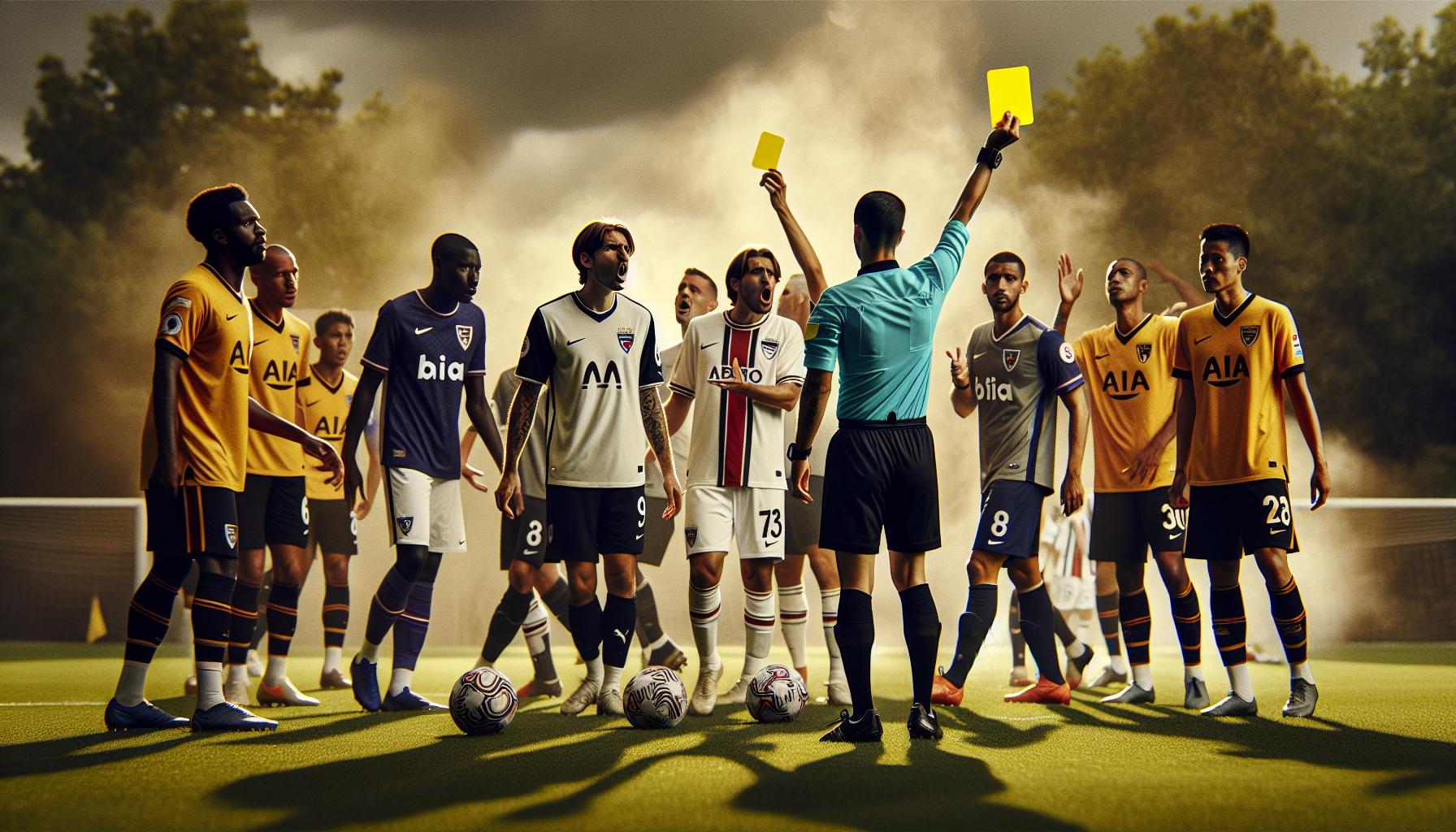
Few moments in soccer encapsulate tension and strategy quite like the flash of a yellow card. More than just a caution,the yellow card acts as a referee’s signal that a player’s conduct has crossed a line-yet the danger of removal still looms. It’s a psychological pivot point, both for the cautioned player and the team. The player must recalibrate aggression and decision-making to avoid a second booking,while coaches often adjust tactics to protect key athletes from risking dismissal. Legends of the game like Xavi Hernández have spoken about the “invisible penalty” a yellow card imposes-a mental game as much as a physical restraint. In high-stakes matches, managing this balance can dictate the flow of play, turning the yellow card into a tool of subtle control embedded deep in soccer’s drama.
This nuanced role feeds into team strategy in profound ways. Coaches often instruct players who are on a yellow card to adopt a more conservative style,minimizing risky tackles or confrontations. Conversely, the presence of a cautioned player can invite opponents to exploit vulnerabilities, testing those boundaries in pursuit of tactical advantage.Soccer analyst Jamie Carragher once noted, “A yellow card changes the game for the player-it’s like walking a tightrope without a safety net.” Whether to shield a creative midfielder or recalibrate defensive positioning, teams must constantly analyze the evolving risk. On the field, this dynamic creates micro-battles where discipline intertwines with ambition. For fans, recognizing these tensions deepens thankfulness of the match’s emotional pulse-showing that a yellow card is less a stop sign and more a challenge to master the art of controlled passion.
Practical Advice for Players and Teams Facing Yellow Cards
- Stay Mentally Focused: A yellow card demands heightened concentration to avoid unnecessary fouls or dissent.
- Communicate with Teammates: Adjust marking assignments to support the cautioned player and reduce exposure.
- Modify Tactical Roles: Coaches might reposition a player to less risky zones or encourage quicker ball distribution.
- Use Experience as Leverage: Veteran players can mentor younger teammates on managing the card’s pressure effectively.
- Anticipate opponent Strategy: Be aware that opponents may target cautioned players, requiring proactive defensive strategies.
Red Cards Explained: Game-changing Moments and Consequences
A red card in soccer instantly alters the game’s rhythm, intensity, and stakes, marking a definitive moment where one player’s conduct reshapes not just the scoreboard but the entire tactical landscape. This ultimate form of disciplinary action forces the offending player to leave the pitch, leaving their team to battle with one fewer competitor. The consequences ripple far beyond the final whistle-teams must rapidly adjust formations and strategies to cover gaps, frequently enough shifting from offensive ambitions toward a defensively resilient posture. Legendary matches such as the 2006 World Cup final saw Zidane’s infamous red card drastically change the psychological momentum, underscoring how a single act can redefine history. Coaches frequently describe the immediate aftermath using words like “shockwave” and “crisis management,” emphasizing how removing a player disrupts not only numerical balance but team morale and cohesion.
Understanding the gravity of a red card requires grasping the types of fouls and misconduct that led to this harsh penalty.Straight reds enforce instant ejection for violent conduct,serious fouls,or denying clear goal-scoring opportunities,while two yellows accumulate to the same result but frequently enough with a different narrative of escalating tension. Heroic defenders have spoken about how the threat of a red card forces players to recalibrate their aggression and decision-making in real time-a balance between passion and prudence. For players facing the prospect of dismissal,mental resilience is key. coaches advise:
- Maintain Composure: Avoid actions that escalate emotions, which could trigger a second bookable offense.
- Adapt Quickly: Shift roles to compensate for the numerical disadvantage and ensure defensive solidity.
- Encourage Team Interaction: Heightened coordination helps manage space and preserve energy while protecting the goal.
- Refocus on Discipline: Players must use strategic fouling sparingly; reckless tackles are no longer tolerable.
- Harness Psychological Strength: Remaining players often galvanize to deliver inspired performances under pressure.
This vivid interplay between penalty and performance captures why red cards have become one of soccer’s most dramatic storytelling devices-moments charged with tension, resilience, and sometimes redemption.
Less Common Cards: When Are Orange or Blue Cards Used?
Few aspects of soccer’s visual language are more intriguing than the less frequent use of orange and blue cards-colors that rarely flash on the field but carry unique significance when they do. Unlike the ubiquitous yellow and red cards, which all fans readily recognize, these unconventional hues are typically reserved for niche competitions or specific disciplinary frameworks around the world. Their rarity turns any appearance into an event that immediately captures player, coach, and spectator attention, underscoring how nuanced and regionally diverse soccer’s disciplinary systems can be. The orange card, as a notable exmaple, is primarily introduced in youth or amateur tournaments as an intermediate sanction-signaling a stern warning beyond a yellow card but stopping short of outright ejection.
This tiered approach allows referees to tailor their responses to player behavior more flexibly,promoting development and education over punishment. Coaches frequently enough appreciate this nuanced tool, seeing it as a way to instill discipline while maintaining player morale. In some South American leagues,the blue card serves a similar intermediary function,often applied to technical fouls or unsporting behavior that disrupts play but doesn’t merit a full send-off. A standout example occured during a brazilian Serie B match where the rare blue card was issued for time-wasting tactics,instantly shifting the game’s tempo. these lesser-known cards remind us that soccer’s regulatory palette is far from monochrome,and that behind each color lies a story of evolving rules,refereeing philosophies,and the sport’s unwavering commitment to fairness and respect.
Orange Cards: the Bridge Between Caution and Consequence
- Usage: Frequently enough deployed in youth leagues or amateur competitions to flag persistently reckless play while avoiding the harsh impact of a red card.
- Effect: Players receiving an orange card are usually suspended momentarily off the field (similar to a sin bin), reinforcing discipline without full dismissal.
- Coach Insight: Many coaches view the orange card as a vital tool for shaping temperaments, offering hard lessons in self-control during formative years.
Blue Cards: Tactical Management Beyond Traditional Sanctions
- Role: Used primarily in certain South american and indoor soccer leagues to penalize nonviolent infractions such as excessive time wasting or tactical fouling.
- Significance: Though less harsh than red cards, blue cards serve as a public signpost that the referee is closely monitoring a player, often dampening aggressive tendencies.
- Memorable Moment: The 2017 Copa Paulista saw a pivotal use of the blue card when a player was temporarily removed, shifting momentum and highlighting the card’s strategic importance.
Historical Evolution of Card Colors in Soccer
Few innovations in soccer’s extensive history have altered the game’s rhythm and fairness as profoundly as the introduction of colored cards. Before their invention, referees struggled to communicate cautions and expulsions clearly in the heat of passionate matches, often leading to confusion and controversy.It was during the 1970 FIFA World Cup – a tournament etched into football folklore – that the yellow and red card system made its vivid debut, designed by English referee Ken Aston. Inspired by the traffic light signals that indicate caution and stop, these colors brought immediate clarity and authority to officiating worldwide, ensuring players, coaches, and fans could understand disciplinary actions at a glance. As Aston once reflected, “It was all about openness – making the referee’s decisions visible, unambiguous, and respected everywhere.”
The introduction of yellow and red cards not only revolutionized how referees maintained order but also laid the foundation for a visual language that continues to evolve today.Over the decades, the soccer community has experimented with additional card colors-such as orange and blue-tailored to specific leagues or developmental settings to handle nuanced infractions more precisely, echoing the game’s increasing complexity and its global diversity of playstyles. These less common cards frequently enough symbolize a commitment to mentoring young players or managing technical fouls with subtler degrees of discipline. Coaches like Pep Guardiola have praised these innovations for promoting fairness without stifling competitive spirit, emphasizing that “discipline on the pitch is more about education and respect than punishment.” As the sport embraces technology and varied cultural approaches to regulation, the colors flashed by referees continue to tell compelling stories – of heated rivalries, emerging talents learning self-control, and the shared pursuit of respect amid soccer’s universal drama.
Card Colors Through the years: milestones and Insights
- 1970: Yellow and red cards introduced at FIFA World Cup for immediate, universal disciplinary clarity.
- Late 20th Century: Adoption across leagues worldwide, standardizing referee signals and player behavior expectations.
- 2000s: Emergence of additional colors (orange,blue) in youth and regional leagues as nuanced systems for managing fouls.
- Recent Evolution: Integration with VAR technology refining card issuance, emphasizing fair play and reducing human error.

Famous Matches Defined by Card Drama and Player Reactions
Few moments in soccer history have captured the world’s attention like matches where the flash of a yellow or red card changes everything on the pitch. Cards do more than just punctuate fouls; they become symbols of tension,turning points in battle-hardened rivalries,and sometimes even legends in themselves. Consider the infamous 2006 FIFA World Cup final, where Italy’s Marco Materazzi and France’s Zinedine Zidane engaged in one of the sport’s most dramatic exchanges. Zidane’s red card, issued for headbutting Materazzi after a heated verbal exchange, instantly altered the complexion of the match and has since been dissected endlessly by fans and analysts alike. This not only shifted the tactical dynamics-reducing France to 10 men in the crucial final minutes-but also highlighted how discipline and provocation coalesce under the global spotlight, illustrating the profound psychological pressures players face in high stakes games.Such games show the layered role cards play beyond mere punishment. In tournaments like UEFA Champions League or South America’s Copa Libertadores, where passion runs deep, referees wield cards as crucial tools to maintain fairness and temper tempers. The 2009 El Clásico between Barcelona and Real Madrid remains etched in memory for its record-setting 14 cards issued, a vivid illustration of how immediate and palpable the impact of card decisions can be. Coaches and players alike have acknowledged that managing card accumulation is a strategic art form-knowing when to hold back aggressive tackles or adapt playing style under pressure. As Pep Guardiola once noted,”A card can be a teacher,showing you the boundaries without breaking your flow.” For fans and players trying to navigate the emotional rollercoaster of such matches, understanding these moments offers a richer appreciation of how discipline, respect, and raw emotion intertwine on soccer’s grandest stages.
Iconic Matches Where Cards Defined the Outcome
- 2006 world Cup Final: Zidane’s red card reshaping the narrative of a legendary showdown.
- 2009 El Clásico: A record 14 cards exchanged, highlighting fierce rivalry and referee control.
- 1998 FIFA World Cup Quarterfinal: Spain vs. Italy saw multiple red cards, emphasizing grit and discipline under pressure.
- 2010 World Cup Round of 16 (Netherlands vs. spain): The first direct red card of the tournament dramatically impacted team strategies.
Players and Coaches Reflect on card Drama
| Person | Match/Event | Quote/Insight |
|---|---|---|
| Zinedine Zidane | 2006 world Cup Final | “In the heat of the moment, emotions can cloud judgment-discipline is not just about rules, but self-control.” |
| Pep Guardiola | Various | “Cards don’t just stop players; they teach them-a yellow tells you ‘be careful,’ a red says ‘change now.'” |
| Diego Maradona | 1986 World Cup | “A game’s rhythm can turn on a solitary card, a reminder that every action has consequence.” |
How referees Decide Card Issuance: Inside the Mind of the Official
Few moments in a match are as tension-filled and scrutinized as when a referee reaches into the pocket to pull out a card. The decision to issue a yellow or red card is rarely impulsive; it is the culmination of split-second observations, deep understanding of the game’s spirit, and the referee’s resolve to keep the contest fair and safe.every card is a message, but what players and fans rarely see is the mental calculus and emotional discipline referees practice to deliver that message with authority and clarity, even amid roaring crowds and swirling pressure.
Referees balance an array of factors before reaching into their arsenal of cards. They evaluate the *severity of the foul*-intentionality and impact weigh heavily. A reckless tackle that endangers safety triggers a quicker, sterner response than a minor infringement. Referees also monitor the *game’s rhythm and player behavior*: repeated offenses by the same player or team may escalate the punishment to maintain control. Experience and situational awareness are critical-knowing when to *warn* through a yellow card or to *change the game’s dynamic* by sending off a player. As UEFA elite referee pierluigi Collina once reflected,”Issuing a card is not about being harsh; it’s about preserving the game’s integrity and protecting players,sometimes even protecting emotions.” This delicate balance between authority and empathy helps referees sustain flow and fairness in matches where passions often run as high as the stakes.
Key Considerations Behind Card Decisions
- Intent and Impact: Was the foul accidental,reckless,or violent?
- Pattern of Behavior: Is the player repeatedly infringing rules?
- Match Context: Time in the game,current score,and player reactions influence urgency.
- Safety First: Protecting players from risky play is paramount.
- Communication: Clear signals and explanations help maintain respect for the decision.
Players and coaches alike understand that referees carry a heavy burden, frequently enough making decisions that can alter the fate of millions passionately watching. Diego Maradona once remarked, “A game’s rhythm can turn on a solitary card, a reminder that every action has consequence.” Coaches such as Pep Guardiola have praised this subtle art, calling cards “teachers” that guide player discipline without stifling creativity. The best referees read the game like a seasoned player, knowing when a yellow card is a cautionary whisper and when a red card must echo as a firm command. In embracing this responsibility, officials become the unsung guardians of soccer’s beauty and drama, ensuring that the game’s passion never oversteps the boundaries of respect and fairness.
Impact of Cards on Team Strategy and Player Behavior
Few events in soccer influence the very pulse of a match like the strategic ripple effect after a card is shown. When a player receives a yellow or red card, teams must instantly recalibrate-not just in formation, but in mentality. coaches often describe these moments as “pivot points” that redefine how a squad approaches both offense and defense. A single yellow card can force a player to curb aggression, effectively altering their natural style and sometimes limiting their involvement in key duels. Simultaneously occurring, a red card truncates manpower, compelling a team to reorganize tactically to plug gaps and retain competitive balance. Legendary managers like Carlo Ancelotti have emphasized that “discipline isn’t only about avoiding mistakes-it’s about maintaining strategic clarity under pressure,” underscoring how cards shape not just rules adherence but the chess match unfolding on the pitch.
The psychological impact of cards reverberates through team dynamics and player behavior, frequently enough dictating momentum swings that can decide outcomes. Take the 2006 World Cup final: when Zinedine zidane was sent off, France’s tactical rhythm unraveled, illustrating how losing a pivotal player can demoralize a squad and shift control to the opponent. Conversely, teams have expertly used cautionary cards as tactical tools-deliberately slowing play or drawing fouls to disrupt an opponent’s flow without risking dismissal. Players often adapt by communicating more conservatively or playing positional football to avoid reckless challenges. Coaches provide clear frameworks during training: emphasizing discipline under pressure, encouraging players to read the referee’s tolerance, and leveraging experienced leaders to quell potential flare-ups. These strategies protect teams from the double jeopardy of cumulative card risks and their broader effects on game momentum.
How Teams Adapt Strategically After a Card
- Reorganizing Formation: Shifting to a more compact lineup after a red card to cover defensive zones efficiently.
- Modulating Aggression: Players on a yellow card often reduce risky tackles to avoid a second caution.
- Substitution Adjustments: Bringing on fresh legs or defensive specialists to shore up vulnerabilities.
- Psychological Coaching: Reinforcing focus and composure to prevent emotional reactions leading to further cards.
- Discipline as a Tactical Asset: Using strategic fouls wisely to control the game without crossing disciplinary lines.
Player Behavior in Response to Card Warnings
- Self-Regulation: Players become more cautious, often changing their approach to tackles and challenges.
- Enhanced Communication: Teams heighten verbal coordination to compensate for individuals under caution.
- Experience Counts: Veteran players set examples by maintaining discipline and guiding younger teammates.
- Impact on Creativity: While some players thrive under constraint, others may feel restricted, influencing offensive risk-taking.
This nuanced dance between risk and restraint reveals that cards are far more than punitive symbols; they are catalysts that shape the very fabric of team strategy and player psychology, enriching the beautiful game’s narrative with high-stakes drama and enduring lessons in discipline and resilience.
Comparing Card Rules Across Soccer Leagues and Tournaments
Across the global tapestry of soccer, card rules serve as a vital language of discipline and control, yet their request subtly shifts depending on the league or tournament. These differences reflect cultural attitudes toward the game and strategic nuances that coaches and players must master. For instance, while the yellow and red card system is universally recognized, how these cards impact suspension durations, accumulation thresholds, or the introduction of lesser-known colors like orange or blue can vary significantly. In the UEFA Champions League,a player accrues automatic suspension after receiving three yellow cards over multiple ties,intensifying the importance of card management in a competition where every moment counts. Contrast this with major domestic leagues like the English Premier League,where a player is suspended after five yellow cards within the season,encouraging more leniency early on but raising stakes as the campaign progresses. These nuanced rulings turn card discipline into a chess match that extends beyond the field, with coaches and players carefully tracking cautions to preserve squad strength for decisive fixtures.
Such distinctions also echo in tournament settings with high stakes and condensed schedules, such as the FIFA World Cup. Here, the disciplinary framework is designed to balance fairness with the tournament’s rhythm. For example, yellow cards accumulate up to the quarterfinals, after which all prior cautions are wiped clean to prevent players from missing the final stages unfairly. This strategic reset creates tense yet fair conditions where players must balance aggression with caution early on, knowing that a single unnecessary card could jeopardize their presence in knockout rounds. Coach Roberto Martinez, during the 2018 World Cup, famously emphasized to his squad that “understanding how card rules reset and suspend players is as vital as any tactical briefing.” This practical wisdom is borne out repeatedly, as teams that master these disciplinary subtleties maintain composure under pressure, frequently enough turning potential setbacks into momentum.Recognizing these rule variations and their tactical implications empowers players, referees, and fans to appreciate the diverse ways discipline shapes the sport’s drama worldwide.
Variations in Card Accumulation and Suspension Rules
- UEFA Competitions: Three yellow cards across matches trigger suspension; a one-match ban is standard for a red card.
- English Premier League: Five yellow cards lead to a one-game suspension, with further penalties for subsequent accumulations.
- FIFA World cup: Cards reset after quarterfinals; players with direct red cards typically serve a minimum one-match ban, subject to review.
- MLS and Other Leagues: Some north American leagues experiment with additional card colors like orange to signal different caution levels or temporary suspensions.
Strategic Impact on Teams and Players
- Player Rotation: Coaches must anticipate suspensions by rotating players and sometimes altering roles to cover those at risk.
- Discipline Mentoring: Veteran players and captains frequently enough guide younger teammates in reading referees’ tolerance specific to each competition.
- Match Preparation: Tactical adjustments consider potential card risks, notably in knockout formats where every suspension can shift the balance.
- Fan Engagement: Understanding the card rules enhances fan appreciation for player decisions, tensions, and moments of drama throughout different tournaments.
| Competition | Yellow Card Suspension Threshold | Red Card Penalty | Notable Variations |
|---|---|---|---|
| UEFA Champions League | 3 accumulated | 1 match suspension | Yellow card accumulation carries across rounds |
| English Premier League | 5 accumulated | 1 match suspension, possible extensions | Suspensions based on season-long count |
| FIFA World Cup | Reset after quarterfinals | Minimum 1 match, review possible | Designed for tournament fairness |
| MLS | Varies; includes use of orange cards in some instances | 1 match suspension fewer standardized protocols | Experimenting with additional card colors |
Player Perspectives: managing Discipline and Pressure on the Pitch
Players often describe the pressure of managing discipline on the pitch as a delicate balancing act-not just against opponents but within themselves.Every cautious touch or contested tackle carries weight when a yellow card looms over your head,threatening to derail your game or even your tournament run. Take sergio Ramos,renowned for his fiery style and knack for pushing limits,who once reflected,”When you have a card,you play with one eye on the referee. It’s mental warfare, but controlling that pressure is what separates the good from the great.” For players, discipline is a blend of self-awareness and tactical intelligence, knowing when to press aggressively and when to hold back. Understanding the card system’s nuances-such as when suspensions come into effect or how accumulation rules differ across competitions-empowers players to adjust their approach dynamically. This mental game is as critical as any physical skill on the pitch,influencing not only individual performance but also team strategy.
Players develop diverse methods to cope with the threat of cards while maintaining competitive edge. Among the most effective is the mentorship culture within teams, where seasoned veterans counsel younger teammates on referee tendencies and situational discipline. Champions League stalwart Luka Modric has stressed the importance of this guidance, noting, “Sometimes, it’s about reading the ref before you even touch the ball-knowing when you can push and when to box yourself in.” Additionally, players rely heavily on in-game communication with coaches and captains for swift tactical tweaks to avoid unnecessary risks. While some adopt a conservative posture when on a yellow card, others use it to fuel focused precision, aware that one misstep can shift momentum drastically. This calculated respect for the card system has turned discipline into a quiet form of leadership on the field-balancing competitive fire with tactical restraint, proving that mastering card management is integral to lasting success in soccer’s high-stakes arenas.
- Maintain sharp situational awareness: Track personal card count and game context actively.
- Communicate aggressively: Work with captains and coaches to adjust play style mid-match.
- Use veteran insight: Learn referee patterns and tournament rules from experienced teammates.
- Control emotion: Avoid reactive fouls that frequently enough lead to cards.
Technological Influence: VAR and Its Effect on Card Decisions
Soccer’s introduction of Video Assistant Referee (VAR) technology has revolutionized the way on-field disciplinary decisions are made, injecting a new layer of precision and debate to the issuance of cards. Whether it’s a contentious yellow for a tactical foul or a blatant red for violent conduct, VAR empowers referees to review critical moments carefully, minimizing human error and ensuring the spirit of fairness remains intact. This digital safety net often changes the narrative of games dramatically-transforming uncertain or overlooked incidents into definitive calls that can seal victories or ignite controversy. for players and fans alike, VAR’s influence underscores the evolving relationship between technology and tradition in soccer’s vibrant theater.
The implementation of VAR has also impacted player behavior and game dynamics, adding a meta-awareness that influences how aggressiveness or fouls are perceived during high-stakes matches. Coaches report that players approach contentious tackles or fouls with greater caution, knowing that off-the-ball or split-second infractions are subject to video review and potential escalation from no card to yellow or even red. Real-world examples abound-like in the 2018 FIFA World Cup, where several crucial red cards and penalties were awarded following VAR consultations, reshaping the tournament’s emotional highs and lows. Yet, the technology isn’t without its critics, as delays can disrupt game flow or create moments of intense psychological pressure on players awaiting final decisions. Balancing these elements involves embracing VAR as a tool that complements referee judgment rather than replacing the human element that makes soccer’s narrative so compelling.
- Stay mentally prepared: Anticipate that any questionable tackle or gesture can be reviewed-maintain composure during possible delays.
- Refine discipline: Use the knowledge that video evidence is available to avoid borderline fouls that invite close scrutiny.
- Communicate clearly with coaching staff: Use breaks to receive feedback on adjusting tactics to reduce card risks under VAR.
- Enhance referee study: Understand how different leagues implement VAR to tailor play style appropriately in domestic or international matches.
VAR and the Future of Card Issuance: A Continuous Evolution
The integration of VAR marks just one chapter in the technological evolution shaping soccer’s disciplinary landscape. Its capacity to safeguard fairness while heightening drama is undeniable, but success depends on streamlined protocols and respect for the referee’s authority-the ultimate arbiter of the game. As technology matures,expect more nuanced tools like real-time foul analytics and enhanced communication systems to assist referees and teams alike. Embracing these innovations with an open but discerning mindset will continue to celebrate soccer’s beautiful complexity,preserving the delicate balance between human judgment and technological aid that defines the sport’s relentless pulse.
Common Myths and Misunderstandings About Soccer Cards
Few elements in soccer spark as much debate and misconception as the colored card system. From casual fans to seasoned analysts, many hold beliefs about cards that don’t quite square with reality, fueling confusion and sometimes unfair player criticism. It’s a common myth, such as, that a yellow card for a tactical foul always signals a “dirty” player, when in fact it often reflects a strategic sacrifice to prevent a more damaging play.Legendary coaches like Sir Alex Ferguson have emphasized that smart fouls-those that protect the team without reckless endangerment-are part of the game’s chess match, even if they earn a caution. Understanding these nuances deepens appreciation for the tactical layers cards represent beyond mere punishment.
Another widespread misunderstanding surrounds the use and meaning of less familiar card colors. Fans may wonder why orange or blue cards rarely appear, or what situations warrant their issuance. In reality,orange cards,though uncommon in professional soccer,are sometimes used in youth leagues to indicate temporary suspensions (sin bins),while blue cards tend to be found in variants like futsal or local leagues with modified rules. This patchwork of color usage reflects soccer’s global diversity and its willingness to adapt disciplinary measures to different levels and styles of play. For clubs and players moving between leagues, knowing these subtle variations is crucial to mastering in-game discipline and respecting cultural approaches to fairness.Below are key points that clear common confusions and empower a more informed spectator and participant mindset:
Clearing Up card Confusions: Key Insights
- Yellow cards don’t always mean reckless play: Tactical cautions are part of controlling the game tempo and preventing counterattacks.
- Red cards are not automatically game-ending disasters: Many red card incidents, like Zinedine Zidane’s 1998 World Cup final send-off, led to poignant reflections on passion and consequence rather than simple disgrace.
- Orange and blue cards signify league-specific modifications: Their rarity in top-level soccer highlights that card colors are not universally standardized beyond yellow and red.
- VAR reshapes card perception but doesn’t replace human judgment: Referee decisions remain pivotal, as seen in high-stakes matches where technology confirms or questions calls but cannot remove drama and subjectivity.
- Players’ discipline management is as much psychological as tactical: Star midfielders often share how they mentally “reset” after cards to maintain composure and performance under pressure.
By peeling back the myths and embracing the rich context behind each card, fans can move beyond simplistic calls of “good” or “bad” play. Instead, they join the global conversation of the sport-one that celebrates its drama, complexity, and the passionate human stories intertwined with every whistle and caution. Coaches, players, and referees alike continue to evolve the card system, making it a vibrant symbol not just of regulatory control but of soccer’s enduring narrative of challenge, resilience, and grace under pressure.
Faq
Q: Why are there different colors of cards used in soccer matches?
A: Different card colors in soccer serve to communicate specific referee decisions clearly and instantly. Yellow cards warn players about misconduct, red cards indicate immediate ejection, while less common colors like orange or blue may be used in some leagues to signal particular offenses. this color system helps maintain fairness and control during the game. For deeper insights,see our section on Understanding Soccer Card Colors.
Q: How do card colors affect player behavior during a soccer game?
A: Card colors directly influence player behavior by signaling consequences for fouls or unsportsmanlike conduct. A yellow card warns players to adjust their tactics, while a red card forces immediate removal, changing match dynamics. Players frequently enough become more cautious after receiving cards, impacting team strategy and discipline, as detailed in Impact of Cards on Team Strategy.
Q: What are the rare instances when orange or blue cards are shown in soccer?
A: Orange and blue cards are rare and used mainly in specific leagues or competitions to address unique infractions, such as temporary suspensions or team behavior warnings.These colors supplement the traditional yellow and red system but aren’t standard worldwide. Learn more about these exceptions in our Less Common Cards section.
Q: How do soccer card colors differ between leagues and international tournaments?
A: While yellow and red cards are universally recognized,some leagues and tournaments introduce variations in card usage and interpretation. Such as, the use of blue cards to signify temporary substitutions is league-dependent. Comparing these differences can provide useful context, which we examine in Comparing Card Rules Across Soccer Leagues and Tournaments.
Q: When do referees decide to issue a second yellow card versus a direct red card?
A: Referees issue a second yellow card if a player commits two separate cautionable offenses. However, a direct red card is given for severe fouls or violent conduct without prior warning. understanding these distinctions helps clarify disciplinary actions, explained further in How Referees Decide Card Issuance.
Q: Can teams challenge or appeal card decisions based on their colors in professional soccer?
A: Teams can appeal red card decisions through official review processes,but yellow cards generally cannot be contested. video technology like VAR supports this by providing evidence on card-worthy actions. This procedural detail is covered under Technological Influence: VAR and Its effect on Card Decisions to enhance referee fairness.
Q: How have soccer card colors evolved historically to improve game fairness?
A: soccer card colors evolved from verbal warnings to visual signals to enhance clarity and fairness on the pitch. Introduced in the 1970 world Cup, yellow and red cards standardized communication between referees and players. This evolution is explored in Historical Evolution of Card Colors in Soccer, highlighting how it shaped modern play.
Q: What impact do card colors have on team strategy during crucial moments in a match?
A: card colors can dramatically shift team strategy, especially when players face suspension or ejection. A red card forces teams to adapt to fewer players, often adopting defensive tactics, while yellow cards may cause players to avoid aggressive play to stay on the field. This tactical influence is detailed in Impact of Cards on Team Strategy and Player Behavior.
For rich, tactical analyses and iconic player stories around these moments, dive into our full Complete Reference Chart on soccer card colors to enrich your understanding of the game’s dramatic flair and discipline management.
To Conclude
Understanding the significance behind each color card in soccer unlocks a deeper appreciation for the game’s intensity and the rules that keep it fair and thrilling. Whether it’s the cautionary yellow or the decisive red, these cards shape the drama on the pitch and influence every match’s outcome. Now that you grasp the crucial role these colors play, why not explore our detailed guides on soccer fouls and penalties or dive into strategies for playing fair in competitive matches to elevate your understanding even further?
don’t let the game suspend your curiosity-subscribe to our newsletter for the latest insights, expert analyses, and exclusive content that bring the beautiful game to life. join a passionate community of fans and players who, like you, want to master not just the rules but the spirit of soccer. Share your thoughts below on the moments when a single card changed the course of a match-you might inspire the next great conversation. Keep exploring, stay engaged, and let the colors of soccer continue to captivate your passion and deepen your knowledge.