Few moments in soccer ignite as much instant drama as the flash of a red card-an event that not only changes the course of a match but can ripple thru team morale, strategy, and even a player’s career. At its core, a red card means immediate ejection from the game, leaving the offending player’s team to battle with ten men. But beyond this simple rule lies a complex web of consequences affecting everything from tactical adjustments on the pitch to suspension impact off it. Whether you’re a passionate fan trying to understand how such pivotal moments swing momentum or a budding player eager to grasp the stakes of discipline,uncovering the full impact of a red card reveals much about the sport’s fierce intensity and the fine line between passion and control. As we dive deeper into the consequences-tactical, psychological, and historic-you’ll see why every red card moment is more than just a penalty; its a dramatic turning point in soccer’s ever-unfolding story.
Contents
- Understanding the Immediate Effects of a Red Card on Gameplay
- Immediate Tactical Adjustments
- Case Study: notable Player Responses
- How a Red Card Changes Team Dynamics and Tactics
- Essential Tactical Responses
- The Psychological Impact of Receiving a Red Card on Players
- Common Psychological Responses After a Red card
- Strategies to Support Players’ Mental Recovery
- Refereeing Decisions: When and Why Are Red Cards Given?
- Key Situations Leading to a Red Card
- Advice for Players and teams
- Long-Term Consequences: Suspensions and Player Discipline
- Practical Guidelines for Managing Suspensions
- Examples of Disciplinary Impact on Squad dynamics
- Famous Matches Decided by Red Card Moments
- Notable Red Card Incidents and Their match Impacts
- Statistical Analysis: Red Cards and Match Outcomes
- The Tactical cost and Psychological Ripple of a Red Card
- How Red Cards Influence Tournament Progress and Team Morale
- Lessons from the Tournament Trenches
- Player and Coach Reactions to Red Card Incidents
- Strategies From the Sidelines
- Voices from the Pitch
- Variations in Red Card Rules Across Different Soccer Leagues
- Practical Implications for Teams and Fans
- Strategies Teams Use to Manage Playing with One Less Player
- Core Adjustments to Overcome the numerical Deficit
- The Role of Video Assistant Referee (VAR) in Awarding Red Cards
- Practical Insights into Navigating VAR’s Influence on Red Cards
- Q&A
- Q: How does a red card affect a team’s substitution strategy during a match?
- Q: What financial penalties can clubs face when a player receives a red card?
- Q: Can a player appeal a red card decision, and what is the typical process?
- Q: How does a red card influence a player’s future behavior and reputation on the field?
- Q: What impact do red cards have on youth and amateur soccer leagues compared to professional levels?
- Q: How do red cards influence a team’s chances in knockout soccer tournaments?
- Q: Why might some teams deliberately provoke opponents to risk receiving red cards?
- Q: How do different soccer leagues enforce red card suspensions differently around the world?
- The Conclusion
Understanding the Immediate Effects of a Red Card on Gameplay
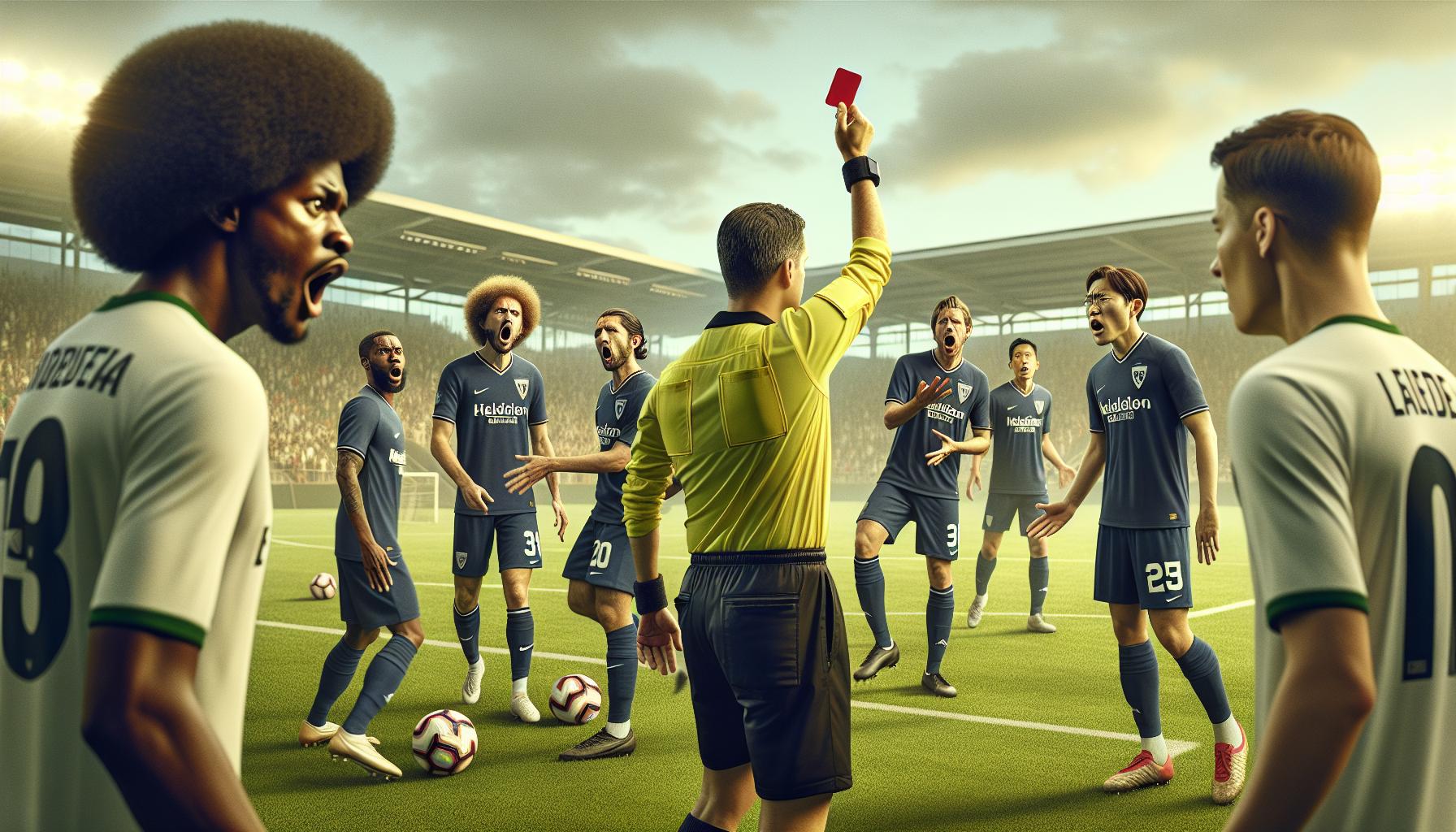
A red card instantly transforms the rhythm and intensity of a soccer match in a way few moments can match. When a player is sent off, the team’s numerical disadvantage forces an immediate recalibration of gameplay, frequently enough swinging momentum in favor of the opposition. This sudden shift is not simply about losing one player-it’s a seismic event that affects every touch, pass, and tactical decision on the pitch. Historic clashes,like the 2006 World Cup quarterfinal between Italy and Australia,demonstrate how a single dismissal can compel a team to dig deep into their reserves of resilience and strategy,converting adversity into a remarkable defensive fortress.
In those critical first minutes after a red card, teams commonly retreat into a more compact, cautious formation to preserve defensive integrity while seeking opportunities to counterattack. Coaches might instruct midfielders to track back more diligently or deploy a “park the bus” strategy, emphasizing containment over creativity.Players themselves experience added pressure,knowing any lapse could be exploited more easily by full-strength opponents. Understanding this dynamic means appreciating the exceptional fitness, discipline, and mental toughness required to manage these moments successfully-qualities that frequently enough distinguish great champions from the rest.
Immediate Tactical Adjustments
- Formation Shift: Teams ofen shift from an attacking 4-3-3 to a defensive 4-4-1 or 5-3-1 to cover gaps.
- Role Compression: Midfielders and defenders take on greater responsibilities, covering wider areas and increasing communication.
- Conservative Play: Riskier passing and pressing are reduced to minimize turnovers.
- physical Demand: Remaining players must sustain higher intensity to compensate for the missing teammate.
Case Study: notable Player Responses
Legendary defender Paolo Maldini once noted after a red card, “The team binds even tighter, every player becomes a leader on the pitch.” His leadership in high-stakes matches showcased how an immediate mindset shift-embracing discipline and cohesion-can neutralize the disadvantage of being a player down. Similarly, psychological readiness and collective trust underpin the immediate gameplay effects initiated by a red card, turning what might be a crippling blow into a rallying moment for the entire squad.
How a Red Card Changes Team Dynamics and Tactics
A red card does more than reduce a team’s numbers; it demands an immediate redefinition of roles and responsibilities on the field.When a player is dismissed, teams frequently enough respond by consolidating around defensive solidity, turning what was once an expansive, fluid approach into a meticulously organized, resilient structure. Managers must swiftly adjust formations, frequently sacrificing offensive ambition to prioritize shape and balance.the dynamic nature of these adjustments can be seen in ancient moments such as the 2010 World Cup semi-final, where Uruguay, despite losing a key defender early, restructured into a tight 4-4-1 and relied on tactical discipline to frustrate the Netherlands, illustrating the critical interplay between rigid defense and opportunistic counterplay.
Such tactical shifts invariably elevate the demand on individual players to operate beyond their usual zones. Midfielders extend their coverage to shield the backline, while forwards frequently enough become the first line of defense, creating a layered approach to managing space and pressure. This compressed teamwork requires heightened communication and unwavering focus, a chess match on the grass where every intercepted pass or controlled clearance can change the game’s momentum. Coaches reinforce these adjustments with clear instructions emphasizing risk mitigation-simplifying passing choices and reducing pressing intensity to minimize costly turnovers. Icons like José Mourinho have famously celebrated such moments, remarking, “Playing a man down is a test of character and collective spirit; it reveals who truly understands the essence of team football.” For fans and players alike, this conversion showcases the sport’s profound beauty: adversity giving birth to tactical ingenuity and collective heroism.
Essential Tactical Responses
- Formation Reorganization: Commonly,teams switch from attacking formations such as 4-3-3 to more defensive setups like 4-4-1 or even 5-3-1.
- Role Adaptation: Players embrace enhanced duties, covering greater spatial areas-midfielders track back aggressively, defenders communicate intensely to close gaps.
- Possession Management: emphasis shifts toward safer ball handling, maintaining possession through simple, low-risk passes.
- Physical and Mental Stamina: Increased workload demands both endurance and sharpened concentration to neutralize opponents’ numerical superiority.

The Psychological Impact of Receiving a Red Card on Players
Few moments in soccer sting quite like the sight of a red card being raised. Beyond the immediate tactical upheaval, the psychological weight placed on the player who receives it can be shattering. That flash of the referee’s hand marks not only expulsion from the game but often an emotional reckoning-a cocktail of frustration, guilt, and isolation that can ripple through a player’s mindset during and after the match. Legendary figures like Paolo Maldini and Sergio Ramos have spoken candidly about the internal battle that follows a sending-off: ”It’s a moment when the world feels against you, and the hardest fight is to keep composure and trust your teammates to carry the load,” Ramos once reflected. This mental crucible tests not just the individual but the cohesion of the locker room, where support can either temper or intensify the sting of the moment.The psychological impact extends deeper than the immediate aftermath on the pitch. Players often wrestle with self-doubt and replay “what-if” scenarios-could I have avoided that challenge? Was the decision fair? This mental replay is especially common during crucial fixtures where a red card might swing the momentum and final result.Coaches note that resilience training and building emotional intelligence are crucial for players to recover fully and maintain peak performance levels. Introducing practices such as mindfulness, controlled breathing, or mental rehearsals can help players regain focus quickly in-game and bounce back stronger post-match. Clubs that foster a supportive culture around mistakes and discipline often find their players recover psychologically more swiftly, turning a moment of adversity into fuel for future determination.
Common Psychological Responses After a Red card
- Frustration and Anger: Feelings toward self or perceived injustice, which can disrupt mental clarity.
- Guilt and Responsibility: Concern over letting teammates and fans down,creating internal pressure.
- Isolation: Physical removal from the field often triggers emotional withdrawal.
- Motivation Shift: Channeling disappointment into a determination to improve conduct and performance.
Strategies to Support Players’ Mental Recovery
- Immediate Team Support: Encouragement from coaches and teammates to reinforce collective responsibility.
- Reflective Analysis: Video sessions focusing on learning moments rather than blame.
- Psychological Skills Training: Techniques like visualization and emotional regulation exercises.
- Long-Term Mentorship: Guiding young players through discipline challenges with seasoned professionals.
The psychological dimension of a red card is woven into the rich fabric of the game’s drama. It reveals the human side of sport,where passion,error,and redemption coexist. As coaches and communities rally around affected players,these moments become more than setbacks; they transform into stepping stones that echo the enduring spirit and beauty of soccer itself.
Refereeing Decisions: When and Why Are Red Cards Given?
Few moments in soccer ignite such immediate controversy and intense scrutiny as a red card decision.The referee’s choice to send a player off not only alters the complexion of the match but also sparks passionate debate among fans, coaches, and players alike. While the rules guiding red cards are well-defined, their interpretation can hinge on split-second judgments fraught with complexity and pressure. Red cards are typically shown for ”serious foul play,” violent conduct, denying an obvious goal-scoring possibility by illegal means, or using offensive or abusive language.Yet, what truly shapes these decisions is the context of the moment-the speed of play, the referee’s vantage point, and the intensity of the fixture itself. Legendary referees like Pierluigi Collina have often spoken about the delicate balance between maintaining control and preserving the flow of the game, emphasizing that a red card is rarely given lightly but must be enforced decisively to protect fairness and player safety.
The flourishing use of Video Assistant Referee (VAR) technology in major tournaments has added a new layer of scrutiny and precision to red card calls. VAR seeks to minimize errors by reviewing incidents that referee teams might have missed or misjudged in real time, ensuring the integrity of decisions that can decide titles or careers. Iconic moments, such as Nani’s red card in the 2014 World Cup group stage against Germany, were analyzed frame-by-frame to confirm the foul’s severity, reinforcing how judges must weigh both rulebooks and the spirit of the game. Coaches often advocate for openness and consistency in refereeing to help players understand the boundaries that could lead to dismissal. The ultimate goal is a referee who is both authoritative and empathetic-someone who enforces discipline while preserving the drama and passion that make soccer a universal language.
Key Situations Leading to a Red Card
- Serious foul play: Excessive force or brutality against an opponent, e.g., perilous tackles.
- Violent conduct: Aggression off the ball,such as punching or headbutting.
- Denial of Goal-Scoring Opportunity (DOGSO): Illegal actions that prevent a clear chance to score.
- Use of Offensive Language or Gestures: Verbal or physical abuse directed at officials, players, or fans.
- Second Yellow card: Accumulation of two cautions in one match results in an automatic red card.
Advice for Players and teams
- Maintain discipline: Understanding the gravity of red card offenses helps players adjust aggression levels.
- Communication with referees: Respectful interaction may reduce misunderstandings or escalation.
- awareness of VAR impact: Knowing that actions are subject to video review encourages calculated decision-making.
Harnessing knowledge of when and why red cards are issued empowers players and fans alike to engage more deeply with the stunning game’s ever-unfolding drama-where every whistle and card carries the weight of history and human passion.
Long-Term Consequences: Suspensions and Player Discipline
Few actions in soccer ripple beyond the final whistle quite like the consequences that follow a red card. The immediate loss of a player is just the start; suspensions loom as a powerful reminder that the impact of a sending-off extends well into future games, influencing team selection, strategy, and momentum. Suspensions typically begin with at least a one-match ban but can escalate depending on the severity of the offense-violent conduct or racial abuse, for example, trigger lengthier bans and hefty fines.These disciplinary measures serve as both punishment and deterrent, underscoring the sport’s commitment to fair play and respect. Clubs often rally to support the sanctioned player, balancing accountability with encouragement to channel frustration into growth and stronger discipline moving forward.
The long-term ramifications can shape an entire season’s narrative.Coaches must recalibrate tactics knowing a key player will miss crucial matches, sometimes forcing underdog players into the spotlight.Legendary examples abound: in the 2006 World Cup, zinedine Zidane’s red card in the final not only ended his illustrious playing career but arguably tipped the scales in Italy’s favor, leaving fans and historians debating the broader legacy of discipline in defining glory. Teams facing suspensions increasingly integrate psychological coaching and conflict management into their training regimes, acknowledging that mental resilience is as vital as physical skill. Practical advice for players includes cultivating emotional intelligence to anticipate and defuse provocations that risk disciplinary action. understanding the regulations and consequences empowers players and clubs to preserve both competitive edge and the timeless beauty of soccer’s spirited yet respectful contest.
Practical Guidelines for Managing Suspensions
- Know the Rules: Awareness of specific league and tournament suspension policies helps players avoid inadvertent escalation.
- Maintain Physical and Mental Readiness: Even during suspension periods, staying in peak condition ensures smooth reintegration.
- Team Support Systems: Psychological support and tactical briefings keep suspended players connected and prepared for return.
Examples of Disciplinary Impact on Squad dynamics
| Player | Incident | Suspension Duration | Impact on Team |
|---|---|---|---|
| Zinedine Zidane (2006 WC final) | Headbutt, violent conduct | Match ended with red card; legacy impact | France lost final; team morale deeply affected |
| David Luiz (2014 World Cup) | Second yellow card | One match suspension | Brazil weakened defensively for quarterfinals |
| Eric Cantona (1995 Premier League) | Kung-fu kick, violent conduct | 9 months suspension | Manchester United lost key player; sparked wide debate |
Famous Matches Decided by Red Card Moments
Few moments in soccer history have ignited as much debate and turned the tide of destiny quite like red card incidents in pivotal matches. These expulsions not only strip a team of a crucial player but often reshape the entire narrative and momentum of a game.Consider the 2006 FIFA World Cup final, where Zinedine Zidane’s infamous headbutt and subsequent red card didn’t just end his legendary career-it perhaps tilted the championship in Italy’s favor. This singular moment, charged with raw emotion and consequence, exemplifies how discipline on the pitch intertwines with legacy, influencing both the immediate contest and the broader tapestry of football folklore. Coaches and players alike understand that such episodes magnify the stakes, forcing swift tactical recalibrations and testing a squad’s resilience under pressure.
Some of the most iconic matches hinge on these turning points, where a red card shifts psychology as unmistakably as it alters numbers. The 1995 premier League clash involving Eric Cantona’s notorious kung-fu kick profoundly disrupted Manchester United’s rhythm-not merely through his nine-month absence but by sparking a wider cultural discussion on player conduct and passion in competition. Meanwhile, Brazil’s loss of David Luiz in the 2014 world Cup quarterfinals due to a second yellow card demonstrated how defensive reshuffling under duress can unravel even the most talented sides at crucial junctures. Practical insights from these encounters highlight the importance of emotional intelligence and discipline, with teams learning to absorb setbacks without fracturing their spirit. Encouraging players to remain mentally vigilant ensures that the team’s collective focus endures even in numerical disadvantage, turning adversity into a crucible for character and tactical innovation.
Notable Red Card Incidents and Their match Impacts
| Match/Event | Player Involved | Incident | Match Outcome Impact |
|---|---|---|---|
| 2006 World Cup Final (France vs Italy) | Zinedine Zidane | Headbutt; violent conduct | France played final minutes down to 10; Italy won 5-3 on penalties |
| 1995 Premier League (Manchester United vs Crystal Palace) | Eric Cantona | Kung-fu kick; violent conduct | Cantona suspended; Manchester United’s form challenged, incident widely debated |
| 2014 world Cup Quarterfinal (Brazil vs Colombia) | David Luiz | Second yellow card; reckless challenge | Brazil down to 10 players, lost 2-1, defensive frailty exposed |
- Resilience in the Face of Pressure: Coaches emphasize mental toughness after expulsions to maintain composure and adapt tactics effectively.
- Strategic Adjustments: Teams frequently shift formations, often sacrificing attacking aggressiveness to preserve defensive solidity.
- Legacy and Learning: Players and teams frequently enough reflect on the gravity of these moments to improve discipline and emotional control moving forward.

Statistical Analysis: Red Cards and Match Outcomes
A single red card has long been recognized as a pivotal moment that can dramatically tilt the balance of a soccer match. Statistical analyses across leagues and tournaments consistently reveal that teams reduced to 10 players face significantly tougher odds, with win probabilities dropping sharply and the likelihood of conceding goals rising.According to comprehensive studies of major European leagues, teams playing a man down concede on average a goal every 15 minutes of numerical disadvantage, underscoring the relentless physical and tactical strain imposed. Yet, the numbers also tell a story of resilience and tactical ingenuity: while many teams succumb, a notable minority manage to adapt their formations and strategies to frustrate opponents, even snatching unexpected points. Liverpool’s famous comeback against Barcelona in the 2019 Champions League semi-final second leg remains a stunning example,where despite a red card,a mixture of disciplined defense and lethal counter-attacking reversed the script.
The Tactical cost and Psychological Ripple of a Red Card
Beyond pure statistics, red cards inject an emotional and strategic complexity that quantitative data alone cannot fully capture. Coaches like José Mourinho and Pep Guardiola frequently enough highlight how managing the aftermath of a sending-off is as much psychological as tactical. The loss forces teams to reconfigure roles instantly-typically sacrificing attacking risk for defensive solidarity. This strategic retrenchment leads to fewer goal-scoring opportunities, a pattern reflected in data showing a significant drop in expected goals (xG) for teams playing a man down. However, not all red cards doom a team’s chances equally; timing matters profoundly. Cards issued early leave teams vulnerable longer, but those late in games sometimes galvanize defensive grit, converting adversity into a rallying point. Former Manchester United captain Roy Keane once remarked,”When you’re down to 10,you draw strength from each other. It’s testing your character.” This human element aligns with match data showing that teams better prepared mentally often outperform statistical expectations, emphasizing that discipline and cohesion can partially offset the harsh realities of numerical inferiority.
- Key statistical trends: Teams with a red card win significantly fewer matches, approximately 15-20% less on average across top leagues.
- Timing effect: Red cards before the 60th minute correlate with more frequent losses; after 75th minute, the impact on results is less severe.
- Strategic adaptation: Successful teams down a player frequently enough switch to formations emphasizing compact defense, such as 4-4-1 or 5-3-1.
- mental toughness: Teams with strong leadership and experience are statistically better at mitigating the negative impact of red cards.
By combining raw data with vivid match scenarios and expert insights, it becomes clear that while red cards statistically hamper a team, the drama and unpredictability they introduce are part of what makes soccer captivating. Every sending-off sparks a unique battle of wills, where momentary disadvantage can either unravel a team or forge legendary displays of grit and brilliance.
How Red Cards Influence Tournament Progress and Team Morale
A single red card can echo far beyond the ninety minutes on the pitch, profoundly reshaping a team’s journey through a tournament and reshuffling morale both within the squad and across the fanbase. when a player is sent off, the immediate challenge isn’t just about surviving with one less teammate; it’s about safeguarding a season’s ambitions. Teams have faced the harsh reality of tournament elimination not solely because of tactical disadvantages, but due to the cascading effects of frustration, fatigue, and shattered confidence that often accompany being reduced. Historical moments, like Zinedine Zidane’s red card in the 2006 World cup final, illustrate how a single disciplinary lapse can shift momentum and even determine championships. Coaches frequently remind their squads that discipline and composure are as vital as skill when stakes are highest, emphasizing that emotional resilience must be nurtured to counterbalance the forced tactical sacrifice.Maintaining belief and cohesion after a sending-off demands more than just rearranging formations; it calls for leaders on and off the pitch to reinforce collective focus and fighting spirit. Teams that successfully navigate these turbulent moments often channel adversity into unity, sparking memorable comebacks or gritty draws that uplift morale for subsequent matches. Some coaches adopt motivational strategies, such as rotating captaincy roles to empower players psychologically or integrating recovery sessions that blend physical rest with mental strengthening. the psychological impact can linger, but teams well-versed in crisis management treat a red card as a crucible, refining character and sharpening resolve. Practical advice for players includes embracing responsibility without dwelling on the infraction,while clubs should prioritize transparent communication and support mechanisms. This dual approach has underpinned triumphs in tournaments where teams, despite disciplinary setbacks, harnessed discipline and grit to defy the odds and prolong their campaigns.
Lessons from the Tournament Trenches
- Emotional recovery is pivotal: Managing team morale after a red card requires strategic support from both coaches and teammates.
- Leadership steps up: Veteran players often play a crucial role in re-establishing order and focus instantly.
- Tactical adjustments serve morale: A compact defensive setup not only stifles opponents but can boost collective confidence through clear roles.
- Future planning: Awareness of ensuing suspensions pushes teams to prepare squad depth and rotate intelligently.

Player and Coach Reactions to Red Card Incidents
Few moments in soccer evoke more raw emotion than when a red card flashes, instantly altering the fabric of a match and the psyche of everyone involved. Players often experience a whirlwind of frustration, guilt, or resolve as they grapple with the immediate consequences of leaving their team numerically disadvantaged. Legendary figures such as Paolo Maldini and Sergio Ramos have, in different eras, spoken candidly about how receiving a red card forced them to confront not just their tactical responsibilities but the emotional weight of letting teammates and fans down. Coaches, meanwhile, walk a razor’s edge between frustration and opportunity-balancing a critical appraisal of the incident with the need to galvanize their squad. The fiery outburst from José Mourinho after his team’s red card in a crucial Champions League tie underscored a critical truth: while discipline failures are costly,the response from leadership shapes whether defeat spirals or resilience blooms.
Understanding how top players and coaches react to sending-offs reveals invaluable lessons for teams at every level. Proactively,coaches emphasize clarity-communicating immediate tactical changes while reinforcing calm and collective spirit. For example, after Steven Gerrard’s infamous 2010 red card, Liverpool’s then-manager Rafael Benítez reflected publicly on how crucial it was to “reset the team’s mindset within minutes” to salvage a hard-fought draw. In practice,this means leaders on the field step forward-often captains or seasoned players-to marshal their teammates,simplifying roles and fostering a sense of shared responsibility rather than individual blame. Support systems within clubs have evolved too, providing psychological resources that help players manage regret and refocus on future matches rather than past mistakes. The ebb and flow of these reactions weave a compelling narrative of human endurance,motivating fans and athletes alike through the drama of adversity.
Strategies From the Sidelines
- Immediate Tactical Communication: Coaches use concise briefings during stoppages to clarify defensive realignments and pressing strategies.
- Emotional Regulation: Leadership teams encourage players to channel frustration into heightened focus rather than rash decisions.
- Post-Match Reflection: Constructive dialogue centered on learning, with an emphasis on accountability over punishment.
- Player Empowerment: Rotating captaincy or leadership roles post-incident helps rebuild confidence and ownership on the pitch.
Voices from the Pitch
Reflecting on their own experiences, many elite players attest to the fine line between despair and determination that follows a red card. Cristiano Ronaldo once described the emotional rollercoaster: “in the moment, it feels like the game slips away, but then a fire ignites-your team needs you to be strong.” Coaches often echo these sentiments; Pep Guardiola has noted that “how a team reacts in adversity, like when down a man, reveals its true character.” For fans witnessing these moments, the drama is authentic and deeply human-embodying the sport’s unpredictability and passion.
Variations in Red Card Rules Across Different Soccer Leagues
Few moments reveal the rich tapestry of soccer’s global diversity quite like the differing interpretations and applications of red card rules across leagues. While the fundamental concept-sending a player off for serious infractions-is universal, the nuances in enforcement and subsequent penalties can vary dramatically, reflecting distinct footballing cultures and administrative approaches.For instance, in England’s Premier League, a straight red card typically results in an immediate three-match suspension, yet referees often weigh the context closely, sometimes allowing appeals that can reduce the ban. Contrast this with leagues like Italy’s Serie A, where the disciplinary process can be notably stringent, leading to longer suspensions particularly for violent conduct, an approach mirrored in the fiercely competitive nature of the league’s defensive battles. Such variations not only influence how players tackle and contest the ball but also how coaches strategize around disciplinary risks, knowing how harsh or lenient the consequences might be.
Practical Implications for Teams and Fans
Navigating these differences means teams must tailor their discipline management to the league’s standards, balancing aggression with caution. Players like Diego Costa, infamous for his combative style, have learned over their careers to adapt their play to avoid costly send-offs depending on the competition-a red card in La Liga might earn him a two-game suspension, while in the turbulent margins of the Argentine Primera División, harsher punishments could apply swiftly. Fans, meanwhile, witness a fascinating interplay of rule enforcement and footballing ethos, where a red card in the Bundesliga might appear less frequent but more impactful due to smaller squad rotations and tactical rigidity. coaches often prepare their squads by emphasizing emotional control and understanding of local refereeing tendencies, knowing that what’s deemed reckless in one league might slip by in another. Embracing this multidimensional nature of red card regulations enriches the experience of following international soccer and highlights the beautiful complexity behind every decisive send-off.
| League | typical Immediate Suspension | Appeal Possibility | Common Grounds for Red Card | Notable Enforcement Trait |
|---|---|---|---|---|
| Premier League (England) | 3 matches | Yes, frequently successful | Serious foul play, violent conduct | Strict but appeal-pleasant |
| Serie A (Italy) | 3-5 matches | Limited | Violent conduct, professional fouls | Harsh suspensions for repeat offenders |
| La Liga (Spain) | 2-3 matches | Yes | Denying goal scoring opportunity | Technical fouls more heavily scrutinized |
| Bundesliga (Germany) | 3 matches | Less common | Dangerous tackles, dissent | Focus on player safety and discipline |
| MLS (USA) | 1-3 matches | Yes | Accumulated yellows, violent conduct | Progressive punishment system |
these tailored disciplinary frameworks demand that clubs maintain a sharp awareness not only of rules but of cultural attitudes toward physicality and sportsmanship. As former international referee Pierluigi Collina once remarked, ”The red card is not just a punishment; it is a message to mold the soul of the game.” This perspective encourages teams and fans alike to view red cards through a prism of respect and adaptation, finding in each league’s approach a story of their unique football identity and unyielding passion.
Strategies Teams Use to Manage Playing with One Less Player
Few moments in soccer demand a team’s collective resilience like adjusting to playing a man down after a red card.This abrupt numerical disadvantage forces an immediate tactical rethink-a crucible where strategy, mental fortitude, and unity collide to either crumble under pressure or galvanize extraordinary displays of grit. Coaches and players must swiftly recalibrate roles, often sacrificing offensive ambitions to fortify defensive solidity.Legendary teams, from José Mourinho’s resilient Chelsea squads to Diego Simeone’s notoriously disciplined Atlético Madrid sides, have showcased how embracing an underdog mindset transforms adversity into tactical mastery.
Successful management of this challenge hinges on a blend of adaptive formations and razor-sharp communication. Many teams shift to compact shapes such as a 4-4-1 or 4-4-0, emphasizing tight defensive lines and reducing exploitable space. This demands increased work rate and spatial awareness from every outfield player to cover for the missing teammate. Coaches often call upon midfielders to drop deeper, creating a dense midfield block that disrupts the opposition’s rhythm. As Sir Alex Ferguson famously noted, “When down to ten men, it’s all about discipline and determination-nothing beats the will to fight as one.” Real-world examples are abundant: in the 2006 World Cup Round of 16, Italy’s ten-man defense against Australia showcased patient, clinical counterattacks while maintaining a fortress-like backline, ultimately prevailing 1-0.
Core Adjustments to Overcome the numerical Deficit
- Emphasizing Defensive Compactness: Reducing gaps between defenders and midfielders to prevent opposition breakthroughs.
- Conserving Energy and Time: Slowing the tempo and focusing on possession retention to frustrate opponents and limit their chances.
- Targeting Counterattacks: Using pacey forwards or midfield runners for quick transitions exploiting spaces left by attacking opponents.
- Role Fluidity: Encouraging versatile players to cover multiple positions dynamically, making the team less predictable.
- Psychological Unity: Cultivating a collective mindset rooted in resilience and mutual trust to sustain intensity and focus.
The strategic pivot required after a red card is not purely defensive.It embodies a narrative of adaptation and inspires some of soccer’s most dramatic moments, where character and craft come to the forefront. Coaches frequently enough draw from vast experience, blending analytical rigour with intuition-knowing when to absorb pressure and when to risk calculated surges forward. This intricate dance between caution and daring is why managing a player down is less about limitation and more about unleashing a different kind of brilliance on the field, demonstrating soccer’s unyielding beauty and drama.
The Role of Video Assistant Referee (VAR) in Awarding Red Cards
Few moments provoke as much debate and drama in football as a red card decision, a moment that can pivot the entire rhythm of a match in an instant. The introduction of the Video Assistant Referee (VAR) system has transformed this crucible of controversy into a more measured and transparent process, allowing referees to review crucial incidents with the clarity that human perception alone cannot always deliver. By slowing down key moments, assessing multiple angles, and collaborating with on-field officials, VAR ensures that red card decisions-frequently enough the most consequential disciplinary action in the sport-are grounded in fairness without sacrificing the game’s fluidity. This technological guardian of integrity not only protects players’ careers but also upholds the competitive balance essential for the sport’s vibrant drama.
VAR’s impact extends beyond mere confirmation or overturning of red cards; it reshapes tactical and psychological dimensions on both sides of the pitch. Consider the 2018 World Cup Round of 16 clash between Brazil and Belgium where the referee consulted VAR before sending off Fernandinho, a decision that dramatically shifted Brazil’s defensive approach and Belgium’s attacking confidence. coaches and players must now prepare for the unpredictability of post-incident video reviews, which can either validate their resilience or force rapid strategic adjustments under evolving match conditions. Successful teams embrace the role of VAR by cultivating disciplined play that minimizes risky challenges and by fostering a mindset that adapts fluidly when decisions alter the course of contest. This synergy of technology, human judgment, and team psychology celebrates football’s intricate beauty while encouraging respect, fairness, and relentless competitive spirit.
- Preparation and Awareness: Educate players on the nuances of fouls and challenges that typically attract VAR scrutiny, promoting clean, tactical aggression.
- Communication Strategies: Coaches should maintain clear lines of communication to quickly reorganize team shape and roles when a red card decision is under VAR review.
- Mental Resilience: Teams that cultivate psychological strength are better equipped to manage the emotional swings that VAR-induced decisions cause.
- Leveraging VAR for Fair Play: Embrace VAR as a tool to reduce injustice rather than seeing it as a disruptor of game flow or emotion.
- Post-Match Analysis: use VAR footage for coaching and player development, understanding the fine margins between aggressive defending and foul play.
harnessing the power of VAR creates pathways not only to enhanced fairness but also to richer tactical narratives,where teams evolve dynamically around a new era of refereeing precision. It’s a compelling chapter in the ongoing story of soccer’s unrelenting evolution-where tradition meets technology, and where every decision, challenged or confirmed, adds to the pulse and passion that makes the beautiful game so captivating.
Q&A
Q: How does a red card affect a team’s substitution strategy during a match?
A: A red card forces a team to adjust its substitution plan by often prioritizing defensive players to cover the numerical disadvantage. Coaches may also save substitutions to replace fatigued players later, balancing tactical shifts while managing stamina.for deeper insights,see our section on *Strategies Teams Use to Manage Playing with One Less Player*.
Q: What financial penalties can clubs face when a player receives a red card?
A: Clubs may incur fines or disciplinary fees depending on league rules after a player’s red card. These penalties aim to promote fair play and can affect team budgets, especially in professional leagues. Understanding these consequences complements the *Long-Term Consequences: Suspensions and Player Discipline* segment for a full picture.
Q: Can a player appeal a red card decision, and what is the typical process?
A: Yes, players or clubs can usually appeal red cards through their league’s disciplinary committee. The process involves submitting a formal review request, often accompanied by video evidence, but success rates vary. This appeals mechanism adds a layer of fairness linked to *refereeing decisions* discussed in the article.
Q: How does a red card influence a player’s future behavior and reputation on the field?
A: Receiving a red card often leads players to reassess their aggressiveness and discipline, impacting their personal reputation and how referees perceive them in future games. This psychological shift ties into *The Psychological Impact of Receiving a Red Card* and can alter a player’s career trajectory.
Q: What impact do red cards have on youth and amateur soccer leagues compared to professional levels?
A: In youth and amateur leagues, red cards often lead to stricter educational penalties, such as mandatory training sessions on sportsmanship, rather than heavy suspensions. These practices focus on development and discipline, complementing professional game rules outlined in *Variations in Red Card Rules Across Different Soccer Leagues*.
Q: How do red cards influence a team’s chances in knockout soccer tournaments?
A: A red card in knockout tournaments significantly reduces a team’s odds of advancing due to playing with fewer players and potential suspensions in upcoming rounds. This highlights the crucial nature of discipline referenced in *How Red Cards Influence Tournament Progress and Team Morale*.
Q: Why might some teams deliberately provoke opponents to risk receiving red cards?
A: Some teams use psychological tactics to provoke opponents, increasing chances of red cards that level the playing field strategically.This controversial approach ties into *Player and Coach Reactions to Red Card Incidents* and showcases the mental battle within soccer’s drama.
Q: How do different soccer leagues enforce red card suspensions differently around the world?
A: Suspension durations and appeals processes vary globally; for example, some leagues apply multi-match bans for violent conduct, while others allow quicker reinstatement. Exploring *Variations in Red card rules Across Different Soccer Leagues* offers valuable context for fans and players.
—
For more vivid tactical insight and player stories related to red cards, explore our *Famous Matches Decided by Red Card Moments* section. Keep engaging with our detailed coverage to deepen your appreciation of soccer’s complex drama and strategy!
The Conclusion
Understanding the ripple effects of a red card goes far beyond just losing a player on the pitch-it reshapes team dynamics, strategy, and often the very outcome of the match. From historic clashes where one sending-off changed the course of tournaments, to the personal stories of players like Zinedine Zidane or Sergio Ramos, the impact resonates deeply across all levels of soccer. As you reflect on these moments, consider how critical discipline and composure remain in the beautiful game.
Ready to deepen your insight? Explore our detailed breakdowns of soccer rules and regulations, discover legendary player profiles, or get the latest on tournament strategies and highlights. Stay ahead of the game by subscribing to our newsletter for exclusive expert analysis and behind-the-scenes stories. got questions or memorable red card moments? share your thoughts below and join our vibrant community of passionate fans who celebrate soccer’s drama in all its glory.
Don’t let the conversation end here-continue exploring the nuances of red cards, fouls, and match-changing events. Your next great soccer insight is just a click away, fueling your love for the game and sharpening your understanding with every scroll.