Every great soccer legend started as a young player eager to master the basics, and behind every skilled athlete lies a thoughtful, intentional training plan. How to Train Youth Soccer Players: Skill Growth plan breaks down the essential stages of nurturing talent, focusing on building technical skills, tactical understanding, and confident decision-making on the field. Whether you’re a coach,parent,or mentor,this guide addresses the shared goal of shaping well-rounded players who enjoy the game and rise to their potential. As you dive in, discover practical strategies that respect each player’s unique style and pace, while celebrating the sport’s joy and drama. Through stories of breakthrough moments and expert insights, you’ll see how consistent, engaging training transforms enthusiasm into lasting skill-fueling dreams of victory and the love of the game that lasts a lifetime. Let’s unlock the passion and precision behind youth soccer development,turning today’s players into tomorrow’s champions.
Contents
- Understanding Youth Soccer Fundamentals: Building a Strong Foundation
- Practical Approaches to Establishing Solid Fundamentals
- Crafting Age-Appropriate Skill Development Drills That Inspire Growth
- design Principles for Effective age-Specific Drills
- Examples of Age-Appropriate Drills That Inspire Growth
- Mastering ball Control and Technical Technique with Confidence
- Practical Strategies to Build Ball control Confidence
- Sample Ball Control Progression for Ages 7-13
- Building Tactical Awareness: Teaching Smart, Creative Play
- Practical Steps to Cultivate tactical Awareness
- Sample Tactical Awareness Progression for Ages 8-13
- Boosting Physical Fitness: Agility, Speed, and Strength for Young Athletes
- Effective Training Essentials for young Soccer Athletes
- Sample Weekly Workout for Building Speed and Strength
- Fostering Mental Resilience and Teamwork on and off the Field
- Practical Strategies to Build Mental Resilience and Team Cohesion
- Balancing Competition with Connection
- Incorporating Fun and Competitive Play to Sustain Passion and Motivation
- Strategies to Enhance Enjoyment and Healthy Competition
- Guiding Parents and Coaches: Creating Supportive Learning Environments
- Practical Tips for Building Positive Collaboration
- Encouraging Empathy and Patience in Youth Development
- Tracking Progress: Effective Methods to Measure Skill Advancement
- Practical Strategies for Monitoring Player Development
- Adapting Training Plans for various Skill Levels and Position Roles
- Frequently Asked Questions
- Q: How can coaches balance individual skill training with team strategy for youth soccer players?
- Q: What are effective ways to motivate youth soccer players who struggle with consistent practice?
- Q: When is the best time to introduce competitive matches into a youth soccer training plan?
- Q: How should training plans be adjusted during off-season periods to maintain youth player development?
- Q: What role do nutrition and hydration play in youth soccer training and skill development?
- Q: How can technology be used effectively in training youth soccer players?
- Q: Why is it important to customize training based on individual learning styles in youth soccer development?
- Q: What are the key indicators to decide when a youth player is ready to advance to a higher skill level or position role?
- Future Outlook
Understanding Youth Soccer Fundamentals: Building a Strong Foundation
Youth soccer thrives on the delicate balance between passion and precision, where the love of the game meets the essential building blocks that shape future stars. At the heart of cultivating extraordinary young talent lies an understanding that fundamentals are not mere basics-they are the foundation upon which every great player constructs their skillset and soccer intelligence. Legendary coaches and players alike emphasize that mastering simple elements-like passing accuracy, spatial awareness, and ball control-early on sets the stage for confident, creative play. When a young player first steps onto the field, their experience must resonate with joy and revelation, anchored by clear, achievable goals that foster steady growth rather than overwhelming pressure.
Effective youth training embraces this philosophy by rooting every drill and session in core principles that build both physical coordination and mental understanding. Such as, echoing the wisdom of youth development programs worldwide, coaches frequently enough stress the “three P’s”-positioning, passing, and patience-as critical early lessons. These elements naturally cultivate a player’s tactical sense and pave the way for more complex skills. Coaches like Claudio Reyna have reflected on how their early grounding in these fundamentals allowed them to interpret the game dynamically, making instinctive, game-changing decisions later in their careers. Creating an environment that celebrates incremental achievements, such as completing a series of triumphant passes or understanding how to create space, encourages players to connect the dots between training and match play, ultimately igniting a lifelong passion for the sport.
Practical Approaches to Establishing Solid Fundamentals
- Focus on Ball Familiarity: encourage players to spend time with the ball daily, boosting touch and comfort through simple drills like wall passes or toe taps.
- Introduce Basic Tactical Concepts: Teach positioning through small-sided games that mimic real match scenarios, highlighting spatial awareness without overwhelming complexity.
- Positive Reinforcement: Celebrate effort and progress consistently to motivate players and build confidence in foundational skills.
- Use Role Models: Share stories of professionals’ early experiences with fundamentals, making development relatable and aspirational.
This foundational commitment is what transforms raw enthusiasm into well-rounded players ready to embrace the adventure of growth and competition.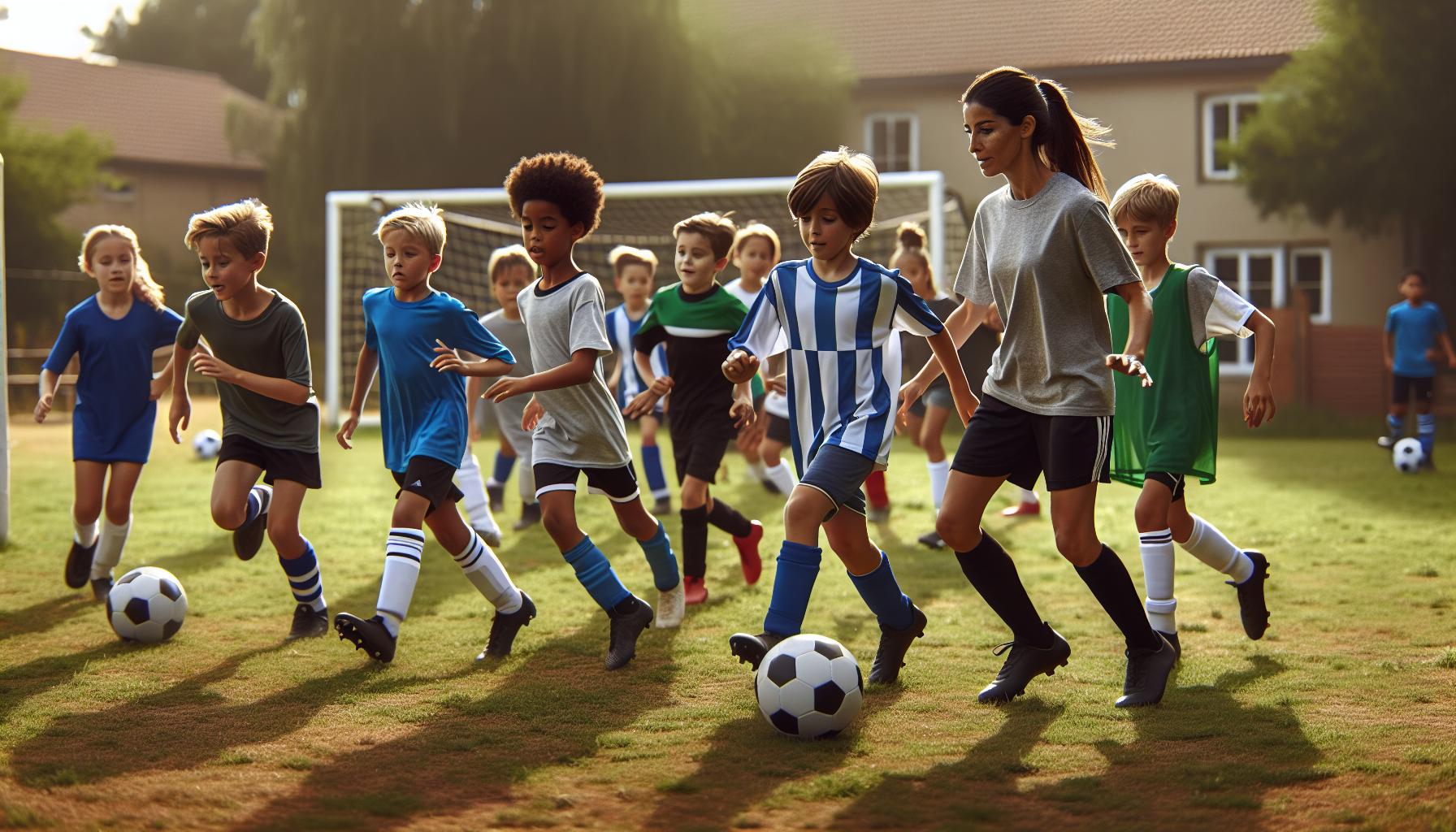
Crafting Age-Appropriate Skill Development Drills That Inspire Growth
Youth players thrive when their training feels both challenging and accessible, a balance achieved by tailoring skill development drills to their unique stages of growth. Young athletes respond best to activities that not only hone technical ability but also ignite intrinsic motivation-drills shouldn’t feel like chores but gateways to discovery and mastery. Coaches who understand age-appropriate progression know that a 6-year-old’s coordination and attention span differ vastly from that of a 12-year-old, making drills designed with developmental milestones in mind essential to nurturing confidence and sustained enhancement. Such as, simpler, playful exercises such as dribbling through cones shaped like animals or navigating mini-obstacle courses embed fundamental ball control while keeping the atmosphere light and fun, which is critical in these early years.
As players advance, introducing slightly more complex challenges that promote decision-making enhances their tactical growth alongside physical skills. Emulating real-game scenarios in small group drills sharpens not only individual techniques-like sharp turns, feints, and first-touch control-but also fosters quick thinking under pressure. Take the approach championed by youth academy coach Maria Sanchez, who integrates “reaction zones” where players must instantly choose between passing, shooting, or dribbling based on dynamic cues. She observes that embedding cognitive elements alongside physical skills accelerates learning and helps players internalize the rhythm of match play earlier than conventional repetitive drills allow. By matching drill intensity and complexity to players’ evolving abilities and enthusiasm, coaches create a vibrant training environment that celebrates effort and encourages continuous growth.
design Principles for Effective age-Specific Drills
- Simplicity for Young Beginners: focus on basic motor skills-not just soccer technique-with fun activities that promote balance,coordination,and spatial awareness.
- Progressive Complexity: Gradually layer technical elements (e.g., controlled dribbling followed by directional changes) to challenge players without causing frustration.
- Integration of Game-Like Scenarios: Utilize small-sided games and decision-making drills that mimic match pressure, promoting adaptability and tactical intelligence.
- Encouragement of creative expression: Allow players room to experiment within drills, reinforcing confidence and innovation rather than rigid repetition.
Examples of Age-Appropriate Drills That Inspire Growth
| Age Group | Drill Type | Focus Area | Impact |
|---|---|---|---|
| 5-7 years | “Animal Dribble” Course | Ball Familiarity, Balance | develops touch and coordination in a playful environment |
| 8-10 years | Passing Triangles | Passing Accuracy, Spatial Awareness | Builds understanding of positioning and teamwork |
| 11-13 years | Reaction Zone Decision Drill | First Touch Control, Tactical Choices | Encourages smart decision-making under pressure |

Mastering ball Control and Technical Technique with Confidence
Few aspects of youth soccer captivate more than the moment a young player effortlessly controls a lively ball under pressure, turning chaos into composure. This mastery of ball control and technical prowess is more than mere skill-it’s the artful foundation upon which creativity and tactical brilliance are built. Coaches often recall the early days of soccer legends like Lionel Messi or Mia Hamm, who spent countless hours perfecting their first touch and dribbling finesse. For youth players, nurturing this confidence means cultivating a deep connection with the ball, embracing repetition infused with joy, and learning to command every touch with intent and flair.
Experienced coaches emphasize that mastery comes from purposeful,varied practice rather than monotonous repetition. Incorporating drills that simulate real-game unpredictability is key. As an example, small-sided games where players must trap, pinch, or shift the ball while under defensive pressure encourage micro-decisions that develop natural instincts. As Coach Liam Thompson from a renowned youth academy notes, “When players learn to feel the ball around their feet before reacting, their confidence skyrockets.It’s like they’re dancing with the game rather than chasing it.” Empowering players to experiment with both feet-encouraging ambidexterity-and introducing skills like feints, turn-overs, and controlled shielding builds a technical toolbox that supports expressive, intelligent play.
Practical Strategies to Build Ball control Confidence
- Multifaceted Touch Drills: Combine simple traps with progressive challenges such as one-touch passing and receiving on the move to simulate match pressure.
- Ambidextrous Training: Prioritize equal use of both feet through specific ball mastery exercises to unlock versatility and unpredictability.
- pressure-Adjusted Scenarios: Use small groups where defenders apply light pressure to encourage players to maintain composure and refine close control.
- Visual and Cognitive Cues: Introduce “reaction balls” or variable passing drills to sharpen focus and ball control under unexpected conditions.
Sample Ball Control Progression for Ages 7-13
| Age Group | Drill Focus | Technical Goals | confidence-Building Outcome |
|---|---|---|---|
| 7-9 years | Basic Dribbling Mazes | Touch consistency, balance | Cozy ball proximity and controlled movement |
| 10-11 years | Paired Passing and Receiving | First touch accuracy, weight of pass | Improved anticipation and tactile awareness |
| 12-13 years | reactive Control and Feint Drills | Quick adjustments, deception skills | Confidence to initiate and evade pressure creatively |

Building Tactical Awareness: Teaching Smart, Creative Play
Few moments in youth soccer are as thrilling-and as foundational-as witnessing a young player read the game instinctively, anticipating opponents’ moves and threading clever passes that reshape the flow of play. Developing this tactical awareness transforms players from reactive participants into proactive creators on the field. Legends like Andrés Iniesta or Megan Rapinoe didn’t merely rely on technical skill; their genius stemmed from a deep understanding of the game’s rhythm, space, and timing. For youth coaches, the challenge lies in helping young athletes build this soccer IQ while preserving the game’s joyful spontaneity and creative spirit.
Teaching tactical intelligence involves more than simple drills; it requires immersing players in dynamic scenarios that encourage problem-solving and adaptability.Small-sided games, varied positional rotations, and guided group discussions about decision-making sharpen a player’s perception of angles, support runs, and defensive responsibilities. Coach Maria Lopez emphasizes, “When kids grasp why they should pass here instead of there, or when they start seeing the field like a chessboard, their confidence soars. It’s the spark that turns effort into artistry.” Incorporating tactical teaching tools that blend visualization and active play helps young athletes develop a keen sense of timing, collective movement, and space utilization that will serve them well throughout their soccer journey.
Practical Steps to Cultivate tactical Awareness
- Role-Playing Scenarios: Assign players different positions periodically to broaden their understanding of team dynamics and responsibilities.
- Guided Game Analysis: Use video clips from youth matches or professional games to discuss key moments where tactical choices influenced the outcome.
- Small-Sided Tactical Drills: Design drills that emphasize specific strategic goals,such as creating overloads,defensive compactness,or exploiting width.
- question-Based Coaching: Encourage players to verbalize their thought process during training, fostering critical thinking and self-awareness.
Sample Tactical Awareness Progression for Ages 8-13
| Age Group | Focus | Tactical skills Developed | Expected Outcomes |
|---|---|---|---|
| 8-9 years | Basic Positioning & Support Play | Understanding spacing, simple off-ball movement | recognizes where to be on the field and how to support teammates |
| 10-11 years | Creating Passing Angles & Defensive Shape | Reading opponents’ intentions, offering passing options | Begins making smarter decisions about movement and positioning |
| 12-13 years | Advanced Transition Play & Tactical Flexibility | Switching between attacking and defending with speed, tactical adaptability | Demonstrates creativity and awareness in fluid game situations |
Boosting Physical Fitness: Agility, Speed, and Strength for Young Athletes
Few attributes electrify the soccer field quite like the sudden burst of speed or the nimble pivot that leaves defenders grasping at air. In youth soccer, cultivating agility, speed, and strength isn’t just about raw physicality-it’s about shaping young athletes into dynamic, resilient players capable of meeting the demands of the modern game’s pace and intensity. The explosive sprint to intercept a pass, the quick change of direction to evade a challenge, or the powerful stride to win a duel all hinge on these foundational physical traits. Legendary players, from Pelé to Alex Morgan, have demonstrated how athleticism combined with technique turns thrilling moments into defining plays, reminding us that fitness training is an essential chapter in every young soccer player’s story.
Developing these qualities in youth athletes requires a balanced, age-appropriate approach that emphasizes growth, injury prevention, and enjoyment. Instead of pushing young players toward adult-style weightlifting or intense conditioning, coaches and parents should focus on movement mastery and functional strength. Drills that mimic in-game actions-like ladder exercises to enhance foot speed, cone drills promoting rapid directional changes, and body-weight exercises that build core and lower-body strength-form the backbone of effective training.Coach David Ramirez, who has guided numerous youth teams to regional championships, notes, “When kids see their speed and agility improving, it fuels their confidence and creativity on the ball. They start to play freer, take more risks, and it transforms the energy of the entire team.” Introducing these physical elements progressively not only optimizes performance but fosters a lifelong relationship with athletic health.
Effective Training Essentials for young Soccer Athletes
- Dynamic Warm-Ups: Incorporate jogging, high knees, and butt kicks to prepare muscles and reduce injury risk.
- Agility Ladder Drills: Enhance coordination and quick foot movement to improve on-field maneuverability.
- Short Sprints and Shuttle Runs: Build acceleration and recovery speed vital for game transitions.
- Bodyweight Strength Exercises: Squats, lunges, planks, and push-ups develop essential muscular endurance without heavy weights.
- Plyometrics in Moderation: Jumping drills improve explosive power but should be introduced carefully based on age and technique.
- Flexibility and Mobility Work: Stretching and mobility routines protect joints and promote fluid movement patterns.
Sample Weekly Workout for Building Speed and Strength
| day | Focus | Example Activities |
|---|---|---|
| Monday | Agility & Coordination | Agility ladder drills, cone weaving, balance exercises |
| Wednesday | Speed & sprint Mechanics | short sprints (10-20 meters), shuttle runs, resistance running (parachute or sled) |
| Friday | Strength & Core Stability | Bodyweight circuits: squats, lunges, planks, glute bridges, push-ups |
Empowering young players through thoughtfully designed fitness routines not only enhances their game-day impact but also nurtures the joy of movement and self-discovery. As athletes develop strength and speed, they gain the physical confidence to express creativity on the field and sustain energy through the rollercoaster of a match. By celebrating every leap in agility and clocked sprint time, coaches build a culture where hard work meets excitement-the spark that lights the next generation of soccer stars.
Fostering Mental Resilience and Teamwork on and off the Field
The ability to bounce back from setbacks and thrive under pressure often marks the difference between promising talent and true soccer champions.In youth soccer, cultivating mental resilience is as essential as honing technical skills or physical fitness. Players who learn to embrace challenges-whether missed opportunities, tough losses, or intense competition-discover inner strength that fuels sustained growth and competitive spirit. Take the story of Mia, a 12-year-old midfielder whose confidence wavered after a crucial penalty miss. Through supportive coaching that emphasized reflection rather than blame,Mia learned to channel disappointment into determination.Her teammates rallied around her, highlighting how collective encouragement not only repairs individual confidence but also solidifies the fabric of teamwork that drives every winning side.
Beyond individual grit, nurturing a sense of unity and shared purpose lays the groundwork for dynamic, creative play. Effective youth programs intertwine mental toughness training with team-building activities that reinforce interaction, empathy, and respect. Coaches can introduce exercises such as paired problem-solving drills or small-group tactical discussions to inspire collaboration and listening skills, essential elements on and off the field. The legendary Dutch total football philosophy embodies this spirit-where every player understands and supports roles fluidly, creating unpredictability and cohesion simultaneously.As Coach Ramirez reflects, “When young players trust each other and embrace their roles, the soccer field becomes a canvas for imaginative play and mutual growth.” Encouraging players to celebrate teammates’ successes just as much as their own fosters a culture of resilience anchored in collective ambition.
Practical Strategies to Build Mental Resilience and Team Cohesion
- Growth Mindset Encouragement: Praise effort, process, and attitude rather than just outcomes to help players internalize perseverance.
- Mindfulness and Visualization Techniques: Teach young athletes simple breathing exercises and mental imagery to manage stress and enhance focus.
- Rotating Leadership Roles: Give each player opportunities to led warm-ups or team discussions,fostering responsibility and confidence.
- Team-Building Challenges: Use fun off-field activities like trust falls or cooperative games to strengthen bonds and communication skills.
- Regular Reflection Sessions: Facilitate post-practice talks where players share what went well and areas to improve,promoting openness and resilience.
Balancing Competition with Connection
| focus Area | approach | benefits for Young Players |
|---|---|---|
| Individual Mental Skills | Breathing exercises,positive self-talk | Reduces anxiety,builds confidence |
| Team Communication | Role rotation,on-field call-outs | Improves clarity,empathy,understanding |
| Handling Pressure | Simulated game scenarios,mindset coaching | Prepares players for match-day stresses |
| Conflict Resolution | Guided discussions,peer mediation | Strengthens relationships,reduces tension |
Embedding these principles within training routines transforms youth soccer from a mere competition into a journey of character building and shared dreams. When young athletes feel mentally prepared and supported by their peers, they play not only with skill but with heart-a combination that electrifies spectators and lives long after the final whistle.
Incorporating Fun and Competitive Play to Sustain Passion and Motivation
The spark that ignites a young player’s love for soccer often flickers strongest in moments where joy and competition blend seamlessly-when the thrill of a perfectly timed pass or a last-second goal overwhelms the fear of failure. Maintaining this delicate balance is crucial; it fuels long-term passion and motivation while sharpening competitive instincts. Coaches who skillfully weave fun interactive games with purposeful challenges create environments where players are eager to return, hungry to improve, and inspired to push their limits. Take, for instance, how coach Elena uses small, high-energy scrimmages with rotating teams, emphasizing creative play and quick decision-making. Her players say these sessions feel like “mini tournaments,” giving them real-game stakes while sparking laughter and camaraderie.This dynamic setting encourages risk-taking with the ball, nurturing confidence and resilience without the weight of pressure.
the art of blending spirited competition with enjoyment lies in empowering players to experience both success and failure as integral parts of their growth journey. Integrating drills that mimic match scenarios-such as timed possession challenges, 3v3 mini-games, or relay races that reward teamwork-brings strategic thinking and physical sharpness into a playful context. Moreover, celebrating effort and sportsmanship daily fosters a positive atmosphere where winning is never the sole objective but part of a larger narrative about development and collective achievement. as young defender Jack shares, “When we play for fun, I’m not afraid to make mistakes, and that’s when I really learn.” Coaches can also implement rotating “fun competitions” within practice that rally the team and cultivate healthy rivalry without causing burnout, ensuring players stay mentally refreshed and emotionally invested throughout the season.
Strategies to Enhance Enjoyment and Healthy Competition
- Game-Like Drills: Use small-sided games with specific goals (e.g., maintaining possession, quick transitions) to simulate real-match pressure with less risk.
- Reward Creativity: Encourage innovative moves and problem-solving by praising inventive passes or skillful plays during fun drills.
- Inclusive Competitions: design contests where everyone contributes to team success, such as cooperative challenges or mixed-skill tournaments.
- Positive Reinforcement: Highlight growth moments and effort alongside results to maintain high motivation and reduce fear of failure.
- Player-Led Games: Invite youth athletes to design mini-games or set rules,fostering ownership and engagement.
Guiding Parents and Coaches: Creating Supportive Learning Environments
Creating an environment rich with encouragement and understanding can transform a young player’s experience from simply learning soccer skills to truly embracing the game’s spirit. Parents and coaches hold immense influence in shaping how youth athletes view both success and setbacks. Consider how Coach Ramirez, known for his patient, open dialog with players and parents alike, fosters a culture where mistakes are seen as natural steps toward mastery, not reasons for criticism. he emphasizes listening as much as instructing, frequently enough inviting parents to his sessions so they witness firsthand the learning process-breaking down unrealistic expectations and fostering empathy. This compassionate approach has helped his teams build trust and confidence, resulting in players who eagerly tackle challenges rather than shy away from them.
Coordinated communication between parents and coaches is critical to sustaining a supportive learning atmosphere. when parents understand the progression framework-why certain drills focus on basic ball mastery one week and tactical awareness the next-they can better reinforce growth at home without undue pressure. Likewise, coaches who engage parents through regular updates and workshops demystify the training plan and emphasize developmental milestones rather than just wins and losses. This partnership encourages holistic development, where emotional, social, and physical growth go hand in hand. Such as, Sara, a young midfielder on a community team, credits her improvement not only to on-field training but also to her parents’ eager questions and positive reinforcement during evening practice talks. Their shared journey underscores how vital creating a warm,informed support network is to cultivating resilience and a lifelong love for the sport.
Practical Tips for Building Positive Collaboration
- Establish Clear Expectations: Share development goals and training philosophies early with parents to align support strategies and reduce misunderstandings.
- Promote Open Dialogue: Encourage regular, respectful conversations between coaches, parents, and players to address concerns and celebrate progress.
- Celebrate Effort Over Outcomes: Reinforce that growth is more vital than immediate success, helping young athletes build confidence and embrace challenges.
- Provide Educational Resources: Host workshops or share articles on age-appropriate training and mental resilience to equip parents with practical tools.
- Foster Player Autonomy: Support kids in setting their own goals and reflecting on their progress, cultivating ownership and intrinsic motivation.
Encouraging Empathy and Patience in Youth Development
Understanding that every child develops at a unique pace is fundamental. Patience and empathy from adults create safe spaces where players feel comfortable experimenting and learning, even when progress feels slow. Coaches like Elena, mentioned earlier, integrate this philosophy by tailoring feedback to each player’s stage, offering encouragement that resonates personally rather than generic praise. When parents reinforce this mindset at home-resisting the urge to compare their child to peers-they help nurture resilience that extends beyond the pitch, teaching life skills like perseverance and emotional regulation.
Tracking Progress: Effective Methods to Measure Skill Advancement
youth soccer development is a journey rich with moments of breakthrough and quiet progress-both are crucial signals that reveal a player’s evolving mastery of the game. Tracking these advancements not only offers objective insights but also fuels motivation by celebrating tangible growth. Coaches who embrace multifaceted assessment methods help young athletes see beyond the scoreboard, recognizing skill refinement in everything from improved first touches to sharper decision-making under pressure. Consider Coach Jensen’s approach with his under-12 team: by combining video review with player self-reflections, he uncovers nuances missed in real-time-like how a midfielder’s vision expands to anticipate opponents’ moves, transforming routine drills into dynamic game intelligence.
To capture the full spectrum of growth, it’s essential to blend qualitative impressions with quantitative data. Regularly scheduled skills evaluations-such as timed ball control circuits or precision passing tests-offer measurable benchmarks. Meanwhile, narrative tools like personalized progress journals encourage players to articulate their challenges and victories, consolidating mental resilience alongside physical skills. Such practices can be easily integrated into weekly training plans, helping coaches and parents track developments in agility, tactical awareness, and teamwork. Such as, a simple checklist that marks milestones in dribbling, shooting accuracy, and spatial awareness can be invaluable for identifying when it’s time to introduce new complexities or offer tailored encouragement. This clearly communicated, evolving framework demystifies advancement and sustains enthusiasm, as players know exactly what constitutes success and can revel in their upward trajectory.
Practical Strategies for Monitoring Player Development
- Skill Benchmarking Sessions: Conduct periodic drills focusing on core techniques with objective scoring to track improvements over time.
- video Analysis: Use game and practice footage to review player movement, positioning, and decision-making for targeted feedback.
- Player Self-Assessments: Encourage young athletes to reflect on their performances, fostering self-awareness and ownership of their growth.
- Parent and Coach Check-ins: Establish regular conversations that share observations, set realistic goals, and celebrate efforts.
- Dynamic Goal Setting: Adapt skill targets as players develop, ensuring challenges remain stimulating without overwhelming.
| Skill Area | Assessment Method | Frequency |
|---|---|---|
| Ball Control & Dribbling | Timed obstacle course & accuracy drills | Monthly |
| Passing & Receiving | Partner passing tests & small-sided games review | bi-monthly |
| Tactical Understanding | Game video breakdown & scenario quizzes | Quarterly |
| Physical Fitness | Agility runs & endurance sprints | Monthly |
| Mental Resilience | Self-reflection journals & coach-player discussions | Ongoing |
Harnessing these tools within a community spirit encourages young athletes to appreciate the process-the incremental steps that form the foundation of lifelong skill and passion. As Captain Maya, a rising star on her U14 team, shares, “Seeing my own progress in writing and through videos makes me want to push harder. It’s like knowing you’re building your own story.” Such empowered narratives transform training into an exhilarating adventure, where every measured advance becomes a cause for celebration, inspiring everyone on and off the field to honor the gorgeous game’s endless possibilities.
Adapting Training Plans for various Skill Levels and Position Roles
Adapting training plans to accommodate the wide range of skill levels and position roles within a youth soccer team is both an art and a science. Every young player arrives with unique strengths, challenges, and learning paces – and effective coaches see these differences not as obstacles, but as opportunities for tailored growth. Consider the case of Ella, a naturally creative midfielder whose instinctive vision demands training that sharpens decision-making under pressure, while her teammate Jay, a tenacious defender, thrives on drills emphasizing positioning and one-on-one duels. by crafting adaptable sessions that address these diverse needs, coaches transform the training ground into an incubator of individual excellence that ultimately lifts the entire team.This customization respects each player’s journey, ensuring that drills soar beyond rote repetition to engage cognitive, technical, and physical facets suited to their current development phase.
Balancing positional demands means embedding specific skill sets in daily practices without sacrificing the joy and inclusivity that sustain young athletes’ passion. Forwards may focus on shooting accuracy and off-the-ball movement, defenders refine interception timing and spatial awareness, while goalkeepers build reflex speed and communication skills – all within a cohesive training framework. To illustrate,Coach Ramirez uses small-sided games to simulate position-specific decision-making scenarios,seamlessly blending tactical intelligence with technical repetition. This approach encourages players to experiment and grow within roles that highlight their unique talents. Practical adaptations might include:
- Tiered skill circuit stations: Players rotate through drills scaled by difficulty,allowing those ready to push limits while others consolidate fundamentals.
- position-focused mini-sessions: Brief breakout drills during practice that zero in on role-specific techniques.
- Individualized feedback loops: Utilizing video playback and personal goal setting to nurture self-awareness within role demands.
| Position | Key skill Focus | Training Adaptation |
|---|---|---|
| Forward | Finishing, off-ball runs, creativity | Targeted shooting drills & decision-making simulations |
| Midfielder | Passing range, vision, stamina | Dynamic small-sided games & endurance circuits |
| Defender | Marking, tackling, spatial positioning | 1v1 duels & positional awareness drills |
| Goalkeeper | Reaction time, communication, aerial control | Reflex training & scenario-based communication exercises |
By honoring both the diversity of skill sets and the nuances of position roles, coaches lay the groundwork for a resilient, intelligent, and versatile team. Young athletes not only refine their abilities but also gain confidence and clarity about their contributions – fueling a deeper connection to the beautiful game and to the community that surrounds them.
Frequently Asked Questions
Q: How can coaches balance individual skill training with team strategy for youth soccer players?
A: Coaches should blend individual skill drills with team-based exercises by dedicating specific sessions to mastering dribbling, passing, and shooting while integrating tactical concepts through small-sided games. This approach encourages personal growth and teaches players how their skills contribute to team strategy, enhancing overall gameplay. Learn more in the “building Tactical awareness” and “Mastering Ball Control” sections.
Q: What are effective ways to motivate youth soccer players who struggle with consistent practice?
A: To motivate young players, use positive reinforcement, set short-term goals, and incorporate fun challenges linked to their skill development. Encouraging peer support and celebrating small achievements builds confidence and keeps passion alive, as highlighted in “Incorporating Fun and Competitive Play.” Personal stories from players and coaches can inspire continued commitment.
Q: When is the best time to introduce competitive matches into a youth soccer training plan?
A: Introducing competitive matches is ideal after players have developed core technical skills and tactical awareness, usually after a few months of focused training. Early matches should emphasize learning and sportsmanship over winning, helping players apply skills in real-game scenarios, as discussed in “Incorporating Fun and Competitive Play.”
Q: How should training plans be adjusted during off-season periods to maintain youth player development?
A: off-season training should focus on light physical conditioning, skill refinement, and mental rest to prevent burnout.Incorporate fun, low-intensity drills and encourage informal play to keep passion alive while allowing recovery. This aligns with principles in “Boosting Physical Fitness” and “Fostering Mental Resilience.”
Q: What role do nutrition and hydration play in youth soccer training and skill development?
A: Proper nutrition and hydration are crucial for energy, recovery, and focus during training. Encouraging balanced meals with carbs, proteins, and healthy fats, alongside regular water intake, enhances physical fitness and skill execution. Coaches and parents can support this as part of a holistic training plan, complementing sections on physical conditioning.
Q: How can technology be used effectively in training youth soccer players?
A: Technology like video analysis apps and skill-tracking tools can provide visual feedback, help track progress, and identify areas for improvement. Incorporating these tools enhances engagement and data-driven development strategies, linking seamlessly with “Tracking Progress: Effective Methods to Measure Skill Advancement.”
Q: Why is it important to customize training based on individual learning styles in youth soccer development?
A: Customizing training to individual learning styles-visual, auditory, or kinesthetic-improves understanding and retention of skills. Such as, some players benefit from watching demonstrations while others prefer hands-on practice. Tailored approaches boost confidence and accelerate development, supporting ideas from “Crafting Age-Appropriate Skill Development Drills.”
Q: What are the key indicators to decide when a youth player is ready to advance to a higher skill level or position role?
A: Indicators include consistent mastery of foundational skills, tactical understanding, physical readiness, and mental resilience. regular assessments with feedback, as recommended in “Tracking Progress,” help coaches determine if players should advance or need more focused development in their current role. Encourage players to embrace challenges while maintaining confidence.
Future Outlook
Mastering youth soccer requires more than drills – it’s about nurturing passion, resilience, and skill through a thoughtful development plan. By consistently applying these proven training strategies, coaches can watch young players transform on the field, building not just technique but confidence and teamwork. ready to see your team thrive? Start implementing these actionable steps today and witness their growth firsthand.
To deepen your coaching toolkit,explore our detailed guides on Effective Soccer Drills for kids and Building a Winning Youth Soccer Mindset. Don’t miss out on exclusive insights-sign up for our newsletter for ongoing tips and success stories from top youth coaches who have turned potential into performance. Questions or unique challenges in your training journey? Join the conversation below or connect with our expert coaching consultants to tailor your approach.
Remember, every champion began with a single practice-and your next breakthrough is just a session away.Keep pushing forward, stay inspired, and return frequently enough for fresh strategies that elevate your coaching game and empower the next generation of soccer stars.
Get our latest guides, news, and insights highlighted in your Google Search & AI Overviews.