Did you know that one of the simplest yet most powerful tactics in soccer is teaching players too spread out across the field? For youth players,mastering this skill transforms chaotic scrambles into orchestrated plays,creating space,confusing opponents,and opening clear paths to goal.Coaches and parents ofen see young teams clumping together, missing chances to exploit the full pitch-and that’s exactly where understanding spatial awareness and movement becomes a game-changer.By learning how to teach youth soccer players to spread out effectively, you’re not just improving their individual skills but building smarter, more confident teams that read the game brilliantly. Imagine a young player weaving through defenders not just by speed but by positioning,turning a tight spot into a scoring prospect. This article dives into practical tactics, insights from experienced coaches, and real match scenarios to help guide your players toward mastering this essential aspect of the stunning game. Whether you’re a coach eager to elevate your team’s performance or a parent wanting to support your child’s soccer journey,discovering how to spread out on the field will unlock new levels of teamwork and excitement-so let’s explore how you can make that happen.
Contents
- Understanding the Importance of Spreading Out in Youth Soccer
- Why spreading Out Matters to Every Aspect of the Game
- Fundamental Tactics to Teach Spacing on the Field
- Practical Tips for Implementing Spacing
- Using Visual and Practical Drills to Improve Player Positioning
- Tips for Effective Spacing Drills
- How Player Roles Influence Effective Spacing Strategies
- Practical Advice to Integrate Role-Based Spacing Learning
- Communicating Space: Building Team Awareness and Chemistry
- Effective Communication Strategies for Youth Teams
- Adapting Spreading out Tactics to Different Game Situations
- Key Adaptations to Emphasize
- Leveraging Small-Sided Games to Reinforce Tactical Concepts
- Practical Tips for Maximizing Small-Sided Games
- Common Challenges Youth Players Face and How to Overcome Them
- Strategies to Address Spacing Challenges
- Inspiring Youth Players Through Success Stories and Real Match Examples
- Stories That Illuminate Tactical Growth
- Faq
- Q: How can coaches use positioning games to teach youth players to spread out effectively?
- Q: What role does player age and development stage play in teaching spacing tactics?
- Q: Why is teaching anticipation vital when helping youth players spread out on the field?
- Q: How does understanding the opponent’s formation impact spreading out strategies for youth teams?
- Q: What are effective ways to integrate technology to teach spatial tactics in youth soccer?
- Q: When should youth soccer players begin learning about optimal spacing and spreading tactics?
- Q: How can coaches encourage youth players to take ownership of their spatial positioning during matches?
- Q: What non-verbal cues help youth players maintain effective spacing during fast-paced soccer games?
- to sum up
Understanding the Importance of Spreading Out in Youth Soccer
One of the most transformative lessons in youth soccer is understanding how spreading out across the field creates possibilities that can change the course of a game. When young players grasp the art of spacing, they unlock fundamental advantages – from stretching the opposing defense to opening lanes for creative passing and dynamic runs. Imagine a packed defense collapsing around a single ball carrier; without teammates positioned wisely to stretch that pressure, the attack stalls and frustration mounts. Yet when players instinctively create space, they become a living web of connections, pulling defenders out of position and crafting moments of brilliance that defy even the most disciplined opponents.This concept is not just tactical theory; it’s a principle that breathes life into every phase of play and fosters confidence on the ball. Coaches like Eduardo bianchi, who works extensively with youth teams in South America, emphasize that teaching spacing is akin to teaching a new language-one where every position and movement counts like a word in a sentence. “The players learn to read the field like a book,” bianchi notes, “knowing where to be before the ball even gets to them.” These early habits ripple through a player’s growth, seamlessly blending individual skills with team intelligence.Young stars such as Mallory Pugh reflect on how their breakthrough moments came whenever they recognized and exploited space, turning a seemingly tight scenario into a scoring opportunity. This awareness enriches the player’s understanding of the game’s rhythm and tempo,making the beautiful chaos of soccer a little more predictable and a lot more exciting.
Why spreading Out Matters to Every Aspect of the Game
- Enhances Ball Possession: Proper spacing means players provide multiple passing options, reducing turnovers under pressure.
- Creates Attacking Opportunities: Wide positioning pulls defenders,opening gaps for through balls,overlaps,and shots on goal.
- Improves Defensive Shape: Well-distributed players can cover more ground,intercept passes,and quickly regroup as a cohesive unit.
Teaching young athletes to value and practise spreading out not only elevates their tactical skill set but also deepens their connection to one another. It encourages communication, trust, and anticipation, laying down a foundation for both personal growth and collective success.
Fundamental Tactics to Teach Spacing on the Field
Few lessons in youth soccer resonate as deeply as mastering the art of spacing-a concept that transforms chaos into opportunity on the field. Teaching young players to find and maintain the right distance from their teammates doesn’t merely improve possession; it shapes how they think, move, and connect as a unit. Coaches often compare spacing to the strands in a spider’s web: too close, and the web collapses, too far, and the connections break. The key lies in balance. Legendary youth coach Maria Santos from Portugal recalls a pivotal moment with her U12 team: “When I first asked my players to ‘spread like a sunrise,’ their eyes lit up. It wasn’t just about positioning; it was about creating light-space-for the ball to travel and for creativity to flourish.” This vivid imagery helps young minds reframe spacing from a dry tactic to a living,breathing element of the game.
Fundamental tactics begin with teaching players to recognize zones on the field rather than fixed spots. Encouraging natural movement within these zones gives the team fluidity and unpredictability. Key principles include maintaining appropriate distance so the ball carrier always has multiple options, avoiding clustering that invites defensive pressure, and understanding the rhythm of play-knowing when to contract to support defensively or expand to exploit offensive gaps. A practical starting point is emphasizing the “triangle principle,” where each player stays positioned so that any two teammates plus themselves form a triangle, ensuring constant passing triangles that facilitate fast ball circulation. this was frequently illustrated by former player and now coach Kevin O’Neal: “I tell my kids, ‘Be the corner of the triangle your teammate needs. If everyone finds their angle, the field feels bigger, and the game slows down to your tempo.'” These foundational tactics instill both discipline and creativity, essential for youngsters navigating the increasingly complex tactics of modern soccer.
Practical Tips for Implementing Spacing
- Use Visual Markers: Set cones or lines during practice to help players visually grasp proper distance and positioning.
- Encourage Constant Scanning: Teach players to keep their heads up and read the field, developing spatial awareness.
- Promote Movement Off the Ball: Reinforce the idea that spacing requires active adjustment based on where the ball is and where defenders press.
- Leverage Peer Feedback: Foster an habitat where players communicate and remind each other about spacing in real time.
- Celebrate Spatial Awareness: Highlight moments during games and training when good spacing led to positive outcomes, inspiring reinforcement.
Using Visual and Practical Drills to Improve Player Positioning
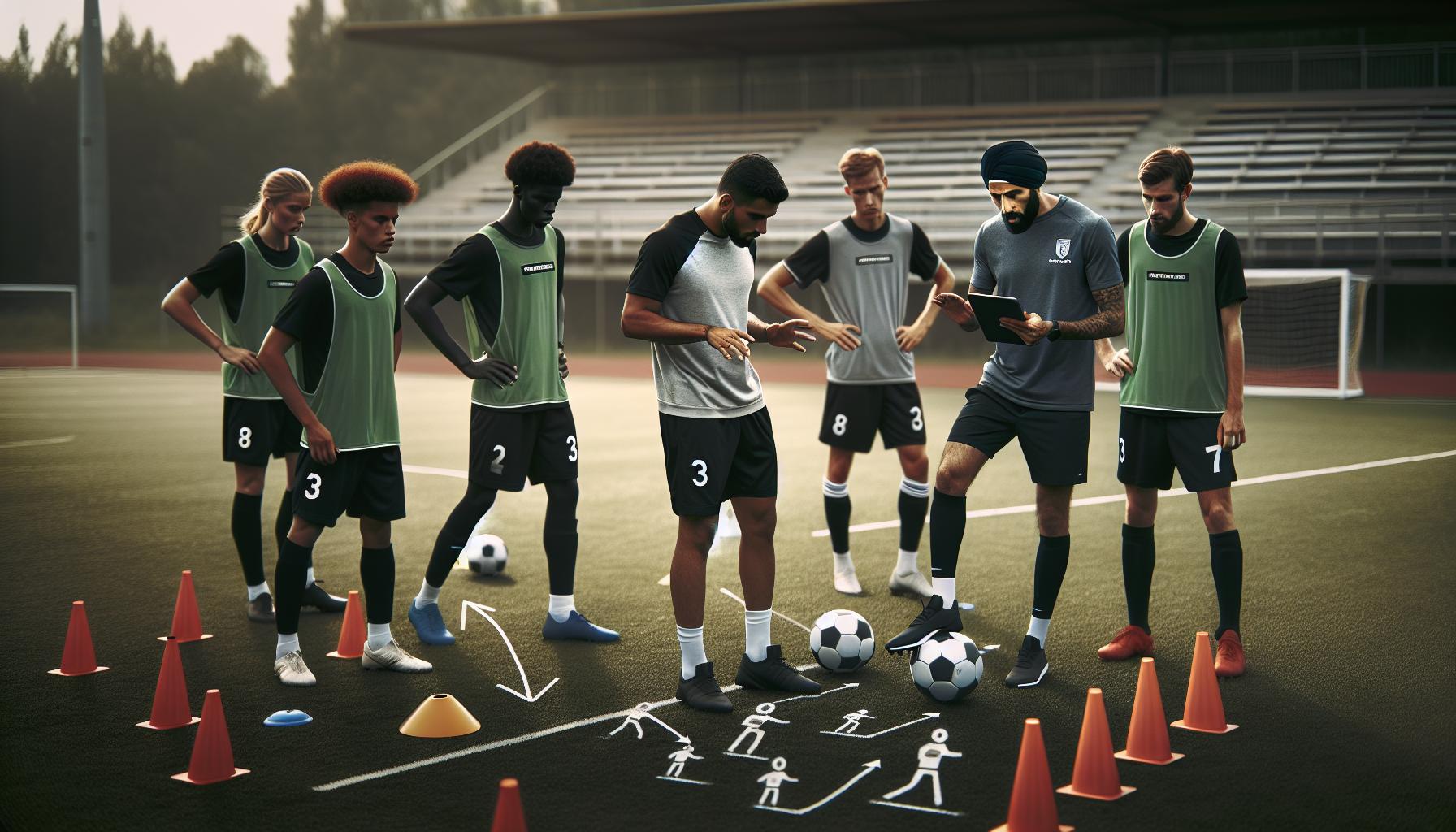
The magic of spacing in youth soccer frequently enough reveals itself in the way players instinctively stretch the field to create passing lanes and open up attacking opportunities. But instinct alone rarely suffices-especially for younger players still developing spatial awareness and tactical understanding. Visual and hands-on drills anchor abstract concepts in reality,giving kids tangible reference points to internalize positioning. One innovative approach used by Coach Elena Ramirez involves ”shadow cones”: setting up cones that represent imaginary defenders or key zones, where players must find pockets of space without clustering. This transforms abstract spacing into a game of angles and distance, engaging players’ minds as much as their feet. Ramirez shares,”When players see the field mapped out with cones,their body language changes-they become explorers searching for safe harbors and launchpads. Spacing stops being a vague instruction and turns into an adventure.”
Integrating practical drills also sharpens skills like scanning and adjusting positioning dynamically. Drills such as ”moving triangles” ask three players to maintain a triangle shape while moving freely within a marked area, emphasizing constant communication and awareness. Another favorite is the “follow-the-leader spacing” exercise where one player with the ball leads the movement and others adjust their relative distances based on cues from the leader’s direction changes. these exercises mirror real-game complexity and pressure, helping youth players appreciate spacing as a living, breathing element influenced by ball location and opponent positioning. Encouraging players to vocalize their spacing decisions during drills fosters team chemistry,as defender-turned-coach Kevin O’Neal notes: “The moment kids start calling out,’Right here!’ or ’Stretch wider!’ you see confidence grow and lines open up naturally.” By systematically blending visual aids and movement challenges, coaches build not only positioning skills but a deeper spatial intelligence essential to modern soccer’s rhythm and beauty.
Tips for Effective Spacing Drills
- Start Simple: Use static cone setups before adding movement,allowing players to first recognize spacing concepts.
- Incorporate Small Groups: drills with 3-5 players encourage more involvement and clearer spacing understanding.
- Rotate Roles: Let players experience spacing from ball carrier and off-ball perspectives to develop all-around awareness.
- Gradually Add Pressure: Introduce defenders or time limits to simulate match conditions and decision-making speed.
- use Video Feedback: Record drills to review spacing decisions with players, visualizing success and areas for growth.
How Player Roles Influence Effective Spacing Strategies
No two spaces are created equal on a soccer field, and understanding how each player’s role shapes positioning is key to mastering effective spacing strategies. For young players, grasping that defenders, midfielders, and forwards each have distinct responsibilities and ideal zones fundamentally changes how they perceive the pitch. Take defenders, as an exmaple: their primary job is to maintain a solid backline and disrupt opposition attacks, but they also influence spacing by providing safe outlets for teammates under pressure. Midfielders-often called the team’s engine-must balance defensive duties with creative freedom, dynamically shifting to fill gaps and extend passing lanes. Meanwhile, forwards stretch opposing defenses vertically and horizontally, creating pockets of space for teammates to exploit. When young players internalize these role-based movement patterns, spacing ceases to be random-it becomes a purposeful dance that pulses with tactical intent.
Coach Jamal Owens, known for his work with youth academies, emphasizes role-awareness in his training sessions: “I tell my players that spacing is about *who* you are on the field just as much as *where* you are. A fullback’s wide position isn’t just out of habit-it pulls defenders wide and opens space in the midfield for creative runners.” Owens uses role rotation drills where players briefly switch positions to experience firsthand how spacing demands shift. This approach fosters empathy and sharpens spatial intelligence, helping young athletes read the game beyond their immediate tasks. Success stories from local tournaments back this up; a 12-year-old midfielder named Elena transformed her play dramatically once she understood how her role as a link between defense and attack required constant adjustment relative to teammates’ positions. Her coach says, “She started anticipating runs and courses of the ball better as spacing wasn’t just about being separate-it was about complementing every role on her team.”
Practical Advice to Integrate Role-Based Spacing Learning
- Define Role Zones: Map out approximate areas each player should occupy during various phases of play to build spatial framework.
- Use Position-Specific Drills: Tailor spacing exercises to reflect role responsibilities-defenders practice maintaining depth; forwards work on stretching lines wide.
- Encourage Role-Switching: allow players to briefly swap roles in practice to experience how spacing must adapt based on responsibilities.
- Reinforce Communication: instill language habits that clarify roles and spatial adjustments,e.g., “Cover left,” “Push up,” or “Drag defenders.”
- Debrief with Video: Show clips highlighting how spacing supports role execution to turn abstract tactics into visual learning.

Communicating Space: Building Team Awareness and Chemistry
One of the most electrifying aspects of soccer is the invisible thread of connection weaving teammates together across the pitch - a delicate web spun through clear,confident communication. For youth players learning to spread out effectively, mastering this language of space can mean the difference between chaotic clustering and synchronized, fluid play. When players understand not just where to be but how to signal their movements and intentions, they transform individual positioning into cohesive teamwork, turning the sprawling field into a finely tuned stage for creativity and strategy. legendary coaches from grassroots to professional levels stress that *talking* about space actively improves awareness: it trains players’ eyes and minds to scan the field, anticipate teammates’ options, and fill gaps before the opposition even senses an opportunity.
Coach Sofia Martinez, who has worked extensively with youth teams in diverse settings, shares a vivid example: ”During a recent tournament, our defenders began using simple calls like ‘wide left’ or ‘step up’ combined with hand gestures. The moment this started, our midfielders naturally shifted to create passing triangles, and suddenly it felt like the whole team breathed as one.” These small but deliberate signals build trust and sharpen instincts, fostering a playing environment where space is not just occupied but *owned* collectively.Encouraging players to develop a shared vocabulary-words and signs that clarify roles, highlight space, or prompt quick positional adjustments-builds both tactical intelligence and chemistry. Communication becomes the glue that melds individual spatial awareness into a living system of support, enabling young athletes to read the game dynamically and react instinctively.
Effective Communication Strategies for Youth Teams
- Use Simple, Clear Phrases: Introduce concise spatial commands like “check in,” “drop back,” or “push wide” that everyone understands to avoid confusion during play.
- Encourage Non-Verbal Signals: Develop hand signs or body language cues suitable for noisy environments or fast transitions.
- Practice Communication Drills: Incorporate specific exercises where players must verbalize their positioning or call for the ball before executing moves.
- Foster a Supportive Atmosphere: Create a culture where players feel confident to speak up without fear of criticism, boosting engagement and on-field leadership.
- Leverage Video Feedback: Review matches or practices highlighting effective communication moments, reinforcing positive habits visually.
By embedding communication into the core of spacing tactics,youth players not only improve their positioning but also deepen their awareness of the collective rhythm of their team. this synergy elevates the game from a collection of isolated runs to a masterpiece of coordinated movement, inspiring young athletes to own both their individual and shared spaces with pride and purpose.
Adapting Spreading out Tactics to Different Game Situations
From a tightly packed defensive block to an expansive attacking line, the ebb and flow of a soccer match demand youth players adjust their spacing intuitively and skillfully. The beauty behind spreading out lies not in rigid positioning but in flexible adaptation-knowing when to compact space to frustrate opponents or when to stretch out wide to open passing lanes and exploit gaps. Coach Liam O’Connor, who has guided numerous youth teams to regional success, emphasizes, “Teaching players to read the game situation is key. Spacing isn’t just about distance; it’s about timing and context. Sometimes, drawing closer means controlling the midfield; other times, daring runs to the wings create the breakthroughs.” This dynamic approach fosters smart decision-making and transforms spacing into a fluid tool rather than a fixed instruction.practical request involves helping young players recognize cues within the game such as the opposition’s formation, the phase of play, or the state of the match clock. Such as, when defending a slender lead late in the game, players may need to tighten their shape, shrinking the spaces between them to deny penetration and protect their advantage. conversely, when chasing a goal, pushing higher up the pitch and broadening the attack stretches defenses thin.Coaches can cultivate this awareness through scenario-based drills that mimic real match conditions, encouraging players to think critically about spacing adjustments rather than merely react. Incorporating small-sided games with varied objectives-like maintaining a narrow formation against a strong offense or switching to wide possession when on the front foot-strengthens players’ tactical versatility and confidence.
Key Adaptations to Emphasize
- Compact vs. Expansive shapes: Teach players how to transition smoothly between narrow and stretched formations based on possession and defensive requirements.
- zonal Awareness: Develop an understanding of when to close down opponents tightly and when to drop into pockets of space for passing options.
- Situational communication: Use simple verbal cues for quick realignments, such as “tighten up,” “spread out,” or “push forward,” tailored to match moments.
By embedding these adaptable spacing strategies into training, youth players learn that controlling space is as much about awareness and intent as it is about positioning. This empowers teams to navigate the unpredictable rhythms of soccer with intelligence and creativity, turning spatial awareness into a competitive edge that grows with every game.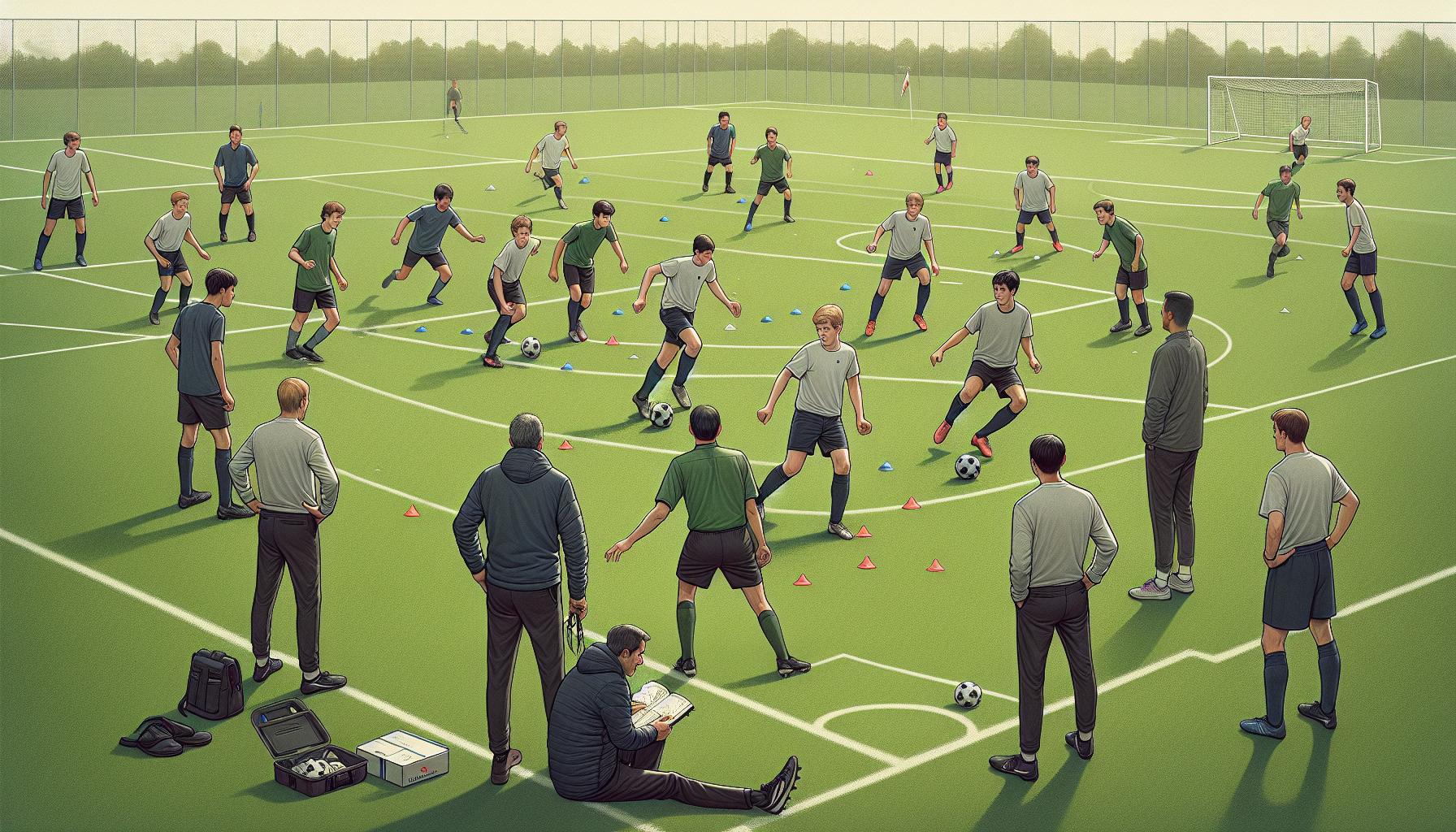
Leveraging Small-Sided Games to Reinforce Tactical Concepts
Small-sided games transform abstract tactical lessons about spacing into vivid, lived experiences for youth players. On a smaller field with fewer teammates, every decision about where to move and how to position oneself becomes magnified. This concentrated environment challenges players to find and create space more deliberately, accelerating their spatial awareness and teaching the critical balance between spreading out to stretch defenses and compacting to support teammates. Coach sofia Ramirez, who leads a top youth academy, reflects, “In small-sided games, players face continuous pressure that forces quick thinking about spacing. They learn the value of staying wide to open passing lanes and the moments to tuck inside for defensive solidity. it’s where theory meets the heartbeat of the game.” These formats mirror real match rhythms but strip away complexity, allowing players to experiment with spacing concepts in a high-engagement, low-risk setting.
The beauty of using small-sided games lies in their versatility and adaptability to emphasize different tactical nuances. By adjusting rules-such as limiting touches, rewarding wide play, or emphasizing transitions-coaches craft scenarios that highlight distinct spacing principles. Such as,encouraging players to maintain width can open up passing triangles and create overlapping runs,helping attackers unlock stubborn defenses.Conversely, games that reward quick, compact play foster tight support networks vital for regaining possession and breaking pressing traps. Integrating these games regularly fosters instinctual spacing decisions,rich betwixt competition and camaraderie. As young winger Javier stars on his U12 team’s breakaway success, he attributes it to “playing lots of small games where I had to find space quickly-now I see gaps on the pitch before they close.” Through these dynamic, tactical playgrounds, youth players build an intuitive feel for spreading out-gaining confidence, sharpening timing, and developing team chemistry that carries over into full-field challenges.
Practical Tips for Maximizing Small-Sided Games
- Vary field Dimensions: Widen or shorten the pitch to emphasize either expansive or compact play.
- Adjust Player Numbers: using fewer players can highlight individual spacing responsibilities; more players can teach collective shape.
- Introduce Specific Tasks: Set goals like ”complete three passes before scoring” to encourage possession and movement off the ball.
- Rotate roles Often: Allow players to experiment with different positions to appreciate spacing demands from multiple perspectives.
- Use Video Feedback: Recording small-sided sessions helps players visualize their spacing and understand areas for advancement.
Common Challenges Youth Players Face and How to Overcome Them
Few concepts in youth soccer challenge players more than mastering the art of spreading out on the field. Young players naturally gravitate toward the ball, creating clusters that stifle fluid play and reduce passing options. This instinct, while understandable, can sabotage offensive opportunities and leave defenses vulnerable.Coach Elena Martinez of rising Stars Academy recalls a turning point in her U11 team’s development: ”We used to see ten kids around the ball, and the opposition coudl smother us effortlessly. When we started focusing on intentional spacing-teaching players to see beyond the ball-the whole dynamic shifted. Suddenly, the field opened up, and so did their creativity.” Helping youth athletes overcome this challenge requires a blend of patience, visual reinforcement, and gradual expectation shifts. Players need to learn not just where to be, but why their positioning empowers their teammates and builds collective strength.
Another common hurdle is balancing spacing with team roles and instincts, especially under pressure.Many young players struggle to interpret when to spread wide or tuck inside, leading to uncertainty and hesitation during critical moments. Communication here is key.Coaches like Liam Turner emphasize that “spacing isn’t static; it’s a living, breathing part of team tactics. Players must understand their role’s demands and how those interact with teammates’ positioning. Consistent drills, video reviews, and candid conversations help dissolve confusion.” For example, defenders who push high must coordinate with midfielders dropping back to maintain shape without overcrowding specific zones. building this intuitive grasp of fluid spacing empowers players to make confident decisions on the fly-even amidst the chaos of a packed midfield. Patience from coaches and supportive encouragement from teammates fuel this growth, reinforcing that spacing is a journey, not a fixed destination.
Strategies to Address Spacing Challenges
- Use Role Rotation: Allow players to experience multiple positions to understand different spacing responsibilities.
- Incorporate Visual Cues: Mark zones or cones during drills to help players internalize ideal distances and positioning.
- Break Down Decisions: Teach players to ask, ”Am I supporting the ball carrier? Am I creating passing lanes?” before moving.
- Emphasize Communication: Encourage verbal and nonverbal signals to dynamically adjust spacing with teammates.
- Celebrate Spatial Awareness Wins: Highlight moments when a player’s effective positioning leads to a key play or goal.

Inspiring Youth Players Through Success Stories and Real Match Examples
few lessons resonate more with youth players than witnessing firsthand the transformative power of deliberate spacing. Take the example of the Eastside Eagles U12 team, who entered their regional tournament notorious for “ball magnet” tendencies-players clustered tightly, battling for possession in cramped spaces. After months under Coach Maria Lopez’s guidance, emphasizing the “see beyond the ball” principle and spacing drills with cone markers, a shift occurred. In a pivotal quarterfinal match, player Ava Chen’s smart positioning off the ball created a passing lane that led to the tournament-winning assist. Reflecting on that moment, Ava shared, “I realized I didn’t have to chase the ball; I could help my team just by being open and moving smartly.” Stories like these illustrate how fostering spatial awareness doesn’t just unlock tactical benefits; it sparks confidence and creativity in young athletes,reinforcing that spreading out is as much about mindset as mechanics.
Stories That Illuminate Tactical Growth
Across countless youth leagues, coaches consistently note how real-game examples accelerate learning about spacing. For instance, Coach Liam Turner witnessed his U11 team transform after integrating small-sided games focused on maintaining width and depth.In one match recap, he explains, “We had a scenario where the midfield was congested, and instead of all pushing forward, a young defender, Max, held the line wide, pulling opponents out and opening a corridor.” Moments like these offer invaluable teaching touchstones to deconstruct with players, highlighting the impact of spacing choices under pressure. Coaches can build on these narratives by:
- Reviewing Video Clips: Break down plays to show effective spreading versus clustering.
- Highlighting player Quotes: Use teammates’ words to reinforce the ‘why’ behind positioning.
- Encouraging Peer Recognition: Celebrate moments when spatial awareness leads to a key play.
By weaving together tactical analysis and heartfelt player experiences, coaches cultivate a culture where youth athletes internalize spacing lessons not just intellectually, but emotionally-transforming abstract concepts into practical, game-changing instincts.
Faq
Q: How can coaches use positioning games to teach youth players to spread out effectively?
A: Positioning games encourage youth players to maintain space by rewarding correct positioning over ball possession. Coaches can design drills where players score points for staying wide or creating passing lanes, reinforcing spatial awareness naturally. This method complements *Using Visual and Practical Drills to Improve Player Positioning* and builds real-game tactical instincts.
Q: What role does player age and development stage play in teaching spacing tactics?
A: Player age influences how complex spacing tactics should be introduced; younger players benefit from simple, fun exercises focusing on *basic positioning*, while older youth can handle advanced concepts like dynamic spacing and movement off the ball. Adjusting tactics this way improves learning and engagement, aligning with *Common Challenges Youth Players Face and How to Overcome Them*.
Q: Why is teaching anticipation vital when helping youth players spread out on the field?
A: Teaching anticipation helps players predict teammates’ and opponents’ movements, enabling better spacing and positioning before the ball arrives. Drills that simulate game scenarios enhance this skill, fostering quick decision-making and fluid space creation, which ties directly into *Communicating Space: Building Team Awareness and Chemistry*.
Q: How does understanding the opponent’s formation impact spreading out strategies for youth teams?
A: Reading the opponent’s formation guides players on where to create or exploit space effectively. Coaches can train youth to recognize defensive gaps and adjust positioning dynamically,which enhances tactical adaptability and reinforces *adapting Spreading Out Tactics to Different Game Situations*.
Q: What are effective ways to integrate technology to teach spatial tactics in youth soccer?
A: Using video analysis and interactive apps allows players to visualize positioning and spacing in real matches, deepening tactical understanding through feedback.These tools support fundamentals taught in *Using Visual and Practical Drills to Improve Player Positioning* and motivate by showing personal progress.
Q: When should youth soccer players begin learning about optimal spacing and spreading tactics?
A: Introducing basic spacing concepts as early as the U8 level helps players develop foundational awareness naturally. As skills mature, coaches can layer more tactical depth, closely relating to *Fundamental Tactics to Teach Spacing on the Field* for age-appropriate progression.
Q: How can coaches encourage youth players to take ownership of their spatial positioning during matches?
A: Coaches can foster ownership by encouraging players to communicate actively, make positional decisions, and reflect on spacing after games. This empowers youth athletes, linking closely with *Communicating Space: Building Team Awareness and Chemistry* and builds confident, tactically aware players.
Q: What non-verbal cues help youth players maintain effective spacing during fast-paced soccer games?
A: teaching players to use eye contact,hand signals,and body orientation supports silent communication,helping maintain spatial structure without disrupting focus. Integrating these tactics enhances team chemistry and situational awareness, complementing *Communicating Space: Building Team Awareness and Chemistry*.
—
Explore these strategies further to ignite *youth players’ tactical growth* and witness their spreading out skills flourish, enriching both practice and game experience. For more on foundational drills and role-specific spacing, see our core sections on *Fundamental Tactics* and *Player Roles Influence Effective Spacing Strategies*.
to sum up
Mastering the art of teaching youth soccer players to spread out unlocks a new level of tactical awareness and fluid gameplay, turning your team into a dynamic force on the field. By cultivating spatial awareness and encouraging bright positioning, coaches nurture confident players ready to seize every strategic opportunity.Now is the perfect moment to put these tactics into practice-watch as your players’ vision and teamwork ignite game-changing moments.
Explore our in-depth guides on youth soccer drills for spacing and effective passing strategies to build on these foundational skills.Don’t miss our expert-curated resources designed to elevate your coaching toolkit,including video breakdowns and player development plans. Ready to deepen your impact? Sign up for our newsletter to receive exclusive tips and motivational insights straight to your inbox.
Join the conversation-share your successes or challenges in the comments below and connect with a passionate community committed to inspiring growth on and off the pitch. Remember, empowering youth players to spread out isn’t just a tactic; it’s a pathway to unlocking their fullest potential and the beautiful drama of the game.
Get our latest guides, news, and insights highlighted in your Google Search & AI Overviews.