In the heat of a fiercely contested soccer match, a single red card can shift the entire momentum, turning the tide between victory and defeat. But what exactly happens when that red card is shown? Simply put, a red card means a player is sent off the field, forcing their team to play with one less member.Understanding how red cards work is crucial for fans, players, and coaches alike, as these moments often define the drama and strategy of the game. From the rules governing fouls and misconduct to the impact on team dynamics and match outcomes, this ultimate guide unpacks every detail you need to know. Weather you’re a passionate supporter eager to grasp the nuances of the sport or a player striving to master game discipline, this deep dive offers clear insights and vivid storytelling that celebrate soccer’s thrilling unpredictability. Join us as we explore the history, key moments, and expert perspectives behind red cards-because in soccer, every card tells a story.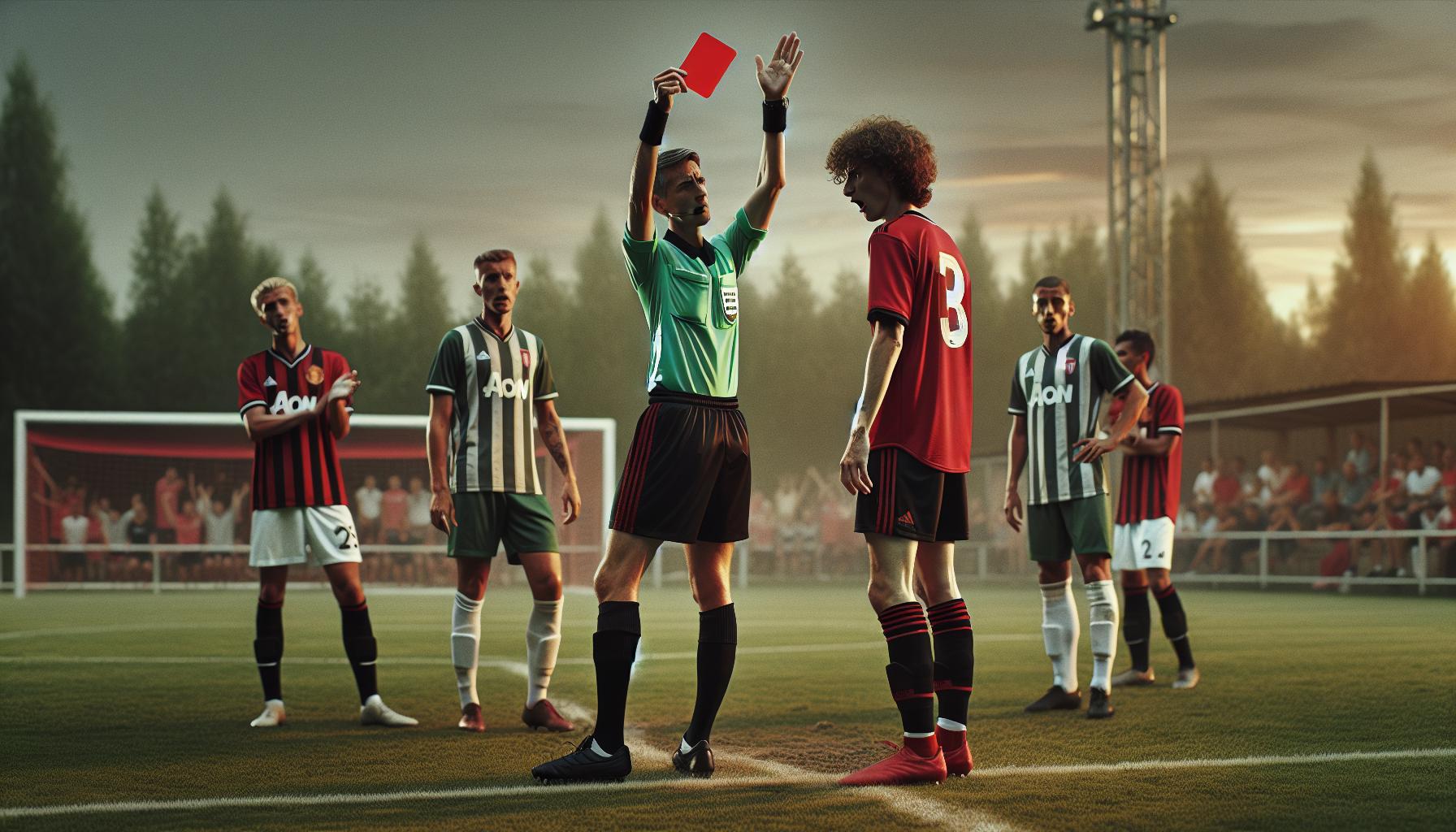
Contents
- What a Red Card Means in Soccer: Rules and Impact
- Key Elements Behind a Red Card Decision
- Common Infractions that Lead to Red Cards
- Common Infractions Leading to Red Cards
- historic Red Card Moments That Changed Games
- Memorable Historic Red Card Incidents
- How Referees Decide to Show a Red card
- Factors That Influence Red Card Decisions
- Real-World Examples
- the Role of VAR in Red Card decisions
- How VAR Guides Referees Through Complex Red Card Decisions
- Consequences for Players After Receiving a Red Card
- Key Consequences Players Face After a red Card
- Tactical adjustments When a Team Is down a Player
- Core Tactical Shifts to Manage a Red Card
- Red Card Differences in Various Soccer Leagues
- Key Variations in Red Card Enforcement Across Major Leagues
- Famous Players’ Reactions and Stories behind Red Cards
- Notable examples and Lessons from Red Card Incidents
- How Red Cards Influence team Discipline and Strategy
- Practical Tips for Teams Facing a Red Card
- Q&A
- Q: How does a red card affect a player’s eligibility in future matches?
- Q: What distinguishes a straight red card from a second yellow leading to a red?
- Q: Why do referees sometimes take longer to decide on a red card during matches?
- Q: Can a red card decision be overturned after a match ends?
- Q: How do different soccer leagues vary in handling red card suspensions?
- Q: What impact does a red card have on a team’s substitution strategy during a match?
- Q: Are there any scenarios where a red card can be rescinded immediately during the game?
- Q: How do emotional reactions from players after receiving red cards influence team dynamics?
- Closing Remarks
What a Red Card Means in Soccer: Rules and Impact
One of the most dramatic moments in any soccer match is when a player is shown a red card – a powerful symbol of discipline that instantly shifts the rhythm, intensity, and often the fate of the game. A red card doesn’t just mean a player must leave the field promptly; it represents a strict enforcement of the laws designed to preserve fairness, safety, and respect on the pitch. When issued, a red card signifies that an infraction has crossed a boundary severe enough to warrant ejection. This underscores the referee’s role as the guardian of the game’s integrity and sends a clear message: certain behaviors,from violent conduct to denying an obvious goal-scoring opportunity,cannot be tolerated. The player’s team must then cope with playing one less member, often forcing profound tactical reshaping under intense pressure.
The impact goes beyond the immediate loss of a player. Teams face psychological and strategic upheavals – coaches must react swiftly to protect their formation and maintain competitive balance.For example, iconic games like the 2006 World Cup final, where Zinedine Zidane’s red card dramatically altered the match’s course, exemplify how a single decision can define legacies. Referees weigh their decisions with great care, aware that a red card is far more than just a rule enforcement; its a turning point loaded with emotional and tactical consequences. For players and fans alike, understanding the weight behind the red card enhances recognition for the sport’s drama and complexity. It’s a reminder that while soccer celebrates creativity and freedom,it demands respect for limits that secure its beauty and fairness on every pitch.
Key Elements Behind a Red Card Decision
- Immediate player dismissal: The player must leave the field and cannot return.
- Team disadvantage: The team plays short-handed for the remainder of the match.
- Suspensions: The player typically faces at least a one-match ban, affecting team rosters and strategies.
- Referee authority: The final decision rests with the referee’s interpretation of the Laws of the Game.
Common Infractions that Lead to Red Cards
Few moments in soccer ignite as much tension and drama as the flash of a red card, a symbol that signals a boundary has been decisively crossed. Red cards are never handed out lightly; they arise from actions that jeopardize the spirit of the game or the physical safety of players. Among the most frequent triggers are violent conduct and serious foul play-actions that display an unnecessary or excessive use of force, such as a reckless tackle that endangers an opponent’s wellbeing. One unforgettable example was when Nigel de Jong’s infamous karate kick on Xabi Alonso during the 2010 World Cup final nearly ended the match in chaos. Even though de Jong escaped a red card during that game, the incident remains a stark reminder of what referees are keen to penalize. Similarly, denying an obvious goal-scoring opportunity by fouling-whether through handball or a professional foul-quickly earns players a red card, highlighting the game’s commitment to fair play and respect for attacking chances.
But the infractions that lead to red cards extend beyond just physical aggression. Persistent dissent or abusive language towards officials and fellow players embodies a breakdown in respect and discipline that the Laws of the Game aim to prevent.Players like Sergio Ramos,renowned for both their brilliance and fiery temperament,have occasionally faced red cards underlining the delicate balance between passion and patience required at elite levels. Additionally, reckless challenges and dangerous plays, even those without malicious intent, compel referees to intervene decisively. Understanding these infractions helps coaches and players alike emphasize discipline without sacrificing competitiveness. For fans, recognizing the nuances behind red-card-worthy offenses elevates appreciation for the referee’s arduous role and the sport’s wider efforts to sustain its integrity.
Common Infractions Leading to Red Cards
- Serious foul play: Tackles or challenges that endanger an opponent’s safety.
- Violent conduct: Physical aggression like hitting, kicking, or headbutting off the ball.
- Denying a goal-scoring opportunity: Fouls or handballs that prevent a clear chance to score.
- Spitting at an opponent or any person: Viewed as extreme disrespect and unsportsmanlike behavior.
- Use of offensive, insulting or abusive language and/or gestures.
- Receiving a second caution (yellow card): automatic red card for repeated minor infractions.
- Deliberate handball to stop an attack: Especially when it prevents a goal or a vital pass.
Every red card moment holds layers of story-from the furious reactions on the field to tactical shifts on the sidelines. These infractions reflect where the rules meet human emotion and competitive fire, crafting unforgettable narratives that are etched into the sport’s rich history. Recognizing these common causes not only sharpens our understanding as fans and players but also deepens the respect we have for the game’s delicate balance between passion, skill, and fair play.
historic Red Card Moments That Changed Games
Few moments in soccer reverberate through history quite like a red card shown at a decisive juncture-sending shockwaves through a match and forcing teams to adapt instantly. Take the 2006 FIFA World Cup final as a vivid example. Zinedine Zidane’s infamous headbutt on marco Materazzi did more than alter his legacy; it transformed the tactical landscape for France in that very final. Suspended from play for violent conduct, zidane’s absence stripped France of its creative talisman, compelling the team to redefine their approach under astonishing pressure. Moments like these reveal how red cards don’t just punish players-they reshape entire narratives, forcing an immediate recalibration of strategy while leaving fans and pundits to debate the ”what ifs” long after the final whistle.
Such historic instances emphasize that the impact of a red card extends far beyond the expelled player. When Roy keane was sent off during the 2001 UEFA Champions League semi-final against Real Madrid, his fiery leadership was missed terribly by Manchester United. Manager Sir Alex Ferguson candidly noted afterward how Keane’s aggression kept the team’s intensity at a boiling point,and losing that anchor shifted the balance. These moments underscore a key learning point for teams and coaches: red cards necessitate swift tactical innovation-whether it’s tightening defensive structure, bolstering midfield resilience, or shifting to counterattack to exploit the opposition’s numerical advantage. Studying these pivotal events encourages players and fans alike to appreciate the deep, often game-defining consequences of disciplinary decisions.
Memorable Historic Red Card Incidents
- Zinedine Zidane (2006 World Cup Final): Sent off in extra time for violent conduct, impacting France’s attacking threat.
- Vasiliy Gorshkov (1990 World Cup): one of the earliest red cards in World Cup history, setting tone for strict enforcement.
- David Beckham (1998 World Cup): Red card for retaliation against Diego Simeone, which transformed England’s group-stage dynamics.
- Roy Keane (2001 champions League): His dismissal weakened Manchester United’s midfield presence critically.
- Pepe (multiple occasions): Known for fiery temperament leading to controversial red cards, highlighting player emotions under pressure.
These stories are rich with lessons in discipline, resilience, and the unpredictability that makes soccer endlessly captivating.For teams aiming to thrive, studying how red cards shifted historic matches can provide practical insights into maintaining composure and flexibility when facing adversity. Not every game-changer stems from goals scored; sometimes, it’s the red card’s irreversible decision that carves the path to triumph or heartbreak.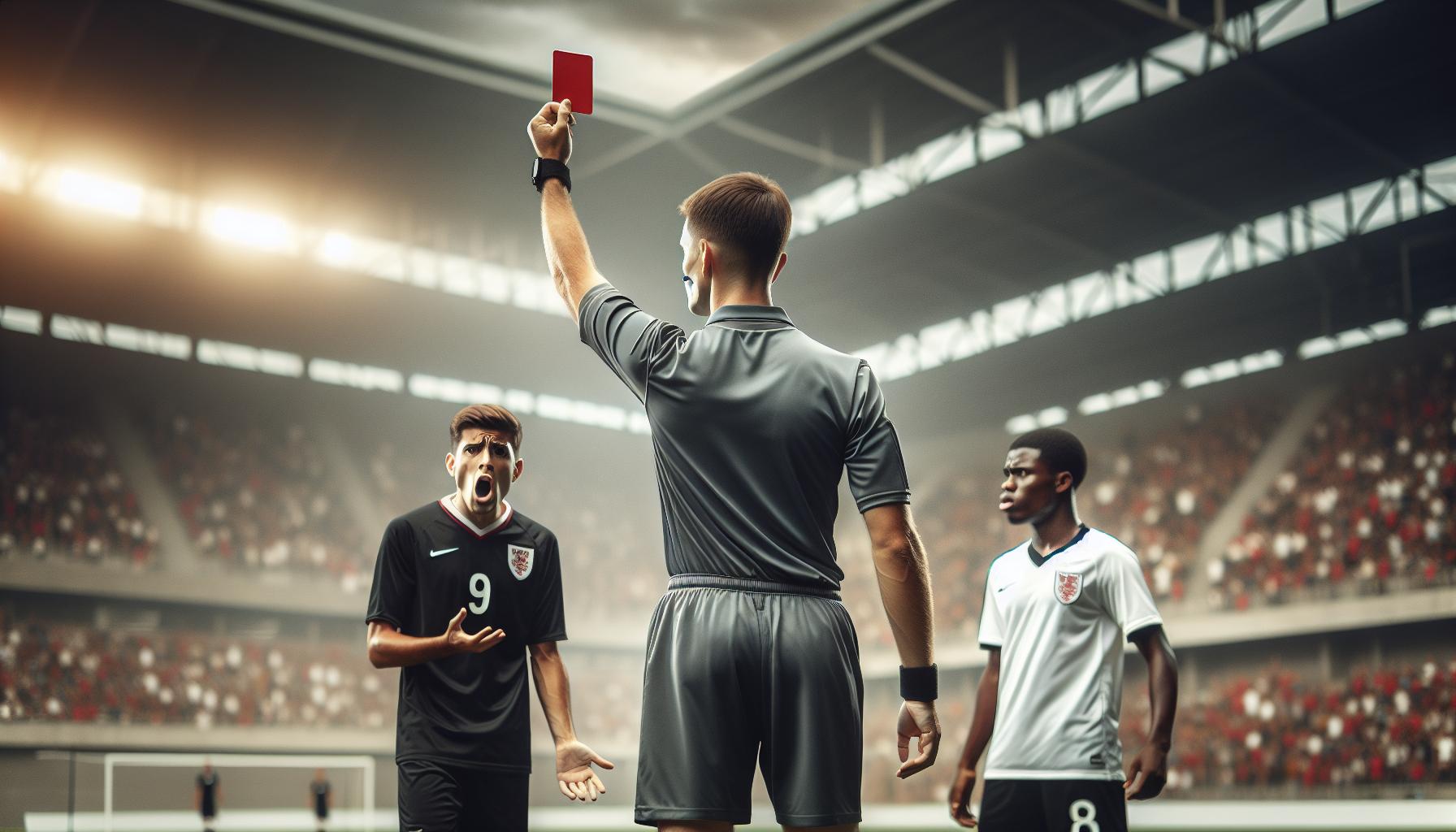
How Referees Decide to Show a Red card
Few decisions in soccer command attention quite like the moment a referee reaches for the red card-a symbol heavy with consequences that can redefine the flow and fate of a match. Yet, this choice is never made lightly or on impulse; it is indeed the culmination of a rigorous evaluation of the action’s severity, the context, and the laws of the game.Referees must balance the immediate intensity on the pitch with their responsibility to maintain fair play and safety, frequently enough under the pressure of packed stadiums and millions of watching fans worldwide. the essence of issuing a red card lies in identifying fouls or behaviors that endanger players, show blatant disrespect for the game, or fundamentally breach its values. This might involve violent conduct, serious foul play, or denying a clear goal-scoring opportunity through illegal means, but the official’s judgement stretches beyond the writen rules into the realm of game management and ethical interpretation.
The decision-making process blends fast, instinctive reading of the situation with slow-motion scrutiny aided by a keen understanding of player intentions and match dynamics. Coaches and players alike recognize the razor-thin margin between reckless challenges and tactical fouls, making the referee’s role as arbiter vital and complex. Legendary referee Pierluigi Collina onc noted, “A red card is not a punishment, but a protection-for the player fouled, the teams, and the spirit of the game.” practical advice for referees includes maintaining clear sightlines, being consistently aware of player behavior patterns throughout the game, and managing heated scenarios before they escalate. Modern innovations such as the Video Assistant Referee (VAR) system have supplemented the referee’s perspective, allowing referees to review contentious incidents with a broader lens. Still, the ultimate authority-the referee on the field-must integrate all inputs swiftly, ensuring their decision preserves the integrity of the match while respecting the passion and unpredictability that define soccer’s drama.
Factors That Influence Red Card Decisions
- Severity of the Offense: Serious foul play or violent conduct (e.g., dangerous tackles, headbutts) usually triggers a straight red.
- Intent and Impact: Deliberate acts to injure, deny a clear goal-scoring chance with handball or fouls, or using offensive language.
- Context of Play: Position on the field, game situation, and prior cautions contribute to interpreting the action’s gravity.
- player Behavior History: Repeat offenders may receive stricter scrutiny and quicker escalations.
Real-World Examples
consider the 2010 World Cup quarter-final when Nigel de Jong’s ’kung-fu’ kick on Xabi Alonso was met with a yellow card rather than a red at the moment, sparking global debate. The referee’s hesitation reflected the pressure and imperfect line of sight, illustrating how human judgment influences outcomes. Conversely, the immediate dismissal of Luis Suárez for handball against Ghana in 2010 exemplified clear-cut adjudication where rules and tactical implications intersect dramatically, forever embedding those moments in soccer lore.
These insights illustrate how referees’ decisions to show red cards are as much about command and courage as they are about rules-highlighting the beautiful complexity and shared human experience at the heart of soccer’s most pivotal calls.
the Role of VAR in Red Card decisions
Few technological innovations in soccer have stirred as much debate and reshaped the game’s landscape as the Video Assistant Referee (VAR) system-especially when it comes to red card decisions. Introduced to inject clarity and fairness into moments fraught with intense pressure and split-second judgment, VAR empowers referees with a profound second look at events that could drastically alter the course of a match. Imagine a razor-thin margin tackle or a subtle handball inside the box-these are scenarios where a red card could trigger passionate outbursts from players and fans alike, and VAR injects a measured pause, offering reinterpretation unfiltered by the chaos of live play. As football legend and coach José Mourinho once said, “VAR does not diminish the referee; it enhances the game’s integrity,” emphasizing how technology supports the human element rather than replaces it.
The VAR protocol in red card incidents follows a meticulous but swift review process. When an on-field referee signals for serious foul play or violent conduct,the VAR team analyzes multiple camera angles and advises whether a red card should be upheld,downgraded,or even upgraded from a yellow. This dynamic interplay between technology and human judgment has led to some iconic moments-the 2018 FIFA World Cup saw VAR confirm a shocking red card for a brutal elbow, sending a top player off and reshaping the tactical battle. Coaches now incorporate VAR awareness into game strategies,mindful that reckless challenges might no longer escape punishment. While critics argue VAR removes some spontaneity, fans appreciate the balance it offers: the drama of edge-of-seat moments combined with the reassurance that justice, fairness, and player safety aren’t casualties of emotion.
How VAR Guides Referees Through Complex Red Card Decisions
- Multiple Angles for Precision: VAR provides slow-motion replays and different viewpoints, reducing miscalls stemming from limited human sightlines during fast gameplay.
- Interaction With On-Field Officials: Referees can either rely on VAR advice or review footage themselves, ensuring confidence and clarity in high-stakes red card rulings.
- Consistency Across Competitions: VAR helps standardize red card adjudications worldwide, minimizing dramatic variability seen in pre-VAR eras.
- Preserving Flow While Ensuring Fairness: Time taken for reviews is carefully managed to avoid disrupting match rhythm, maintaining soccer’s fluidity alongside accuracy.
The addition of VAR redefines the discussion around disciplinary action and player accountability. It magnifies the spotlight on player conduct,encouraging discipline and respect while preserving the game’s beautiful unpredictability. Ultimately, the combined power of an experienced referee and an advanced technological system elevates soccer’s commitment to fair play, making red card decisions not just authoritative, but genuinely just.
Consequences for Players After Receiving a Red Card
Few moments in soccer ignite as much raw emotion and consequence as the instant a player is shown a red card. The impact radiates far beyond the immediate expulsion from the game; it casts a long shadow on the player’s career, team dynamics, and even the spirit of the contest itself. For players,a red card means facing not only the sting of leaving their teammates numerically disadvantaged on the pitch but also entering a gauntlet of disciplinary review that frequently enough results in suspensions affecting future matches.Legendary figures like zinedine Zidane,whose 2006 World Cup final red card became etched in football history,exemplify how a single moment of passion or misjudgment can alter a player’s legacy and shift the balance of grand tournaments. Coaches frequently stress the importance of emotional control, knowing that a rash foul, violent conduct, or dissent can derail months of readiness and hard-fought progress.
The reverberations extend into practical and psychological realms. Upon receiving a red card, players typically face an automatic one-match suspension, but the punishment can escalate depending on the severity of the offense and governing bodies’ discretion. This protocol aims not just to penalize, but to enforce a culture of respect and safety within the sport. From a tactical standpoint, teams lose a vital resource and must adapt quickly, placing increased physical and mental strain on the remaining eleven players. For the athlete,the fallout can be deeply personal: rebuilding trust with teammates and fans while using the enforced absence as a moment for reflection and growth. Coaches often leverage these moments to cultivate resilience and sportsmanship, reminding squads that discipline on the field is inseparable from success.Players like Sergio Ramos have spoken openly about learning from red cards to emerge stronger leaders, demonstrating how adversity triggered by disciplinary actions can evolve into career-defining maturity and professionalism.
Key Consequences Players Face After a red Card
- Immediate Ejection: the player must leave the field instantly,reducing their team’s strength.
- Suspensions: A standard one-match ban with potential for longer suspensions based on incident severity.
- Fines and Disciplinary Actions: Financial penalties or additional sanctions administered by leagues or federations.
- Reputation Impact: Accumulating red cards can tarnish a player’s reputation,affecting team selection and fan perception.
- Psychological Toll: Managing guilt, public scrutiny, and pressure to perform upon return.
Tactical adjustments When a Team Is down a Player
Few moments test a team’s unity and tactical ingenuity quite like losing a player to a red card. When a team drops from eleven to ten men, the field morphs into a battlefield demanding immediate strategic recalibration. Coaches and players alike must embrace a mentality of calculated sacrifice combined with collective resilience. The challenge is to maintain defensive solidity while preserving attacking threat, all under the relentless pressure of being outnumbered. Legendary tacticians such as Diego Simeone have thrived in these moments, famously galvanizing Atlético Madrid into a disciplined fortress with compact lines and fierce counter-pressing that frustrate opponents capitalizing on numerical advantage. It’s an art – balancing grit with intelligent positioning, often requiring teams to shift formations dynamically, for example moving from a 4-3-3 to a more conservative 4-4-1 or 4-4-0 setup to plug gaps and shield vulnerable zones.
Practical adjustments often hinge on which player was sent off and the phase of the game. Defensively,teams tend to pull the midfield deeper,closing passing lanes and focusing on zonal marking rather than man-to-man battles to conserve energy. Offensively, creativity is channeled through quicker transitions and hierarchical decision-making to limit unnecessary risk. Coaches instruct wings and strikers to perform double roles – pressing aggressively while tracking back – reinforcing the mantra that every player must now be part defender and attacker. Past examples abound: in the 2010 World Cup quarterfinal, Ghana’s disciplined repositioning after a red card showcased tactical maturity even in defeat, while Leicester City’s 2015-16 Premier League campaign included multiple matches where resilience under such adversity turned potential losses into priceless points. Players like John Terry have often spoken about the surge of responsibility felt when their team was reduced, emphasizing how mental toughness and communication intensify to transform a setback into a formidable, unified stand.
Core Tactical Shifts to Manage a Red Card
- Formation Adjustments: Altering shape to reinforce defense (e.g., shifting midfield or dropping a forward).
- Compacted Lines: Narrowing space between defense and midfield to deny opponent exploitation.
- Role Adaptation: Assigning multi-functional tasks to key players, blending defensive coverage with offensive duties.
- Energy Conservation: Prioritizing possession control and reducing unnecessary sprints to maintain stamina.
- Psychological Leadership: Senior players stepping up to coordinate positioning and maintain morale.
Red Card Differences in Various Soccer Leagues
The interpretation and enforcement of red card rules often carry subtle yet impactful differences across the world’s top soccer leagues, reflecting distinct cultural attitudes toward discipline and game flow. For example, the Premier League is known for its rigorous but consistent approach to red cards, with referees often prioritizing player safety and swift punishment for reckless challenges. This is evident in intense rivalries where high stakes magnify every tackle, and referees have little tolerance for violent conduct or denial of clear goal-scoring opportunities. Contrastingly, leagues such as La Liga traditionally exhibit a more technical style of play, where referees might exhibit a slightly higher threshold before issuing red cards, encouraging fluid attacking football with fewer interruptions. Such variations underscore how league philosophy and fan expectations influence refereeing styles, crafting unique rhythms of the game and moments of drama.
Beyond enforcement, the aftermath of a red card-such as suspension lengths and appeals processes-varies substantially, impacting team strategies and player availability in distinct ways. In Serie A, for instance, players dismissed for violent conduct often face multi-game bans, emphasizing strict discipline themes aligned with the league’s defensive tactical heritage. Meanwhile, Bundesliga appeals panels regularly review controversial reds, sometimes overturning decisions to ensure fairness and keep star players on the pitch. These procedural differences can sway managerial decisions, from risk-taking in tackles to squad rotation planning during congested fixtures. Coaches like Jürgen Klopp have spoken openly about navigating these nuances, highlighting how understanding league-specific disciplinary frameworks becomes a strategic advantage. Whether navigating the robust physicality of the English game or the fast-paced precision of German football, teams must adapt not only to red card rules but also to the culture of enforcement that shapes every moment of competition.
Key Variations in Red Card Enforcement Across Major Leagues
- Premier League: Strict on violent conduct and professional fouls; immediate red for denying clear goals.
- La Liga: Slightly lenient on tactical fouls; referees encourage flowing play over stoppages.
- Serie A: Heavily punishes violent or unsportsmanlike behavior with longer suspensions.
- bundesliga: Robust appeals process for red cards; balance between discipline and pragmatism.
- Ligue 1: Physical but pragmatic; recent seasons show emphasis on player safety increasing red cards.
Famous Players’ Reactions and Stories behind Red Cards
Few moments in soccer resonate as powerfully as when a high-profile player receives a red card-often a flashpoint that changes not only the rhythm of the match but also personal and professional narratives.The immediate reactions, ranging from outright disbelief to fiery protests, reveal the intense human drama underpinning these split-second decisions. Take Zinedine Zidane’s infamous 2006 World Cup final headbutt, a red card that overshadowed his brilliant tournament. His remorseful explanation afterward, “I lost my head,” humanized the moment and offered insight into how even the greatest players are vulnerable to pressure and emotion. Similarly, Sergio Ramos, known for his combative style, has frequently turned what could have been disciplinary setbacks into stories of resilience and leadership, famously explaining, “I play to win, but I also learn each time I cross the line.” Such candid reflections help fans and aspiring players appreciate the fine margins that separate passion from penalty in soccer.
Beyond emotional reactions, these moments also reveal tactical and psychological layers. Coaches frequently enough weigh in on their players’ red cards as defining episodes within a season’s narrative. José Mourinho once remarked about a key sending-off, “A red card is never just a number; it forces a team to adapt, refocus, and sometimes reveal a hidden strength.” This pragmatic approach underscores how red cards can catalyze unexpected tactical evolutions. Additionally, stories behind red cards frequently enough involve controversies or debates enhanced by VAR reviews, referee interpretations, and the broader context of rivalry intensity. For example, Luis Suárez’s multiple red card incidents have sparked vigorous discussions about player temperament and the balance between aggressive competitiveness and fair play, effectively contributing to ongoing dialogues on discipline in the sport. Understanding these varied responses and stories enriches our appreciation of soccer’s compelling blend of athleticism, character, and drama.
Notable examples and Lessons from Red Card Incidents
- zinedine Zidane (2006 World Cup Final): A moment of frustration with lasting legacy; illustrates pressure’s effect on world-class talent.
- Sergio Ramos: Repeated send-offs balanced by leadership, showing how discipline challenges can coexist with team captains’ roles.
- Luis Suárez: Red cards sparking debate on passion versus professionalism.
- José Mourinho’s Perspective: Viewing cards as opportunities for tactical creativity and team resilience.
How Red Cards Influence team Discipline and Strategy
Few moments test a team’s mettle like the instant a player is shown a red card. This abrupt shift forces a reevaluation of discipline and match strategy, altering the game’s psychological landscape as well. Teams often struggle initially with frustration or urgency, but the discipline that emerges in response can define the remainder of the match-and echo throughout the season. Legendary coach sir Alex Ferguson once reflected, “When we lost a man, it wasn’t just about numbers-it was about the spirit to fight harder together.” that spirit is how squads convert what seems like a significant disadvantage into a framework for resilience. Maintaining composure becomes paramount; every player must balance aggression with calculated caution, understanding that one reckless challenge could invite further sanctions and shift momentum irreversibly.
Strategically, the impact of a red card demands rapid tactical reevaluation from coaches and players alike.Teams often adopt a more conservative posture, typically retreating into a compact defensive shape to minimize the space opponents can exploit. josé Mourinho’s insight that a red card “forces a team to adapt, refocus, and sometimes reveal a hidden strength” captures how adjustments can unlock unexpected advantages. For instance, shifting from a 4-4-2 to a 4-4-1 formation after a sending-off allows the lone striker to lead counterattacks with greater freedom while the midfield and defense prioritize structure and coverage. These decisions highlight not only tactical flexibility but also an emphasis on disciplined positioning and communication. Effective leadership, often from experienced captains like Sergio Ramos, becomes crucial to sustaining team cohesion and morale. By rising above the setback with strategic discipline and a united mindset,teams can sometimes transform red-card adversity into a galvanizing force that shapes their destiny long after the final whistle.
Practical Tips for Teams Facing a Red Card
- Stay Calm and Communicate: Immediate composure helps prevent panic and ensures clear tactical direction on the field.
- Adjust Formation Swiftly: Shift players into roles that plug gaps and maintain defensive solidity without losing attacking threat completely.
- Emphasize Team Discipline: Encourage players to avoid rash challenges or confrontations that could lead to further cards.
- Leverage Leadership: rely on veteran players to maintain morale and organize collective effort.
- Explore Tactical Flexibility: Utilize counterattacks and set-pieces to capitalize on opponents’ overconfidence or structural changes.
Q&A
Q: How does a red card affect a player’s eligibility in future matches?
A: Receiving a red card usually results in an automatic suspension for the next game or more, depending on the severity of the offense. Players should check league-specific disciplinary rules for exact suspension lengths. This impact on eligibility alters team lineups and strategy,as explained in our section on Consequences for Players After Receiving a Red Card.
Q: What distinguishes a straight red card from a second yellow leading to a red?
A: A straight red card is given immediately for severe offenses, such as violent conduct, while a second yellow card results in a red after two cautions. Both lead to a player being sent off, but straight reds typically carry harsher suspensions. For deep tactical effects, see Tactical Adjustments When a Team Is Down a Player.
Q: Why do referees sometimes take longer to decide on a red card during matches?
A: referees may delay red card decisions to review incidents via VAR technology or consult with assistant referees to avoid costly errors. This ensures fairness and accuracy, especially in controversial or high-stakes moments. Learn more about this in The Role of VAR in Red Card Decisions.
Q: Can a red card decision be overturned after a match ends?
A: Yes, red card decisions can be appealed to league disciplinary committees, which may rescind the card or extend suspensions based on new evidence or misjudgments. This process protects player rights and maintains competition integrity. For more, refer to Consequences for Players After Receiving a Red Card.
Q: How do different soccer leagues vary in handling red card suspensions?
A: suspension rules vary-some leagues impose longer bans for violent conduct, others differ on appeals and multi-game suspensions. Understanding these league-specific nuances is vital and covered in detail under Red Card Differences in Various Soccer Leagues.
Q: What impact does a red card have on a team’s substitution strategy during a match?
A: After a red card, teams often adjust substitutions to reinforce defense or midfield, compensating for the player deficit and reshaping tactics quickly. Coaches’ in-game decisions here are critical and highlighted within Tactical Adjustments When a Team Is Down a Player.
Q: Are there any scenarios where a red card can be rescinded immediately during the game?
A: While rare, a referee may reverse a red card decision on the field after VAR reviews show a clear mistake, restoring the player’s presence. This live correction aims to maintain match fairness.For deeper insight, see The Role of VAR in Red Card Decisions.
Q: How do emotional reactions from players after receiving red cards influence team dynamics?
A: Player responses to red cards can either rally a team or disrupt morale, affecting subsequent performance and discipline. Coaches frequently enough use these moments to inspire resilience, a theme explored through Famous Players’ Reactions and Stories Behind Red Cards.
Explore these insights further to deepen your understanding of red card dynamics, and discover how they weave into the thrilling drama that defines soccer’s greatest moments. Dive into Historic Red Card Moments that Changed Games to relive iconic turning points!
Closing Remarks
Understanding the impact of red cards in soccer goes beyond the whistle-it shapes the fate of matches, players, and tournaments alike. Whether it’s a pivotal defensive stop or a heated moment that turns the tide, mastering the rules behind red cards empowers every fan to fully appreciate the drama on the pitch. Ready to deepen your knowledge? Explore our detailed breakdown of yellow cards and their strategic role [here], or dive into the history of soccer’s most controversial referee decisions [here] to see how discipline has evolved over decades.
Don’t let questions linger-subscribe to our newsletter for expert insights and exclusive analyses delivered right to your inbox. Join a community passionate about the beautiful game, where every tactical nuance matters. With rich player profiles, coach interviews, and match previews waiting for you, your journey into soccer’s thrilling intensity is just beginning. Share your thoughts below or challenge us with your toughest red card queries-we’re here to keep the conversation alive and the passion burning strong.