Youth soccer fields come in a variety of sizes, but understanding the official dimensions is key for coaches, players, and parents aiming to create the best environment for skill progress and fair play. From the sprinting sprints along the sidelines to the critical spaces that shape passing lanes, the size of the field influences every moment of the game. Knowing exactly how big a youth soccer field should be helps communities design or select fields that foster creativity, teamwork, and thrilling competition, while ensuring safety and enjoyment for every young athlete. Whether you’re planning a local league, coaching a team, or simply curious about how field dimensions affect the flow of play, diving into the details reveals how these measurements have evolved to support youth players at every stage of their journey. Let’s explore the official standards that set the stage for unforgettable goals, emerging talents, and the pure joy of the world’s most beloved game.
Contents
- Youth Soccer Field Dimensions by Age Group Explained
- Practical Tips for Coaches and Organizers
- Understanding Official Length and Width Standards
- Tips for Adhering to Standards While Enhancing Play
- Critical Markings: Lines, Goals, and Penalty Areas
- Key Field Markings and Their Roles
- How Field Size Influences Player Development and Game Strategy
- Practical Insights for Coaches and Organizers
- Comparing Youth Soccer Fields to Adult and Professional Standards
- Key Dimension Comparisons
- Adapting Tactics and Training Across Field Sizes
- Essential Equipment and Layout Tips for Perfect Field Setup
- Common Variations in Youth Field Sizes Across Leagues and Regions
- Safety Considerations Related to Field Size and Surface
- Innovations and Trends Shaping Modern Youth Soccer Fields
- Innovative Approaches Elevating Field Versatility and Safety
- Frequently Asked Questions
- Q: What factors determine the official size of a youth soccer field?
- Q: How do changes in field dimensions affect youth player performance?
- Q: are there standardized minimum and maximum dimensions for youth soccer goals?
- Q: How can coaches adapt training sessions based on field size variations?
- Q: What are the safety benefits of properly sizing a youth soccer field?
- Q: How do youth soccer field sizes compare internationally?
- Q: When should a youth soccer field be resized as players grow older?
- Q: what are key considerations when marking field lines on youth soccer fields?
- The Conclusion
Youth Soccer Field Dimensions by Age Group Explained
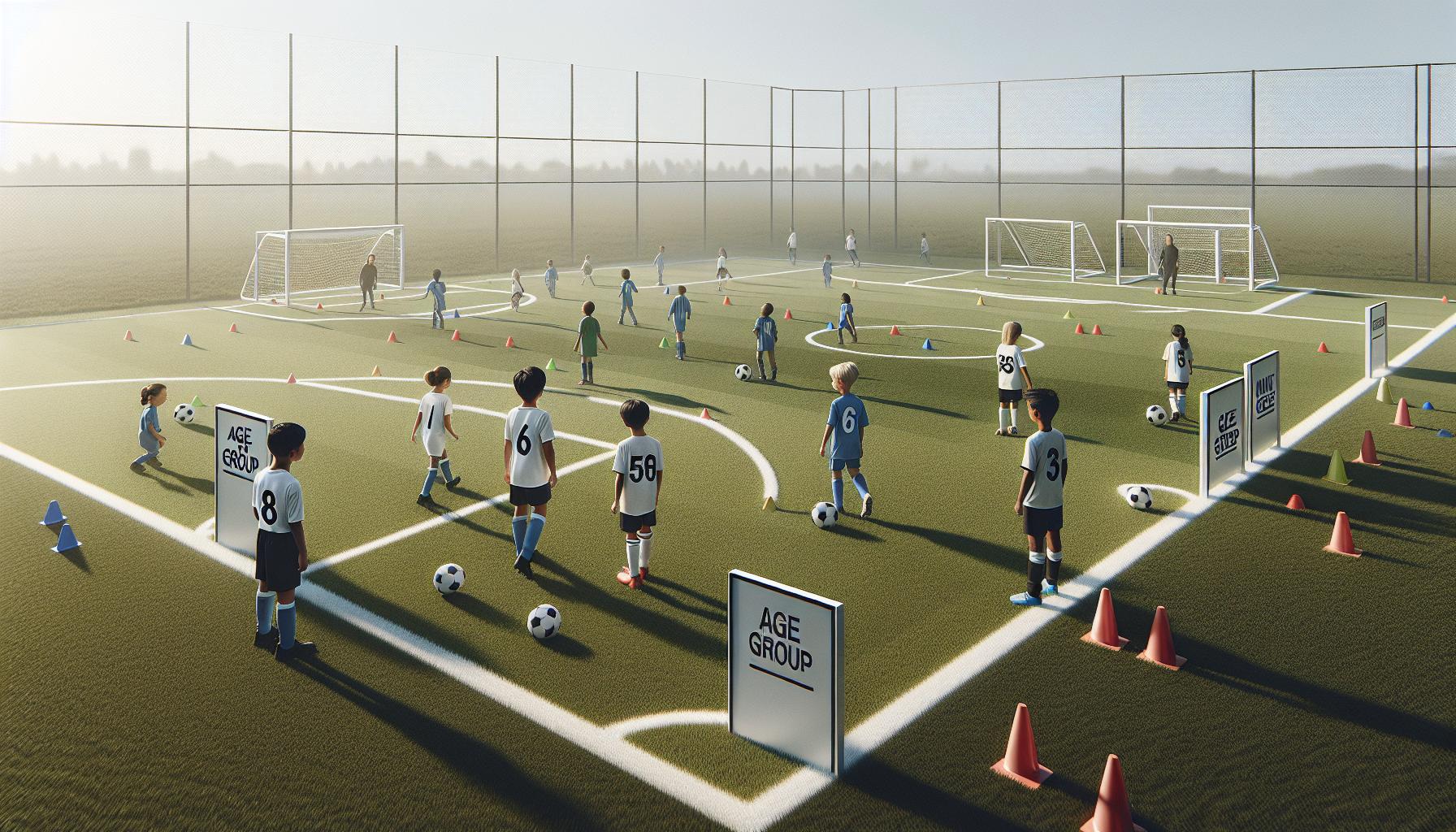
Youth soccer fields are thoughtfully designed to grow alongside the players, ensuring both safety and skill development. From the smallest U6 teams discovering the thrill of controlling the ball to the U14 players preparing to compete on larger stages, field size adjusts to accommodate physical, cognitive, and tactical growth. As an example,players aged 6 and under typically play on fields approximately 30-40 yards long and 15-25 yards wide,a scale that encourages frequent touches and decision-making in tight spaces. As players advance to U8 and U10 levels, these dimensions stretch, frequently enough reaching lengths of 50-60 yards and widths of 30-35 yards, balancing room for speed and spacing without overwhelming young athletes wiht excessive ground to cover.
Coaches often emphasize how these graduated dimensions not only protect young players but also foster crucial developmental milestones. A youth coach from a accomplished U12 club once noted, “The right field size empowers kids to experience the game fully-from tactical positioning to sharp ball control-without feeling lost or tired.” This progression culminates as players approach the teenage years, typically transitioning to fields close to adult dimensions, roughly 70-80 yards long and 45-55 yards wide. This gradual escalation mirrors the increased stamina, spatial awareness, and teamwork young athletes acquire. Implementing officially recognized standards tailored by age helps leagues nationwide to create vibrant, competitive environments that celebrate both dramatic victories and valuable learning moments. Below is a concise overview of typical field sizes by age to guide organizers setting up or evaluating their youth soccer environments:
| Age Group | Field Length (yards) | Field Width (yards) | Typical Game Format |
|---|---|---|---|
| U6 (5-6 years) | 30 – 40 | 15 – 25 | 4v4 |
| U8 (7-8 years) | 40 – 50 | 25 – 30 | 5v5 |
| U10 (9-10 years) | 50 – 60 | 30 – 35 | 7v7 |
| U12 (11-12 years) | 60 – 70 | 35 – 45 | 9v9 |
| U14 (13-14 years) | 70 - 80 | 45 – 55 | 11v11 (Full field) |
Practical Tips for Coaches and Organizers
- Adapt gradually: Align field dimensions with the players’ growth to maintain engagement and reduce injury.
- Customize for context: Consider local league rules and available pitch space, as some regional variations may apply.
- Focus on player experience: Smaller fields support increased touches and interaction, which are critical in early stages of development.
Understanding Official Length and Width Standards
Youth soccer field dimensions are more than just numbers on a blueprint; they are carefully calibrated measures designed to nurture young athletes’ skills while preserving the game’s integrity and excitement. Official length and width standards vary by age to create an environment where players can thrive physically and tactically. As a notable example, smaller fields for U6 and U8 players keep the game fast-paced with constant ball touches, enabling youngsters to develop agility, close control, and spatial awareness without becoming overwhelmed by excessive ground to cover. As Coach Maria lopez from a prominent youth academy explains, “When the field matches their size and stamina, kids play more confidently and creatively. Its not about shrinking the game but scaling it so each child experiences soccer’s beauty fully.”
These standards are rooted in decades of research and practical coaching wisdom, aligned with guidelines from organizations like US Youth Soccer and FIFA’s grassroots recommendations. The measured progression in length-from approximately 30 yards at U6 to nearly full-sized fields of up to 80 yards by U14-reflects the growing demands on young players’ endurance, positioning, and teamwork. This dimension scaling is equally mirrored in field width, which expands to create balanced playing surfaces that encourage wide-attacking strategies and defensive formations. Achieving this balance requires a nuanced understanding of local league requirements and available space, encouraging flexibility within official parameters.Setting the right dimensions enhances competitive fairness, optimizes player development, and preserves the thrilling drama that makes soccer a universal language of passion and perseverance.
Tips for Adhering to Standards While Enhancing Play
- Consult governing bodies: Always reference current official guidelines as a baseline,such as those from US Youth Soccer or local federations.
- engage community input: Experienced coaches and referees can offer valuable insights specific to your league’s unique needs and field conditions.
- Account for growth and versatility: Design fields that can be adapted or resized as players mature or as the league expands.
Critical Markings: Lines, Goals, and Penalty Areas

Every line painted on a youth soccer field tells a story-not just of where play begins and ends, but of the rhythm and flow of the game itself. For young athletes stepping onto these fields, the markings are more than boundaries; they’re guides that shape strategic thinking and spatial awareness at a formative age. The goal lines, sidelines, penalty boxes, and center circles dictate positioning and movement, subtly teaching players how to read the game. For example, smaller penalty areas in younger age groups focus attention on close-range play and quick decision-making, creating intense moments of skill and heart right in front of the net. Coach Daniel Kim of Rising Stars FC shares, “When kids clearly see the penalty box and goal area boundaries, they instinctively understand where to defend, attack, or support teammates. It’s like a visual tutor on the field.” Such clarity encourages confidence, reduces confusion, and elevates the quality of play across all developmental stages.
The goals themselves, scaled to fit age divisions, are critical in balancing challenge and accessibility. Too large, and the game becomes a target practise; too small, and frustration takes root. For very young players, goal size and placement are tailored so every save or goal feels like a genuine triumph, fueling passion and persistence. Simultaneously occurring, clearly marked penalty spots, corner arcs, and halfway lines ensure that referees and players alike operate within a framework that honors fairness and the sport’s traditions. practical tips include using durable, weather-resistant paint and regularly consulting updated league guidelines to ensure all field markings comply with official standards. Additionally, incorporating portable goals and adjustable markings can help leagues adapt quickly to different age groups or mixed-use facilities. this adaptability shows respect for the game’s evolving nature and keeps the community connected to the pure joy and drama that soccer delivers-one perfectly drawn line at a time.
Key Field Markings and Their Roles
- Sidelines and Goal Lines: Define the playing area and influence tactical positioning for defense and attack.
- Penalty Area: Creates a focused zone where critical moments unfold, teaching young players the importance of space and discipline.
- Goal Size: Adjusted by age to balance challenge with achievable success, impacting player confidence.
- Center Circle and Halfway Line: Mark the starting points and territorial divisions that organize the game’s flow.
- Corner Arcs and Penalty Spots: Provide standardized placement for restarts, critical for fair play integrity.
| Age Group | Goal Dimensions (Width x Height) | Penalty Box Dimensions (Length x Width) |
|---|---|---|
| U6-U8 | 6 ft x 4 ft (1.83 m x 1.22 m) | 10 yds x 18 yds (9.14 m x 16.46 m) |
| U9-U12 | 12 ft x 6 ft (3.66 m x 1.83 m) | 16.5 yds x 30 yds (15.11 m x 27.43 m) |
| U13-U14 | 18 ft x 6.5 ft (5.49 m x 1.98 m) | 18 yds x 44 yds (16.46 m x 40.23 m) |
How Field Size Influences Player Development and Game Strategy

A well-sized soccer field is more than just a playing surface; it’s a dynamic classroom where young players learn the art and science of the game. The dimensions of the field directly shape how players interact with space, engage in tactics, and develop key skills.On smaller fields, such as those used for U6 to U8 groups, the reduced area encourages close ball control, quick decision-making, and frequent player contact-all vital ingredients for building confidence and technical ability. Coach Maria Alvarez of Sunnyvale United notes, ”Younger kids thrive when they have to think fast and work in tight spaces.The scaled-down field naturally promotes teamwork and creativity as every touch counts.” As children progress to larger field sizes, they are gradually introduced to more complex strategic elements like positioning, long passing, and pacing themselves-reflecting the transition from individual skill development to collective team awareness.
Game strategy also evolves in tandem with field size. On compact pitches,success frequently enough hinges on rapid attacks and swift transitions,while expansive fields reward players who can read space,maintain stamina,and execute well-timed runs. Players become adept at balancing defensive responsibilities with attacking opportunities,as the spatial dimensions dictate how far they must cover and how quickly they react. Such as, the wider penalty area in U13 to U14 competitions forces defenders and goalkeepers to hone their spatial judgment and communication under greater pressure, shaping fundamentals that will serve them in adult play. Clubs that adjust tactics to field dimensions create environments where athletes aren’t just playing a scaled-down game but are cultivating the mental agility and physical conditioning required at every level.In this way, proper field sizes serve as a bridge that smoothly connects tender beginnings to advanced competitive play.
Practical Insights for Coaches and Organizers
- Match Field Size to Developmental Goals: Use smaller fields for training close control and teamwork; expand as players’ tactical understanding grows.
- Encourage Spatial Awareness: Adapt drills that reinforce positioning relative to field boundaries and teammates, optimizing learning through natural play.
- Vary Game Formats: Integrate small-sided games on smaller fields to increase touches and involvement for each player, boosting engagement and confidence.
- Monitor player Workload: Recognize that larger fields demand greater endurance; modify playing time to maintain energy and enthusiasm.
Comparing Youth Soccer Fields to Adult and Professional Standards
Youth soccer fields serve as essential training grounds, where the dimensions are thoughtfully scaled to foster skill growth and tactical understanding. Unlike adult and professional pitches, which typically boast lengths ranging from 100 to 130 yards and widths between 50 to 100 yards, youth fields are considerably smaller to suit the developmental stages of young athletes. This size difference isn’t arbitrary-it reflects a carefully engineered approach to optimize player engagement and confidence. For instance, a U8 field, often around 40-50 yards long and 25-35 yards wide, condenses the game space, encouraging players to develop close ball control and swift decision-making. In contrast, professional fields not only demand greater stamina due to their expansive sizes but also require players to master spatial awareness on a vastly different scale, adapting their running patterns, passing strategies, and defensive formations accordingly. The progression from smaller to larger fields mimics a natural learning curve, enabling youth players to internalize fundamentals before being challenged with more complex strategic responsibilities on adult-sized pitches.
For coaches and organizers, understanding these dimensional disparities offers practical insights into tailoring training sessions and match play to the appropriate scale. Smaller youth fields create opportunities for increased player touches and tighter team coordination, which are crucial for nurturing creativity and resilience under pressure.By geography, league, or governing body, slight variations in youth field sizes exist, but the underlying principle remains consistent: fields expand as youth mature, gradually acclimating players to the rigors and spatial demands of adult-level competition. Veteran coach Daniel Kim of Rising Stars FC highlights this transition: “When we move from U12 to U15, the field elongates-and instantly, players must adjust their tempo, communication, and stamina. It’s a thrilling phase becuase you can see their tactical maturity blossom.” Recognizing these key differences empowers communities to design environments where the beauty and drama of soccer unfolds naturally, shaping well-rounded players who transition seamlessly from local fields to stadiums where the sport’s global narratives are written.
Key Dimension Comparisons
| Age Group | Field Length (yards) | Field Width (yards) | Typical Game Format |
|---|---|---|---|
| U8 | 40 – 50 | 25 – 35 | 4v4 or 5v5 |
| U12 | 70 – 80 | 40 - 50 | 7v7 or 9v9 |
| U15 | 100 – 110 | 50 – 70 | 11v11 (full size nearing adult) |
| Professional/Adult | 110 – 130 | 70 – 80 | 11v11 (standard) |
Adapting Tactics and Training Across Field Sizes
- Smaller Fields: Prioritize close-quarters drills, fostering touch precision, quick passing, and spatial awareness in tight spots.
- Larger Fields: Encourage endurance building, long-range vision, and structured positioning to prepare players for adult competition.
- Gradual Scaling: Incrementally increasing field size aligns with cognitive and physical development stages, smoothing the tactical evolution.
Essential Equipment and Layout Tips for Perfect Field Setup
Every carefully prepared youth soccer field tells a story before the whistle even blows-a story of intention, care, and the promise of growth. The right equipment and thoughtful layout do more than mark boundaries; they create a stage where young players experience the thrill of competition and the joy of learning. Coaches and field managers consistently emphasize that setting up a field with precision and attention to detail is crucial for cultivating confidence and ensuring fair play. Veteran coach Maria sanchez of Sunrise Youth Soccer League remarks, “When the goals are sturdy and the lines true, kids feel the professionalism of the game-it instills pride and respect that elevate every touch and pass.”
To achieve a flawless setup, organizers should focus first on the essentials: quality goals scaled to the age group, accurately marked lines reflecting official dimensions, and clear penalty and goal areas. Portable goals with anchored bases offer flexibility and safety, especially for younger age groups who play smaller-sided games on condensed fields. Using durable line-marking paint or removable tape ensures the field stays crisp and visible, even through multiple matches or weather variations. Proper corner flags, set at regulation height and placed firmly, complete the professional feel and aid referees and players alike in understanding boundaries. Embracing these details, here are practical tips to help perfect your field layout:
- Measure Twice, Mark Once: Use measuring tapes or a GPS field app to confirm exact lengths and widths for each age group, honoring the range (e.g., U8’s 40-50 yards by 25-35 yards). Consistent measurements help maintain standardization which fosters fairness and player confidence.
- Invest in Age-Appropriate Equipment: Smaller goals (6ft x 18ft for U8/U12) prevent overwhelmed players and encourage scoring opportunities, while U15 and older groups transition naturally to full-sized goals (8ft x 24ft).
- Maintain Clear markings: Line thickness should balance visibility with field playability-typically 4 to 5 inches in width. Repaint regularly and maintain synthetic turf carefully to avoid visual confusion.
- safety in Setup: Use soft ground anchors and ensure all equipment has no sharp edges. Padding post-goalposts if close to the play area can protect budding athletes and minimize injury risk.
Championing these refined details influences player development profoundly. Nothing compares to the moment when a young forward confidently strikes on goal from the penalty spot, knowing the field was crafted just for that moment. The dance between preparation and play unfolds perfectly when every inch of the field complements the players’ hard work, ambition, and dreams.
Common Variations in Youth Field Sizes Across Leagues and Regions
Youth soccer fields,much like the players who grace them,come in a remarkable variety of sizes across different leagues and regions,reflecting a tapestry of local traditions,resources,and developmental priorities. This diversity emerges from the need to balance age-appropriate challenges with practical realities of available space. For example, leagues in dense urban areas often design compact fields to maximize usage and encourage quick decision-making through smaller play spaces, while rural and suburban clubs may enjoy broader expanses that mimic professional pitches more closely, nurturing stamina and field vision from an early stage.Experienced coaches like jamal Robinson of the Pacific Youth Soccer Association stress, “Adjusting field size to suit community and player needs isn’t just about space-it shapes how kids engage with the game emotionally and tactically.”
Within this spectrum, several guiding principles coexist with flexible submission, shaping how fields are laid out in real-world settings.Most U8-focused leagues favor smaller dimensions, typically around 40 to 50 yards in length and 25 to 35 yards in width, supporting fast breaks and repeated touches that build confidence. By contrast, U12 and U15 fields shift toward midway sizes that prepare players for the official adult pitch, frequently enough reaching lengths of 70 to 80 yards and widths from 40 to 55 yards. These adjustments directly influence playing styles: teams on smaller fields tend to develop sharper close control and quick transitional play, while those on larger surfaces cultivate endurance and strategic positioning.
- Regional Preferences: East Coast leagues might prioritize slightly wider pitches to accommodate a customary passing game, while West Coast regions emphasize compact fields supporting aggressive, skill-driven play.
- League Rules and Standards: Competitive travel leagues frequently enough follow stricter dimensions aligned with national federations, whereas recreational leagues allow more latitude based on community needs and field availability.
- Surface and Safety considerations: Artificial turf fields can sometiems be smaller in size due to installation costs, impacting local league field setups and requiring adjustments in gameplay strategies.
| Age Group | Common Length Range (yards) | Common Width Range (yards) | Typical Goal Size |
|---|---|---|---|
| U6 - U8 | 40 – 50 | 25 - 35 | 6ft x 12ft |
| U9 - U12 | 55 – 70 | 35 – 50 | 6.5ft x 18ft |
| U13 – U15 | 70 – 80 | 40 - 55 | 8ft x 24ft |
clubs that thoughtfully adapt their field sizes-not as mere templates, but as responsive environments-unlock unique developmental possibilities for their players. veteran player and current youth mentor Lila Torres recalls how transitioning from a cramped city park to a suburban club’s larger field challenged her spatial awareness: “At first, I struggled to cover the ground, but it taught me how to time runs and communicate with teammates in ways the smaller fields never could.” Such stories illustrate that while official guidelines act as anchors, embracing regional and league-specific variations cultivates richer, more resilient athletes ready to carry their creativity and discipline forward. Ultimately, celebrating this diversity honors soccer’s universal spirit-dynamic, inclusive, and endlessly adaptive.
Safety Considerations Related to Field Size and Surface
Few factors shape the joy and growth of young players more than the playing surface beneath their feet and the dimensions enclosing their game. The physical environment sets the stage not only for athletic development but also for the essential sense of security required for confident play. Coaches and parents alike recognize how a well-sized field with appropriate surface quality can minimize injury risks and encourage fearless expression. For instance, veteran coach Maria Lopez from the Midwest Youth Soccer League often points out, “A field that’s too large or uneven for a child’s age group can drain energy and increase hazards, especially when quick direction changes are involved.” In youth soccer, where agility and rapid transitions define play, a perfectly measured and maintained space allows muscles, joints, and minds to work in harmony, turning potential dangers into opportunities for skillful triumphs.
Beyond size, the type of surface-natural grass, artificial turf, or hybrid options-profoundly influences safety and playability, demanding thoughtful consideration from clubs and leagues. many urban programs opting for artificial turf face challenges like increased surface temperatures and harder landings, which can stress young bodies differently than grass. Yet, turf commonly offers consistency that natural fields sometimes lack after heavy rain or use.To strike a balance, experts recommend these key practices:
- Regular surface inspections to identify uneven spots or worn areas that could cause player trips or falls.
- Tailored field dimensions that account for safe run-off zones, avoiding overly tight boundaries that might cause collisions with fences or benches.
- Temperature management on artificial surfaces, including watering or scheduling games during cooler times to reduce heat-related strain.
- Proper goal anchoring to prevent tipping accidents, a vital safety component frequently enough overlooked in youth setups.
Young defender Aaron Nguyen, who transitioned from playing on hard city turf to a well-maintained suburban grass field, shared, “I felt less worried about sliding tackles hurting my knees, and that made me play more aggressively.” Such testimonials reflect a broader truth: when field size and surface are chosen and maintained with player safety as a priority, the game becomes not just a test of skill, but a festivity of growth nurtured in a secure, inspiring environment.
Innovations and Trends Shaping Modern Youth Soccer Fields
Youth soccer fields are evolving rapidly,driven by a passionate commitment to enhance both player development and enjoyment. Today’s innovations aren’t just about meeting official size standards; they’re about crafting environments that respond dynamically to the needs of young athletes, coaches, and communities. From intelligent field designs that adapt to age-specific agility and endurance to the rising incorporation of eco-friendly materials, these trends represent more than technical upgrades-they embody a holistic vision for the sport’s future. Veteran coach Maria Lopez notes, “Modern fields are no longer just lines and goals; they’re carefully engineered learning spaces that respect young bodies and minds, fostering creativity within safe boundaries.” This shift is visible in multi-use modular fields that allow resizing on demand, supporting diverse training regimes while maintaining safety and competitive balance.
Beyond sizing innovations, technology and sustainability are intersecting to redefine how youth fields look and perform. Cutting-edge synthetic turfs now boast advanced cooling systems embedded beneath the surface, solving longstanding heat issues that once plagued urban leagues.Such features dramatically reduce temperature spikes, allowing players like Aaron Nguyen to feel more comfortable and focused-not just during brief matches but through entire seasons. Additionally, real-time soil and turf sensors are becoming common, alerting groundskeepers to maintenance needs before hazards develop. These innovations benefit players directly by reducing injury risks and providing consistent playing conditions that sharpen tactical awareness and execution. clubs embracing these trends frequently enough see boosted morale and retention, as parents and athletes alike appreciate safer, smarter environments crafted for growth, drama, and the thrill of the game.
Innovative Approaches Elevating Field Versatility and Safety
- Adjustable field dimensions: Using temporary markings and modular goals to fit diverse age groups and training sessions on a single pitch.
- Eco-conscious construction: Incorporation of recycled materials and permeable surfaces promoting sustainability and safer hydration management.
- Integrated cooling technologies: subsurface water-cooling systems in artificial turf to combat heat build-up during sunny matches.
- Advanced monitoring tools: Sensors tracking turf wear, moisture levels, and compaction to schedule proactive maintenance.
- Enhanced padding and goal anchoring: New materials and secure installations improving player protection during high-impact moments.
These forward-thinking enhancements ensure that youth soccer fields are not only arenas for spirited competition but also incubators for the next generation of players-where joyous victories and hard-fought lessons unfold on surfaces designed with care, insight, and respect for every touch of the ball.
Frequently Asked Questions
Q: What factors determine the official size of a youth soccer field?
A: The official size of a youth soccer field depends on age group, player skill level, and league regulations.Smaller fields promote better player development and safety for younger players. Always confirm league-specific standards to ensure proper field dimensions, as these can vary regionally and by competition level. See our section on Common variations in Youth Field Sizes Across Leagues and Regions for more details.
Q: How do changes in field dimensions affect youth player performance?
A: Adjusting field size directly influences gameplay speed, stamina, and tactical skills. Smaller fields encourage closer ball control and quicker decision-making, essential for developing technical abilities. Coaches can tailor training strategies based on field size to improve player engagement and skill growth, as discussed in How Field Size Influences Player development and Game Strategy.
Q: are there standardized minimum and maximum dimensions for youth soccer goals?
A: Yes, youth soccer goals come in specified sizes, generally ranging from 6×18 feet for younger age groups to 8×24 feet for older youth players. Proper goal size complements field dimensions for balanced gameplay and safety. Check the Critical Markings: Lines, Goals, and Penalty Areas section for exact measurements and setup tips.
Q: How can coaches adapt training sessions based on field size variations?
A: Coaches should modify drills to suit the field’s length and width, focusing on spatial awareness and positioning when using larger fields, or emphasizing quick passing and tight ball control on smaller ones. Understanding these adjustments is essential for maximizing practice effectiveness-refer to How Field Size Influences Player Development and Game Strategy for coaching insights.
Q: What are the safety benefits of properly sizing a youth soccer field?
A: Appropriately sized fields reduce injury risks by minimizing overexertion and collisions among young players. Proper dimensions ensure enough space for safe movement while supporting skill development. For comprehensive guidelines, explore the Safety Considerations Related to Field Size and Surface section, and always combine dimension standards with quality field maintenance.
Q: How do youth soccer field sizes compare internationally?
A: Youth soccer field sizes vary globally, influenced by local soccer federation standards and cultural preferences. Such as, FIFA’s general recommendations provide a baseline, but many countries adjust sizes to fit player age and regional play styles. Our overview in Common Variations in Youth Field Sizes Across Leagues and Regions highlights these differences and practical adaptations.
Q: When should a youth soccer field be resized as players grow older?
A: Youth fields should be resized following players’ age group progression, typically every 2-3 years, to accommodate improved skills and endurance. Transitioning to larger fields supports advanced tactics and fitness. Planning resizing timelines ensures compliance with official rules and smooth player development, as outlined in Youth Soccer field Dimensions by Age Group Explained.
Q: what are key considerations when marking field lines on youth soccer fields?
A: Field line markings must be clear, white, and within official width limits (usually 2-5 inches wide) for visibility and adherence to rules. Accurate marking of penalty areas, center circles, and touchlines improves gameplay flow and referee decisions. Consult the Critical Markings: Lines, Goals, and Penalty Areas section for detailed guidance on perfect field setup.
For more detailed exploration and coaching tips, revisit the full article sections to enhance your understanding and create the perfect environment for young athletes to thrive.
The Conclusion
Understanding the official dimensions of a youth soccer field is more than just a measurement-it’s the foundation for fostering skill, teamwork, and unforgettable moments on the pitch. Now that you know the exact size guidelines, you can confidently prepare your team or event, ensuring every game feels fair, competitive, and full of excitement. Don’t wait to put this knowledge into practice-accurate field dimensions can transform the way young players experience the game.
Ready to take it further? Explore our detailed guides on youth soccer drills and position strategies to enhance player development and match performance. If you’re organizing a team or league, check out our resources on equipment essentials and coaching tips, designed to support every step of your soccer journey. Stay connected by signing up for our newsletter to receive expert advice, success stories from coaches and players, and updates on the latest youth soccer standards.
Have questions or want to share your own field setup experiences? Drop a comment below and join the conversation-your insights inspire the entire community. Keep exploring, and let’s keep the passion for youth soccer thriving together.