In the heat of a soccer match, a sudden flash of yellow or red can change everything – shifting momentum, sparking drama, and deciding fates on the pitch.But what do these cards really mean for players, coaches, and fans alike? Understanding the significance behind each caution and dismissal unlocks a deeper recognition of the sport’s intricate balance between skill, discipline, and emotion. Whether you’re a seasoned supporter or new to the beautiful game, grasping how cards influence tactics and player behavior adds an exciting layer to every match you watch. dive into this essential guide to decode the language of soccer’s cards, revealing how they shape not just individual moments but entire tournaments, and why they remain a cornerstone of football’s enduring drama and passion.
Contents
- Understanding Yellow Cards: Rules and Impact on Play
- Key Rules Governing Yellow Cards
- Practical Insight for Fans
- The Red Card Explained: When and Why players Get Sent Off
- Common Offenses Leading to a Red Card
- Insights from the Pitch and Beyond
- common Fouls That Trigger Cards: A Tactical Breakdown
- Key Infractions That Generally Trigger Cards
- How Referees Decide: The Art and Pressure of Carding
- Factors Influencing Referee Decisions
- Real-World Example: The 2010 World Cup Quarterfinal
- Historical Moments: Legendary Card Incidents in Soccer History
- Lessons from Legendary Card Incidents
- Notorious Card Moments in Tournament History
- Player Reactions and Mindset After Receiving Cards
- Card Accumulation Consequences: Suspensions and Strategy
- Managing Suspensions: Tactical Adaptations
- How Cards Influence Team Tactics and Match Outcomes
- Strategic Responses to Card Situations
- Differences in Card Rules Across Leagues and Tournaments
- key Differences Across Top Leagues and Tournaments
- The Role of VAR in Card Decisions: Controversy and Clarity
- How VAR Shapes card Decisions
- Lessons from the Pitch: Player and Coach Perspectives
- Famous Coaches on Managing discipline and Card Risks
- Strategies Coaches Use to Manage Discipline
- Fan Perspectives: How Cards Shape the Viewing Experience
- How Fans Can Enhance Their viewing Experience
- Frequently Asked Questions
- Q: how does the timing of a card affect a player’s behavior and team strategy during a match?
- Q: What subtle signals do referees use before showing a card in high-pressure situations?
- Q: Why are some fouls punished with a card in one league but not in another?
- Q: How do players psychologically prepare to avoid receiving cards during crucial matches?
- Q: What impact do clubs and national teams face when key players receive multiple cards in a tournament?
- Q: How do fans’ perceptions of fairness change after controversial card decisions using VAR?
- Q: how can young players learn from historical card incidents to improve their discipline on the field?
- Q: What role do coaches play in reducing card risks while maintaining aggressive play styles?
- In Conclusion
Understanding Yellow Cards: Rules and Impact on Play

Few moments in soccer spark as much tension and tactical urgency as the appearance of a yellow card. Far from a mere caution, the yellow card acts as a nuanced statement from the referee - a verbal warning transformed into a visible symbol of discipline that threatens both individual players and team dynamics. Recognizing the card’s intentions and the precise rule framework behind it empowers fans to truly appreciate the stakes at play when it flashes on the pitch. Designed to penalize unsporting behavior without immediate expulsion, the yellow card is awarded for a variety of infractions, whether it’s a intentional foul to halt a promising attack or repeated dissent toward officials. Legendary players like Zinedine Zidane and Sergio Ramos have skillfully navigated their careers despite accumulating bookings, showcasing how managing one’s playing style under the threat of a yellow card can define a player’s tactical intelligence and emotional control.
Beyond just the rules,the psychological and strategic impact of a yellow card resonates deeply throughout a match. Coaches often adjust their playbooks once a key player is booked, anticipating a more restrained style to avoid the risk of a second yellow leading to expulsion. Players themselves face a raw mental battle-balancing aggression and caution while maintaining influence on the game. This tension is palpable in iconic matches where a single yellow card shifts momentum, disrupts rhythms, or even rewires entire team formations. Understanding these subtleties elevates a fan’s connection to the drama unfolding on the field. Consider how a savvy midfielder’s temporary restraint preserves a crucial advantage, or how a defender’s risk-averse approach post-warning opens spaces for opponents. The yellow card is thus not merely disciplinary; it is a powerful narrative device in the ongoing story of soccer’s beauty and conflict.
Key Rules Governing Yellow Cards
- Types of Offenses: Persistent fouling, reckless tackles, unsporting behavior, time-wasting, and dissent all qualify for a yellow card.
- Accumulation Impact: Multiple yellow cards may lead to suspension in tournament play, influencing team selection and strategy in future games.
- Second Yellow Equals Red: A second caution in the same match results in automatic sending off, altering both player mindset and team tactics instantly.
Practical Insight for Fans
Whether watching from the stands or analyzing post-match highlights, noticing subtle cues-like the referee’s body language or a player’s reaction to a booking-adds layers to your viewing experience. Keep an eye on how bookings influence substitutions and tactical shifts, revealing how coaches protect critical players and maintain competitive balance under pressure. Fans who grasp yellow card dynamics deepen their appreciation for soccer’s tactical chess match, where every caution writes a new line in the game’s unfolding drama.
The Red Card Explained: When and Why players Get Sent Off
Every moment a red card flashes on the pitch,it instantly rewrites the story of the match. The red card is soccer’s ultimate disciplinary signal-a definitive and immediate punishment that removes a player from the game, forcing their team to continue at a numerical disadvantage. Unlike the yellow card’s cautious warning, the red card carries a weighty consequence that often swings momentum and tactics in dramatic fashion. From fiery straight reds for violent conduct to the tactical implications of a second booking, understanding when and why players are sent off unlocks a deeper appreciation for the high-stakes chess played between referee, players, and coaches.
The reasons behind a red card are both specific and intense, designed to keep the game fair and safe amid fierce competition. Players can be sent off for serious foul play, denying an obvious goal-scoring opportunity by handball or foul, violent conduct, spitting, or the use of offensive language or gestures. Notably,a second yellow card in the same match converts automatically into a red,underscoring the importance of discipline throughout the duration of the game. Legendary moments, like Claudio Marchisio’s controversial red in the 2010 world Cup quarter-final, highlight how crucial these decisions are-not only for the players involved but also for their teams’ fortunes. Coaches often prepare their squads for the possibility of going down a player, developing strategies that can be more defensively compact or exploit the heightened urgency that comes with numerical disadvantage.Players cope differently too: some display resilience and elevate their performance to cover lost ground, while others may struggle mentally after dismissal, emphasizing the profound psychological impact a red card can have.
Common Offenses Leading to a Red Card
- Serious Foul Play: Dangerous tackles or challenges that endanger an opponent.
- Violent Conduct: Acts of aggression outside the normal course of play, such as punching or headbutting.
- Denial of a Goal-Scoring Opportunity: Fouls or handballs that prevent a clear goal chance.
- Second Yellow Card: Receiving two cautions in the same match results in automatic expulsion.
- offensive or Abusive Behavior: Using offensive language,gestures,or dissent when directed at officials or opponents.
Insights from the Pitch and Beyond
Players like Sergio Ramos have garnered reputations for walking the thin line between aggression and control, with their red card history becoming part of their tactical identity. ramos himself once reflected, ”A red card isn’t just punishment-it’s a moment to rethink your role in the game, to channel your passion into smarter decisions.” coaches, meanwhile, often emphasize discipline in training precisely because a single sending off can derail months of readiness. Legendary managers such as Sir Alex Ferguson stressed the importance of mental resilience when a team faces double-digit pressure after losing a player: “The field shrinks when you’re a man down, but discipline and unity win games.” For fans, understanding the gravity behind each red card enriches the viewing experience, transforming what might initially seem like a harsh penalty into a pivotal chapter in soccer’s unfolding drama.
common Fouls That Trigger Cards: A Tactical Breakdown

Few moments ignite as much tension on the pitch as the ref reaching into his pocket to brandish a card. These pivotal instances don’t just halt momentum-they rewrite the tactical blueprint of a match. understanding the fouls that prompt these disciplinary actions is essential for fans who want to grasp how strategy, psychology, and split-second decisions intertwine in football’s high-stakes drama. From the subtle infringement that earns a nod of caution to the reckless challenge that demands an immediate sending-off, every card reflects a story of intent, risk, and consequence.At the heart of these decisions lie fouls that challenge the spirit and flow of the game. A cynical trip to break a counter-attack,a late tackle that endangers an opponent’s safety,or dissent voiced too openly can tip the scales against a player in a flash. Take, for example, the infamous 1998 World Cup red card shown to Laurent Blanc for dissent-an early lesson in how words as much as actions shape card outcomes. Coaches frequently enough drill players to master ”controlled aggression,” striking a tactical balance between assertiveness and discipline. Veteran defender Giorgio Chiellini once remarked, “Knowing when to step in hard and when to hold back is like a chess game with 22 moving pieces-you play the card you don’t want to lose.”
Key Infractions That Generally Trigger Cards
- Unsporting Behavior: This broad category includes actions such as reckless tackling, simulation (“diving”), and excessive celebrations that disrupt the flow of the game or disrespect opponents.
- Dissent by Word or Action: Questioning referees’ decisions thru gestures, verbal protests, or delaying the restart of play frequently enough earn warnings and can escalate quickly if persistent.
- Persistent Infringement: repeated minor fouls accumulate frustration on the pitch and can provoke a booking to remind players to adjust their approach.
- Delaying the Restart of Play: strategic time-wasting to protect a result, such as holding the ball or standing in the way of fast free kicks, attracts cautions designed to keep the game fair and flowing.
- Dangerous Play: High kicks near opponents’ heads or attempts to play the ball while on the ground can be perilous and lead to cards for safety.
The tactical impact of these fouls and subsequent cards can’t be overstated. For example, a midfielder might deliberately commit a petty foul to break a dangerous counter-accepting the risk of a yellow card to protect the defensive shape. Yet, each booking narrows tactical flexibility; players wary of a second caution often curb their aggressiveness, potentially ceding ground to the opposition. Legendary coach Johan Cruyff once noted, “A smart player understands how to keep his team in the game not just with skill, but with discipline.” This delicate dance between calculated fouls and staying on the pitch animates many of soccer’s most riveting encounters, offering fans a layered understanding of how every card tells its own tale of risk, reward, and relentless passion.
How Referees Decide: The Art and Pressure of Carding

Few moments in soccer magnify tension quite like the referee’s decisive glance before pulling a card from their pocket. This instant is charged with consequence, requiring a blend of calm judgment, acute observation, and unwavering authority. Referees operate under immense pressure,faced with rapid sequences of play where the margin for error is minuscule and the scrutiny from players,coaches,and fans is relentless. Their decisions are not merely about enforcing rules but about preserving the flow,fairness,and spirit of the game. Veteran referees frequently enough speak of an almost instinctual awareness-what some call “the art of carding”-where timing, context, and player intent coalesce into the final call. The legendary English referee Howard Webb once shared, “You must read the game like a novel unfolding, but write your verdict in a single sentence.”
Balancing fairness with firmness, referees assess a multitude of factors before producing a yellow or red card. They weigh whether an offense was reckless or intentional, the impact on the opponent, and even the game’s current temperature. Such as, a tactical foul to halt a counterattack might receive a yellow card to maintain control, but an identical challenge delivered with excessive force could warrant a straight red to protect player safety. This nuance frequently enough sparks debate among fans-was the card justified? Did the referee show consistency? Coaches recognize this complexity; as Pep Guardiola put it, “Referees are human, but they manage the game better when players understand their decisions as part of the game’s storytelling.” Practical advice for fans is to view cards not simply as punishments but as narrative tools that shape how matches unfold, reflecting moments of raw passion, controlled aggression, and high-stakes strategy.
Factors Influencing Referee Decisions
- Player Intent and Recklessness: Differentiating between an honest challenge and dangerous play.
- Game Context: Recognizing when tension or stakes justify stricter discipline or subtle warnings.
- Consistency Across Incidents: Ensuring fairness by applying similar standards throughout the match.
- Communication and player Management: Using verbal warnings or body language before escalating to cards.
Real-World Example: The 2010 World Cup Quarterfinal
In the 2010 FIFA World Cup quarterfinal between Uruguay and Ghana, referee Roberto rosetti faced the iconic moment of Luis Suárez’s handball on the goal line-a deliberate foul preventing a sure goal.Rosetti’s red card and the awarding of a penalty highlighted how referees must make instantaneous decisions with maximal impact, balancing rule enforcement with game fairness. This moment, both condemned and celebrated, underscores how crucial referees’ decisions are in scripting soccer’s drama.
| Decision Factor | Referee Considerations |
|---|---|
| Intent | Was the foul accidental, tactical, or violent? |
| Game Flow | Will a card disrupt or control momentum? |
| Player Behavior | Is this part of persistent infringement or a one-time incident? |
| Safety | Is the action endangering players? |
Historical Moments: Legendary Card Incidents in Soccer History
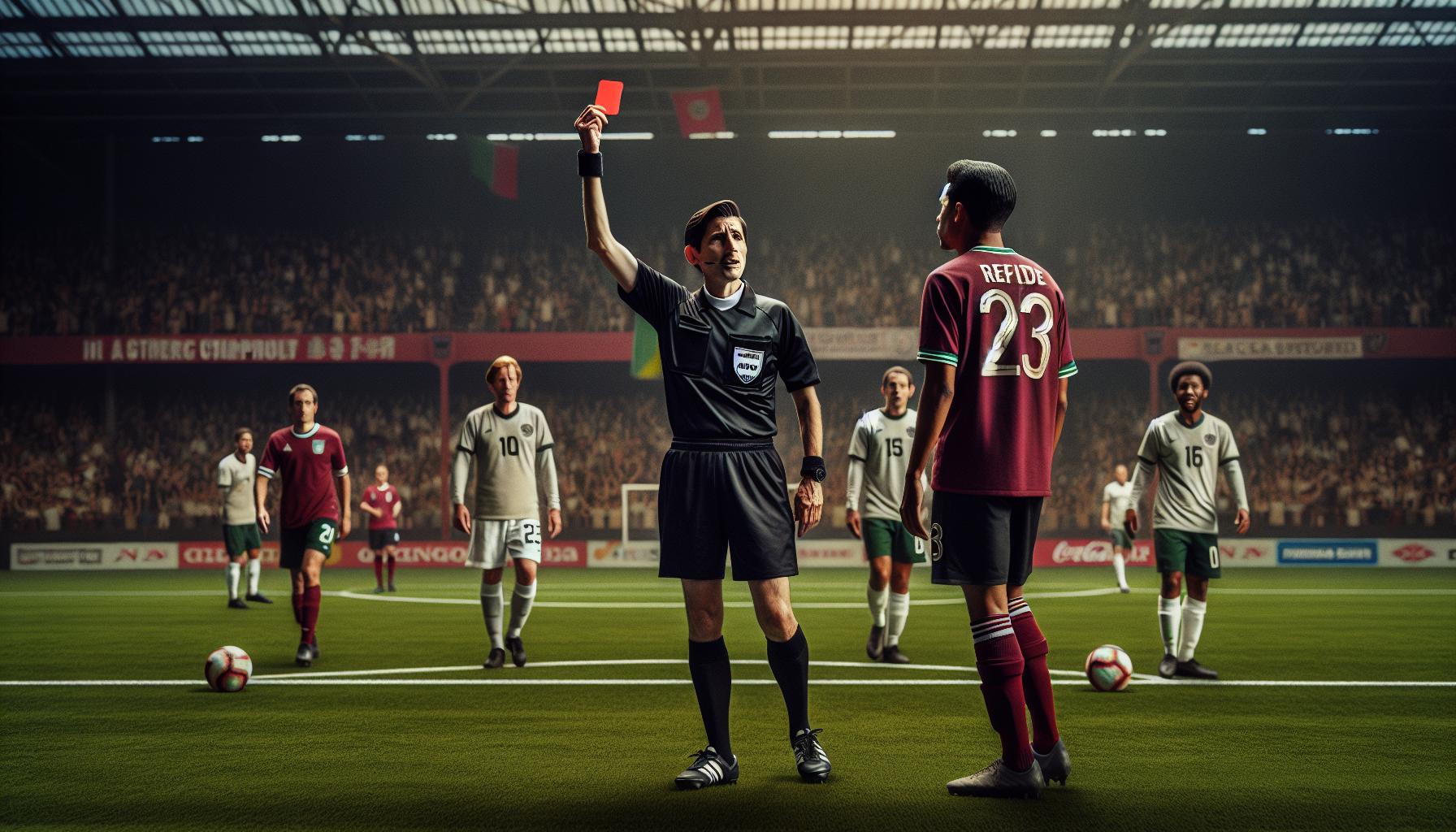
Few moments in soccer history have crystallized the power of cards quite like the infamous incidents that echoed beyond the pitch, transforming how fans perceive discipline and its ripple effects on the game. One such seminal episode unfolded during the 1982 FIFA World Cup semifinal between West Germany and France,known as the “Battle of Seville.” The match, laden with tension and fierce rivalry, witnessed goalkeeper Harald Schumacher delivering a brutal shoulder charge to french defender Patrick battiston-an act so egregious that it shocked viewers worldwide, yet shockingly went unpunished with a card. This moment spotlighted the evolving role of cards as tools not only for fairness but also for player protection, driving calls for stricter enforcement that continue to shape refereeing today.It also reminded fans and players alike that disciplinary decisions can sometimes alter a game’s narrative far beyond mere rule application, imbuing them with almost mythic significance in soccer lore.
Equally electrifying was the red card brandished at Diego Maradona during the 1984 Olympic Games quarterfinals. The fiery Argentine legend’s dismissal illustrated how even the fiercest icons are subject to the referee’s ultimate authority. Maradona later reflected on the moment: “A card can humble you and teach you respect; it’s part of the game’s honesty.” Such acknowledgments highlight how players frequently enough internalize cards as lessons rather than mere punishments, shaping their approach and resilience in high-pressure matches. These iconic incidents resonate with coaches who emphasize discipline as a cornerstone of strategic mastery.as renowned tactician Fabio Capello once noted, “Managing cards isn’t just about avoiding suspensions, but about maintaining your team’s composure and identity under stress.” For fans, these legendary episodes provide a richer appreciation of cards as pivotal story elements that crystallize the drama, passion, and unpredictability that make soccer the beautiful game.
Lessons from Legendary Card Incidents
- Cards as Game-Changers: Recognize how a single yellow or red card can shift momentum and strategy instantly.
- The Human Element: Understand that referees’ decisions carry the weight of fairness and personal judgement, influencing player psychology.
- Player Growth: See how athletes use cards as catalysts to refine discipline and tactical awareness.
- Fan Engagement: Appreciate how controversial or dramatic card moments fuel debate, passion, and deep cultural storytelling around the sport.
Notorious Card Moments in Tournament History
| Match | Player | Card Type | Significance |
|---|---|---|---|
| 1982 World Cup,West Germany vs France | Harald Schumacher | None (controversial foul) | Raised awareness for player safety and stricter card use |
| 1994 World Cup Final,Brazil vs Italy | Bruno Conti | Red card | Influenced final outcome and underscored discipline under pressure |
| 2006 world Cup Final,Italy vs France | Zinedine Zidane | Red card | Famous headbutt marked a dramatic end to Zidane’s career |
| 2010 World Cup Quarterfinal,Uruguay vs Ghana | Luis Suárez | Red card | Deliberate handball saved a certain goal,illustrating tactical fouling |
Player Reactions and Mindset After Receiving Cards
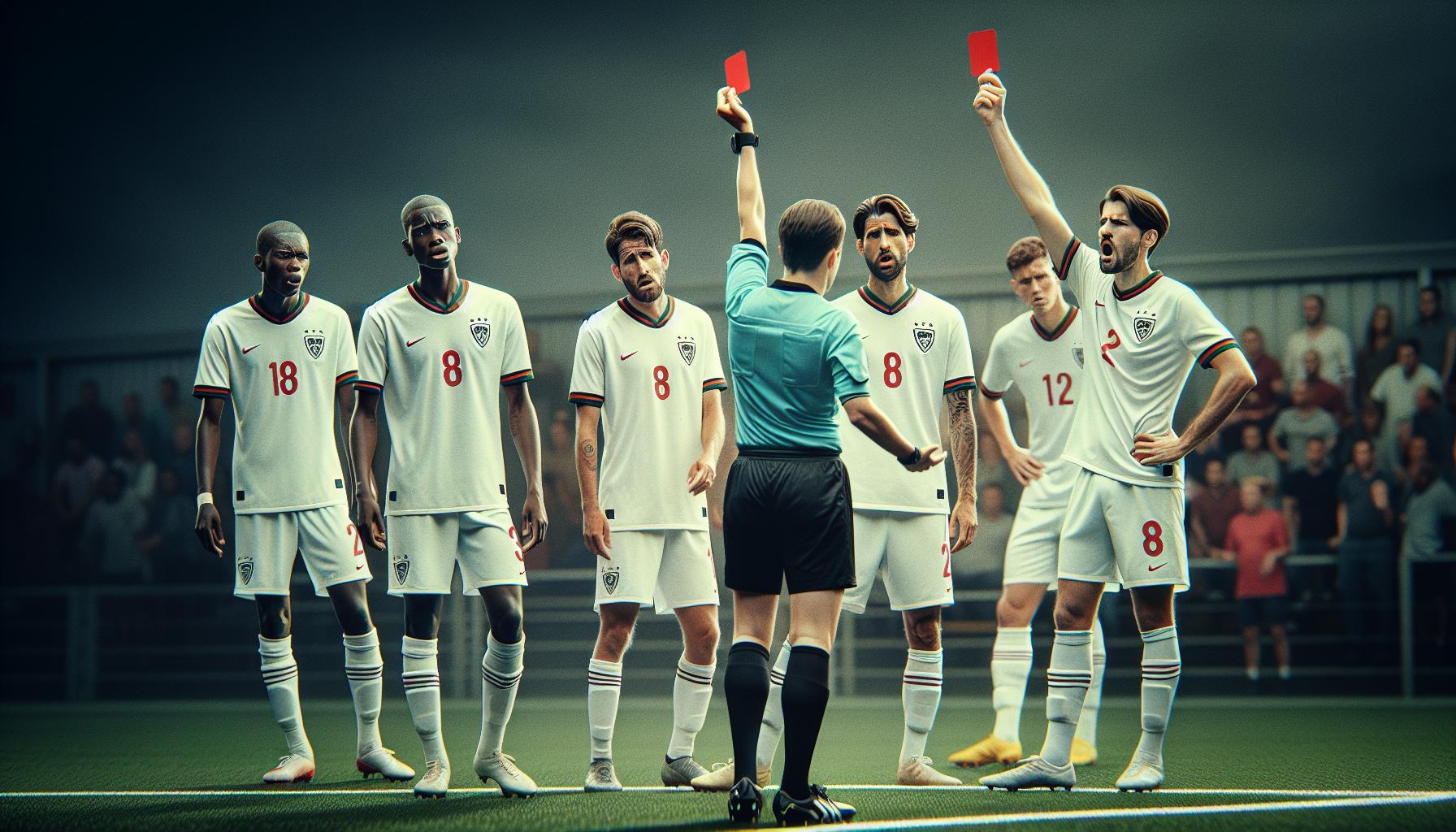
Few moments in soccer test a player’s mental resilience quite like the instant a card flashes before their eyes. The emotional and psychological toll of receiving a yellow or red card can ripple through the individual’s mindset, influencing not only their immediate playstyle but also their broader tactical approach. Players often wrestle with a complex blend of frustration, self-reflection, and determination, knowing that a single lapse can cost their team dearly. for example,when iconic players like Diego Maradona faced dismissal,they publicly acknowledged how the experience humbled them and reinforced the respect essential in competitive sports. Such insights reveal that cards often serve as crucial inflection points-sparking adaptive thinking and emotional regulation that separate great athletes from the rest. Coaches emphasize this dynamic, teaching players to channel the pressure into smarter, more controlled gameplay rather than reckless retaliation.
Navigating the aftermath of a card requires both mental toughness and strategic awareness. Players might instinctively tighten their game to avoid a subsequent booking, which can alter their positional engagement and risk-taking. Veteran professionals understand this adjustment as a tactical necessity, balancing aggression with caution to maintain influence on the pitch without jeopardizing their presence. This nuanced dance often shapes match outcomes, as managers and teammates provide real-time guidance to recalibrate focus and energy. Furthermore, player reactions can ripple through team morale, impacting the collective psyche and momentum.As one veteran coach put it, “How a player responds to a card often decides whether that moment becomes a point of weakness or a catalyst for leadership.” Practical advice for aspiring players includes:
- Immediate composure: Take a deep breath to prevent emotional escalation that invites more fouls.
- Self-analysis: Learn from the incident by reviewing what triggered the card and how to prevent recurrence.
- Team communication: Use the card as a cue to engage more with teammates and adjust tactics collaboratively.
- Focus on discipline: Understand that maintaining discipline under pressure elevates not only personal performance but overall team success.
These approaches highlight how cards, while punitive, also offer profound opportunities for growth, resilience, and leadership-core qualities celebrated across soccer’s rich narrative tapestry.
Card Accumulation Consequences: Suspensions and Strategy
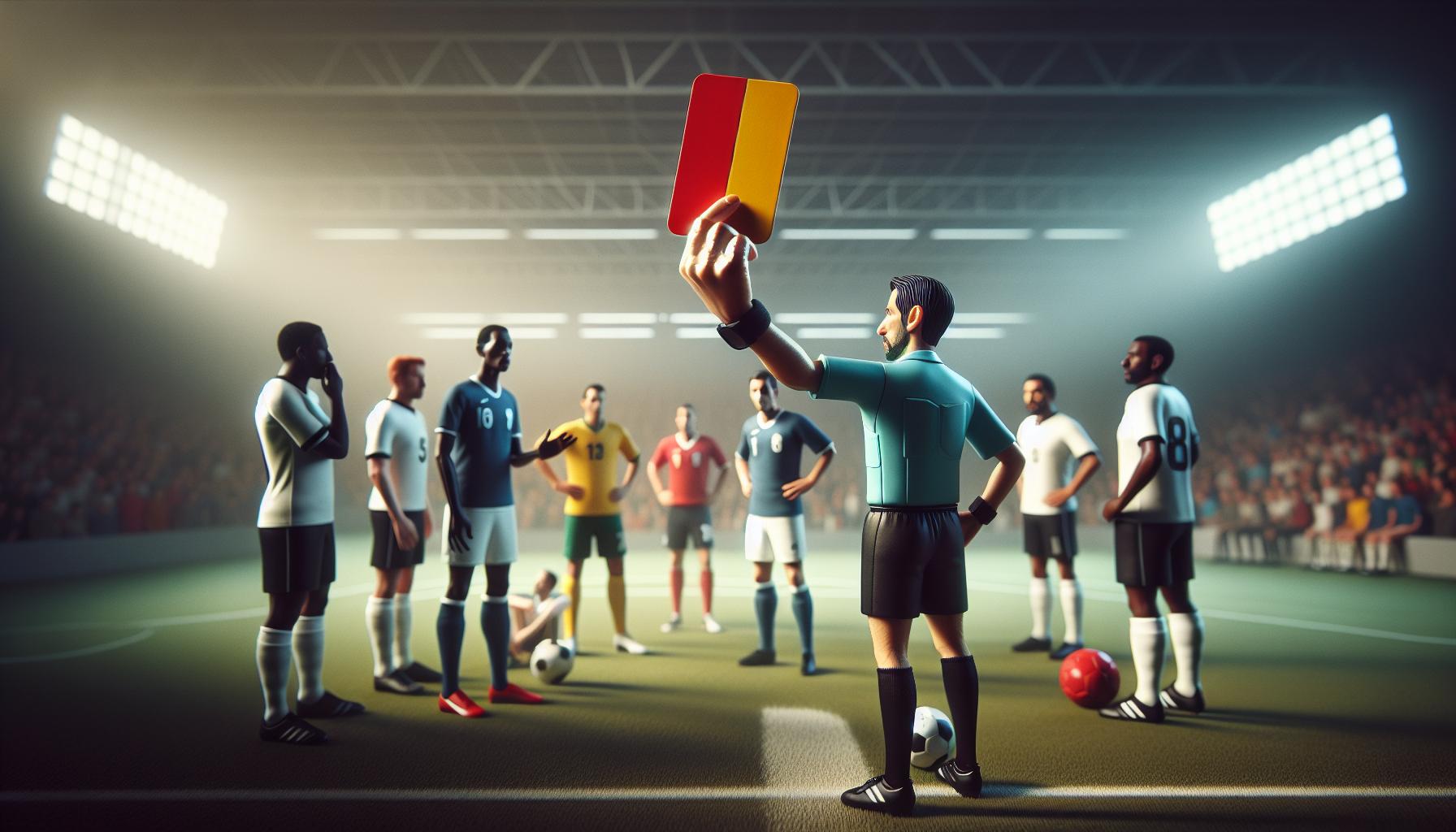
Few moments redefine a player’s season as sharply as the unseen tally of yellow cards quietly accumulating in a notebook away from the roars of the stadium. Beyond the immediate drama of a booking,these accumulated cautions lay a strategic minefield for players and teams alike. Every league and tournament enforces rules where reaching a certain threshold of yellow cards triggers automatic suspensions, forcing coaches to recalibrate their lineups and rethink their tactical approach. A striking example is seen in the UEFA champions league, where players face suspension after three yellow cards across separate matches-a rule that has famously sidelined influential figures at critical junctures. This delicate balancing act demands not just skill, but a razor-sharp sense of discipline and foresight, elevating card management into a vital strategic dimension of the sport.
Players often describe the pressure of playing on the knife-edge of suspension as a battle of wits and composure. As legendary midfielder Xavi once noted, “You play carefully, but never timidly; it’s about finding the perfect harmony.” Coaches reflect this in their game plans by juggling aggression and caution, sometimes opting to rest unavoidable card-prone stars before suspension strikes, preserving squad strength for crucial fixtures. Teams exploit this knowledge, rehearsing alternative formations and empowering utility players to step in seamlessly. Fans witness this tension firsthand-where the quiet count of yellow cards can sway the narrative of a season as dramatically as a last-minute goal.For aspiring players and passionate fans alike, understanding the consequences of card accumulation is key to appreciating how soccer blends relentless physicality with cerebral strategy.
Managing Suspensions: Tactical Adaptations
- Proactive rotation: Coaches often rotate players accumulating cards to avoid suspensions during must-win matches.
- Behavioral adjustments: Players may modify their playing style to reduce risk-taking, balancing aggression with control.
- Communication enhancement: Teams develop in-match signals to assist card-threatened players in dodging needless fouls.
- Squad depth utilization: Bench players receive targeted preparedness to fill roles temporarily vacated by suspended teammates.
| League/Tournament | Yellow Card Suspension Threshold | Reset Policy |
|---|---|---|
| English Premier League | 5 yellow cards | After 19 games, the count resets |
| UEFA Champions League | 3 yellow cards | Cards reset after quarter-finals |
| FIFA World Cup | 2 yellow cards | Reset after quarter-finals |
How Cards Influence Team Tactics and Match Outcomes
Few moments in soccer underscore the delicate chess match played off the ball quite like a player teetering on the brink of a yellow or red card. The presence of cautions and dismissals influences far more than individual behavior; it ripples through the entire team’s tactical approach and can shape the very rhythm of a match. Coaches and players alike must navigate this invisible boundary, balancing fierce competitive spirit with judicious self-control. For instance,when a pivotal defender receives an early booking,the team often adapts by instructing midfielders to provide additional cover,preserving defensive integrity while avoiding reckless challenges. Legendary coach Carlo Ancelotti once emphasized this subtle art: “Discipline breeds freedom – if you’re aware of your limits,you can push harder without breaking.” this tactical dance not only affects formation and pressing but also dictates substitutions and game tempo, underscoring how cards serve as silent signals rewriting a match’s unfolding narrative.
When a player is sent off with a red card, the tactical challenge deepens exponentially. Teams must recalibrate instantly, often sacrificing attacking ambition to shore up defensive lines. The psychological impact is equally profound. An iconic example occurred during the 2006 World cup quarter-final between Italy and Australia, where Australia’s red card pushed them into a defensive shell, allowing Italy to control possession and dictate pace.Coaches might react by shifting to a compact 4-4-1, deploying deeper midfield lines to stifle opposition creativity. Conversely, teams sometimes seize the moment to exploit the space left by a numerical advantage, accelerating their offensive play with greater confidence. Match outcomes can hinge on these adjustments; history is studded with instances where a single caution or dismissal has swung the momentum and final score, reminding us that the consequences of cards transcend the individual and weave deeply into soccer’s tactical fabric.
Strategic Responses to Card Situations
- Risk management: teams monitor players’ card counts carefully to adjust aggression levels without compromising competitive edge.
- Positional shifts: Substitutions or formation tweaks minimize vulnerability caused by a booked or sent-off player.
- Psychological coaching: Leaders within the squad help maintain focus and composure, turning pressure into a strategic advantage.
- Momentum control: Tactical fouls are sometimes used intelligently to prevent dangerous counters despite the risk of further bookings.
Differences in Card Rules Across Leagues and Tournaments
Soccer’s universal language of yellow and red cards resonates across the globe, yet the way these disciplinary tools are applied can differ substantially depending on where you watch the game. These variations stem not only from local football associations’ interpretations but also from the context of diffrent competitions-each weaving its own strategic and cultural fabric into the rules of carding. Such as, while a tackle that earns a yellow card in England’s Premier League might prompt a more lenient verbal warning in a less aggressive league, tournaments like the UEFA Champions League adopt a stricter lens to uphold discipline at the highest competitive level. this dynamic creates engaging contrasts that fans keen on tactics and player behavior will notice, enriching the viewing experience by adding layers of anticipation and surprise.
These differences also influence how players and coaches manage their approach throughout a match or season. The accumulation thresholds for suspensions vary: some leagues impose bans after every three yellow cards accumulated, whereas others count thresholds differently or reset them at intervals, such as after the group stage in international tournaments. This impacts squad rotation decisions and player psychology. Legendary midfielder Andrés Iniesta once reflected on how knowing the La Liga and Champions League card rules helped him pace his aggression: “Understanding when to hold back allowed me to stay on the pitch longer when it mattered most.” Such strategic awareness underlines how card regulations are not mere formalities but integral components shaping football matches’ ebb and flow. Fans and aspiring players alike should consider these nuances when discussing fairness, tactical discipline, and the evolving artistry of soccer’s competitive theater.
key Differences Across Top Leagues and Tournaments
- Accumulation Rules: For instance, in the English Premier League, a player receives a one-match ban after five yellow cards, while in the Spanish La Liga, suspensions start after accumulating five yellow cards but reset after 19 games, encouraging sustained discipline.
- Second Yellow Cards and Automatic Reds: Some competitions may allow appeals or different review procedures for straight red cards versus second yellows, affecting player availability beyond the immediate match.
- Post-Match Review Policies: UEFA competitions frequently enough conduct retrospective reviews to upgrade or downgrade cards, a practice less common in some domestic leagues, emphasizing distinct approaches to fair play enforcement.
- Local Variations: Certain leagues like the MLS in the U.S. use additional measures such as “announceable fouls” and “caution points” that affect player status differently from customary card systems, reflecting the league’s unique style and governance.
| competition | Yellow Card suspension Threshold | Red Card suspension | post-Match Card Review |
|---|---|---|---|
| English Premier League | 5 yellow cards in 19 matches | Automatic 1-3 match ban depending on offense | Limited; appeals possible for straight reds |
| UEFA Champions league | 3 yellow cards in group stage,reset after | Immediate suspension; possible extensions after review | Proactive video-assisted reviews |
| La Liga (Spain) | 5 yellow cards per half-season,resets mid-season | 1-3 matches,appeals allowed | Occasional retrospective reviews |
| MLS (USA) | Varied: accumulation leads to fines or suspensions | Standard 1-match ban; discretionary discipline | Active post-match disciplinary committees |
Understanding these distinctions enhances appreciation of the game’s broader strategic complexity and invites fans to engage with soccer’s global mosaic more deeply.Whether a passionate supporter in Brazil marveling at Serie A’s tactical stringency or a neutral viewer captivated by the crescendo of a World Cup knockout,the nuanced card rules remind us that soccer’s magic lies equally in its shared universal spirit and its thrilling local variations.To truly grasp the game’s heartbeat, respect these unique rules not just as regulations, but as key narrative threads that shape the unfolding drama on the pitch.
The Role of VAR in Card Decisions: Controversy and Clarity
Few moments spark as much debate in modern soccer as the issuance-or overturning-of yellow and red cards through the Video Assistant Referee (VAR) system.Introduced to bring greater accuracy and fairness, VAR’s influence on card decisions has transformed refereeing from split-second judgments into a more measured, if sometimes polarizing, art. The slow-motion replays that dissect tackles, handballs, and dissent reveal layers referees once only glimpsed in real time, adding a new dimension to the game’s narrative. Yet, this pursuit of clarity has not been without controversy-fans and pundits alike grapple with the tension between the flow of the game and the pursuit of justice, raising questions about consistency, timing, and the human element behind each decision.
VAR empowers referees with tools to correct clear errors or serious missed incidents related to cards, but it also shifts the dynamics between players, coaches, and spectators. A notorious example arose during the 2018 World Cup when referees, after VAR consultations, upgraded several yellow cards to straight reds, dramatically altering the complexion of knockout matches. Coaches like pep Guardiola have praised VAR’s role in ensuring “the right decision is made,” emphasizing how it encourages discipline by reducing referee hesitations to sanction players. Though, others caution that too much reliance on video reviews can break the game’s rhythm and fuel frustration among players already walking a fine line of aggression. Practical advice for fans learning to navigate VAR involvement is to watch for the key protocols referees follow-communication with the VAR team, on-field reviews, and clear gestures indicating decisions-offering a window into a complex process designed not to disrupt but to uphold the game’s integrity.
How VAR Shapes card Decisions
- clear and Obvious Errors: VAR can overturn a wrongly issued red or yellow card if replays show no foul or misconduct,protecting players from unfair dismissal.
- Severity Upgrade: A yellow card may be increased to a red if VAR clarifies that the offense was more serious than initially perceived, as seen in violent conduct or professional fouls denying obvious goal-scoring chances.
- Communication with Fans: Referees typically signal reviews by pointing to their ear or touching their wrist,maintaining transparency in the decision-making process to engage and educate viewers.
- Balancing Flow and Fairness: Leagues are increasingly setting guidelines to limit VAR reviews’ length and frequency, seeking harmony between match tempo and decision accuracy.
Lessons from the Pitch: Player and Coach Perspectives
Veteran defender Giorgio chiellini once noted that VAR “adds pressure but also clarity-it changes how you approach challenges, knowing you’re under a microscope.” Coaches, too, adapt tactics, instructing players on when to contest fouls or to restrain their responses, understanding that reckless behavior caught on video risks harsher punishments. As VAR technology continues to evolve, it invites soccer communities worldwide to embrace a shared goal: celebrating the sport’s passion and unpredictability without sacrificing fairness. This delicate balance keeps the beautiful game thrilling while honoring the discipline that underpins every epic contest.
Famous Coaches on Managing discipline and Card Risks
Few factors influence the flow and outcome of a soccer match quite like disciplined decision-making under pressure.Legendary coaches from Johan Cruyff to José Mourinho have mastered the delicate art of managing their teams’ discipline – understanding that every yellow or red card carries weighty tactical consequences. With cards holding the power to derail strategies, coaches place immense emphasis on teaching players the fine line between aggressive competitiveness and reckless behavior. As Mourinho famously said, “Discipline gives you the freedom to play your game; without it, chaos reigns.” It is this mindset that transforms card risks from potential liabilities into tools for tactical advantage.
The practical wisdom of managing card discipline manifests in various forms, from real-time match interventions to season-long squad management. Pep Guardiola,for example,encourages his players to “play with intensity,but always stay smart,” emphasizing anticipation and communication to avoid unnecessary fouls. This beliefs not only limits card accumulation but also preserves on-field composure during high-stakes moments. coaches also use detailed video analysis to review card-prone situations, equipping players to recognize patterns and adjust behavior. Often, a subtle team talk about maintaining “calm under fire” during volatile fixtures can defuse tension before it escalates. These tactical teachings underscore a broader truth: controlling discipline and card risks is as essential as mastering formations and fitness, shaping not just matches but career-defining triumphs.
Strategies Coaches Use to Manage Discipline
- Pre-match Briefings: Emphasizing the importance of situational awareness to avoid unnecessary cards,especially against referees known for strict enforcement.
- On-field Communication: Coaches instruct captains and key players to maintain team composure and mitigate provocations that might lead to reckless fouls or dissent.
- Tactical Substitutions: Removing players at risk of a second yellow card before critical phases of the game to maintain numerical strength.
- Post-match Analysis: Using footage to highlight risky moments and reinforce lessons for future discipline management.
This holistic approach to discipline management elevates it from mere rule-following to a competitive strategy that celebrates the game’s drama while respecting its integrity. The ability of coaches to inspire restraint and tactical intelligence under the looming threat of cards embodies the beautiful game’s complex,human drama - where every decision carries passion,consequence,and legacy.
Fan Perspectives: How Cards Shape the Viewing Experience
Few moments in soccer ignite the crowd’s pulse as powerfully as the flash of a yellow or red card. These pivotal decisions by referees do more than pause the play; they dramatically reshape the emotional landscape of the match and the perspectives of fans watching from the stands or screens worldwide. for supporters,cards represent a tangible sign of the game’s passion and intensity-an unpredictable jolt that can turn heroes into cautionary tales or shift the balance of power on the field. Yet, beyond the immediate drama, cards invite fans into a deeper tactical narrative, prompting spirited debates about fairness, discipline, and the margins between brilliance and recklessness.
Fans often find themselves weaving rich stories around these moments, recalling classic matches where a single card became a defining gamble or a flashpoint of controversy. Consider the legendary 1982 World Cup semi-final, where Germany’s contentious red card against Brazil propelled an emotional debate that persists decades later. Appreciating the nuances of when and why cards are issued enriches the spectator experience, fostering empathy for players’ high-pressure decisions and respect for referees’ complex roles. To engage fully, fans benefit from understanding that cards are not simply punitive but strategic-tools that can steer momentum, dictate tempo, and embolden underdogs. Gaining this perspective helps viewers appreciate that every booking shapes the unfolding drama, inviting them to witness not just a game of skill, but a battle of wills under strict rules that preserve the sport’s integrity and spirit.
How Fans Can Enhance Their viewing Experience
- Educate Yourself on Card Rules: Understanding the difference between cautionary and sending-off offenses improves insight into why referees act and elevates appreciation of key match moments.
- Observe Player Reactions: Watching how players respond to cards-whether with composure or frustration-reveals personal strength and adds layers to the narrative of perseverance or downfall.
- Engage in Post-Match Analysis: Following expert breakdowns or fan forums encourages rich discussions that deepen knowledge and connection to the sport’s strategic depth.
- Respect Diverse Perspectives: Remember that fan reactions can vary widely by culture, team loyalty, or playing style preferences, making discourse richer and more inclusive.
by embracing these approaches, fans not only witness soccer’s thrilling athleticism but also celebrate its layered complexity-where every card symbolizes a chapter in a grand story of discipline, passion, and tactical genius.
Frequently Asked Questions
Q: how does the timing of a card affect a player’s behavior and team strategy during a match?
A: The timing of a card critically influences a player’s approach-early cards frequently enough make players more cautious, limiting aggressive tackles to avoid a second booking. Teams may adjust tactics, playing more defensively to conserve player availability. Understanding this can deepen fan appreciation of how discipline shapes match dynamics. See our section on Card Accumulation Consequences for more tactical insights.
Q: What subtle signals do referees use before showing a card in high-pressure situations?
A: Referees often use subtle body language, such as eye contact with the fouled player or hand gestures, indicating imminent carding to manage player reactions. Recognizing these non-verbal cues enriches fan insight into refereeing decisions, enhancing the viewing experience. Check How Referees Decide for a detailed look at this nuanced art.
Q: Why are some fouls punished with a card in one league but not in another?
A: Different leagues apply slightly varying disciplinary standards due to cultural, tactical, and regulatory nuances, causing inconsistency in carding for similar fouls. Fans should consider these league-specific rules when comparing matches internationally. Our piece on Differences in Card Rules Across Leagues and Tournaments explores this fascinating contrast.
Q: How do players psychologically prepare to avoid receiving cards during crucial matches?
A: Many players train mental discipline techniques like focus and emotional control to avoid impulsive actions that lead to cards. Coaches emphasize this preparation to maintain squad strength, particularly before knockout games. Fans gain richer narratives by appreciating these behind-the-scenes mental battles. See Famous Coaches on Managing Discipline for real-world strategies.
Q: What impact do clubs and national teams face when key players receive multiple cards in a tournament?
A: Accumulated cards often force teams to reshape lineups, risking weakened performance or altered tactics. This adds layers of strategic complexity during tournaments, affecting momentum and morale. Recognizing card-driven absences deepens fan engagement with team progression stories. Details are in Card Accumulation Consequences: suspensions and Strategy.
Q: How do fans’ perceptions of fairness change after controversial card decisions using VAR?
A: VAR can both clarify and ignite debate over fairness, polarizing fan opinion. While it aims for precision, disagreements often fuel passionate discussions-adding drama and emotional depth to the fan experience. Exploring this dynamic enriches your understanding of modern officiating’s impact on soccer culture. Read more in The Role of VAR in Card Decisions: Controversy and Clarity.
Q: how can young players learn from historical card incidents to improve their discipline on the field?
A: Youth can study legendary card moments to see real-life consequences of poor discipline and strategic errors. This mentorship by example helps them develop smart play habits and emotional control, essential for long-term success. The section on historical Moments: Legendary Card Incidents offers powerful, inspiring lessons.
Q: What role do coaches play in reducing card risks while maintaining aggressive play styles?
A: Coaches carefully balance urging aggression with discipline by setting clear behavioral expectations and using tactical drills focused on clean challenges. This fine-tuning maintains competitive edge without costly card risks. Fans appreciate this strategic nuance when following team management. For deeper insights, refer to Famous coaches on Managing Discipline and card Risks.—
*Explore these FAQs to deepen your understanding of cards in soccer and their dramatic influence on the beautiful game. For more tactical and historical storytelling, dive into our full guide and join the passionate community celebrating every thrilling moment!*
In Conclusion
Understanding the meaning behind every card in soccer transforms the way you watch the game-revealing the drama, strategy, and passion on the pitch that define every unforgettable moment. Armed with this essential guide, you’re not just a spectator; you’re part of a global community that reads the subtle language referees and players share in every yellow and red card. Ready to deepen your fandom? Explore our breakdown of key match tactics and player profiles to see how these moments shape the outcome of games and careers.
Don’t miss out on the chance to elevate your soccer knowledge further-check out our expert insights into tournament coverage and player interviews that bring you closer to the heart of the sport. Sign up for our newsletter to get the latest updates, match previews, and behind-the-scenes stories delivered straight to your inbox. Have questions or unique experiences with soccer cards? share your thoughts in the comments below and join the conversation with fans who live and breathe the beautiful game. Your journey into soccer’s rich, emotional world starts here-keep exploring and celebrating every second of the action.